
-
by sayum
28 August 2026 2:11 PM







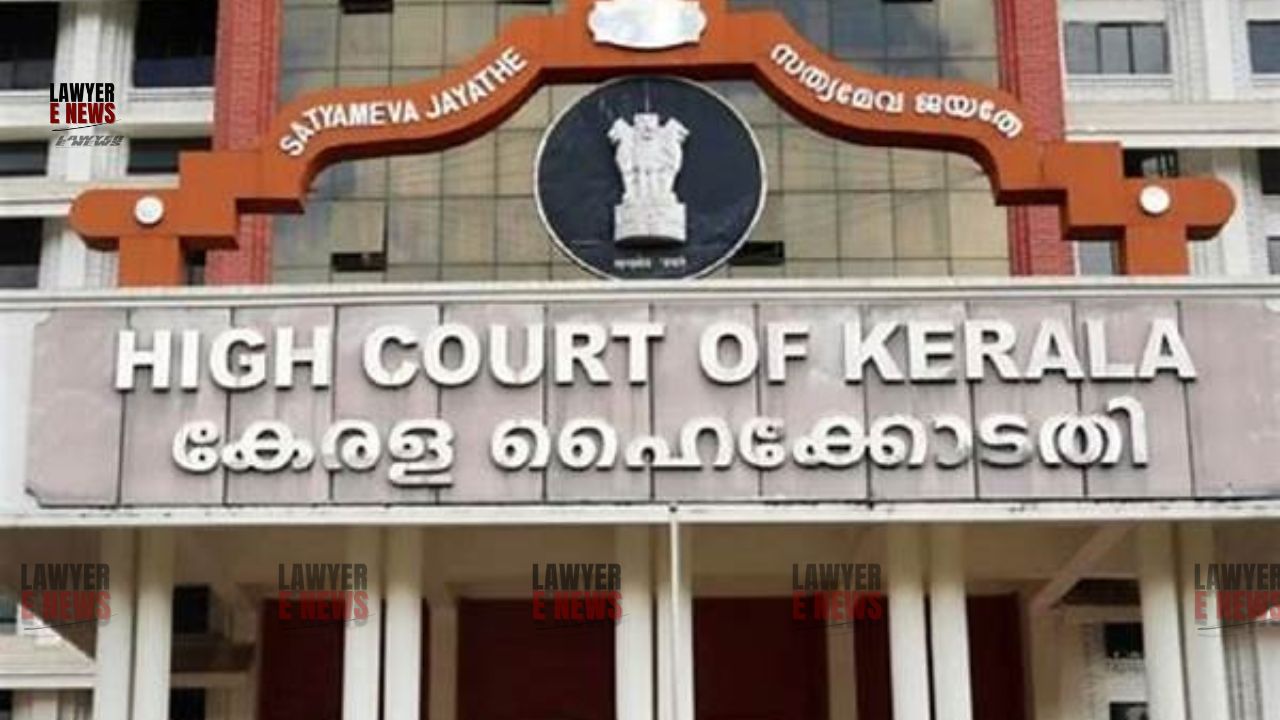
"Environmental Clearance is granted to a project or activity and the same is 'site specific'. The 10th respondent, who has been granted E.C. in respect of a different site, cannot be made answerable for the violations, if any, of the 8th respondent," Kerala High Court, in a significant judgment, held that Environmental Clearance (EC) is fundamentally project and site-specific.
A bench of Justice C. Jayachandran observed that alleged environmental violations or unpaid liabilities of a mining entity at one site cannot serve as a legal basis to deny or quash an EC granted to a related but distinct legal entity for a different site. The Court emphasized that neither the Environment (Protection) Act, 1986, nor the MMDR Act contains provisions to refuse an EC solely based on past violations at a separate location.
The petitioners approached the High Court challenging the grant of an EC by the State Environment Impact Assessment Authority (SEIAA) to M/s. RDR Crushers Private Limited (Respondent No. 10). They alleged that the company was a "binami" or proxy for M/s. Palathra Constructions (Respondent No. 8), which had committed gross mining violations at an adjacent site. The petitioners sought the quashment of the EC on the grounds that environmental compensation and penalties assessed against the previous entity remained unsatisfied.
The primary question before the Court was whether a project proponent can be denied an EC for a new site based on the alleged violations and liabilities of a related entity at a different site. The Court also examined the maintainability of the writ petitions following the withdrawal of similar proceedings before the National Green Tribunal (NGT) without obtaining liberty to file fresh litigation.
EC Is Site And Project Specific - Court Relies On Supreme Court Precedent
The Court underscored that under the prevailing regulatory framework, an Environmental Clearance is tied specifically to a particular plot of land and a defined activity. Referring to the Supreme Court's decision in Rajeev Suri v. Delhi Development Authority and Others (2022), the bench noted that an EC does not attach to the proponent in a general sense but is strictly "site-specific."
No Power To Refuse EC Based On Past External Violations
The bench observed that the law does not currently empower authorities to reject an application for a fresh site based on the conduct of the proponent at other locations. The Court noted that there is no enabling provision in the Environment (Protection) Act or the EIA Notification to refuse an EC for violations committed in a previously granted clearance for a different project area.
"The 10th respondent, who has been granted Ext.P21 E.C in respect of a different site, cannot be made answerable for the violations, if any, of the 8th respondent."
Lifting Of Corporate Veil And Fraud Allegations - Court Finds No Evidence Of Fraudulent Incorporation
While the petitioners argued for the lifting of the corporate veil to establish that the various respondent companies were alter egos of the same family, the Court found the timeline of incorporation contradictory to this claim. It was noted that Respondent No. 9 was constituted in 1996 and Respondent No. 10 in 2018, long before the present controversy reached its peak.
Distinct Entities Operative At Different Sites
The Court held that the mere presence of common directors is insufficient to treat separate legal entities as one for the purpose of environmental liability. It observed that the sites where each company operates are distinct and that no evidence was produced to show that Respondent No. 10 was formed specifically to enable Respondent No. 8 to "wriggle out" of its legal obligations or penalties.
"Merely for the reason that the Directors of the three companies are more or less the same, no fanciful inference can be drawn, as alleged by the petitioners."
Maintainability And Abuse Of Process - Principles Of Order XXIII Rule 4 CPC Applied
A significant portion of the judgment focused on the fact that the petitioners had previously filed an Original Application before the NGT on the same cause of action. That application was withdrawn after some arguments without seeking liberty from the Tribunal to initiate fresh proceedings. The Court held that the principles of public policy enshrined in Order XXIII Rule 4 of the Code of Civil Procedure (CPC) apply to writ jurisdictions to prevent an abuse of process.
Successive Litigations Hit By Principle Of Public Policy
The Court relied on Sarguja Transport Service v. State Transport Appellate Tribunal (1987) to conclude that the second round of litigation in the High Court was an attempt to resuscitate a challenge that was effectively abandoned before the NGT. The bench noted that allowing such petitions would lead to an endless cycle of litigation on the same set of facts, which is contrary to the interests of the administration of justice.
"The second litigation, in the form of Writ Petition before the High Court, will certainly be hit by the principles of Order XXIII Rule 4 of the Code of Civil Procedure."
Petitions Not Sustainable As PILs
Generalized Allegations Insufficient For PIL Status
Although the petitioners claimed to be local inhabitants affected by the mining, the Court found their allegations to be "generalized." It noted that while the first petitioner claimed to live within one kilometer of the site, the joiner of his daughter as a petitioner in the second writ appeared to be a strategic move to avoid allegations of lack of bonafides. The Court rejected the contention that these were Public Interest Litigations (PILs).
The High Court dismissed both writ petitions, vacating all interim orders. It concluded that the grant of Environmental Clearance to the 10th respondent was legally sound as the project site was distinct from the area where violations were alleged. The Court further recorded its appreciation for the Amicus Curiae, Adv. Jacob P. Alex, for his assistance in unfolding the complexities of the liability of different project proponents.
Date of Decision: 17 June 2026





