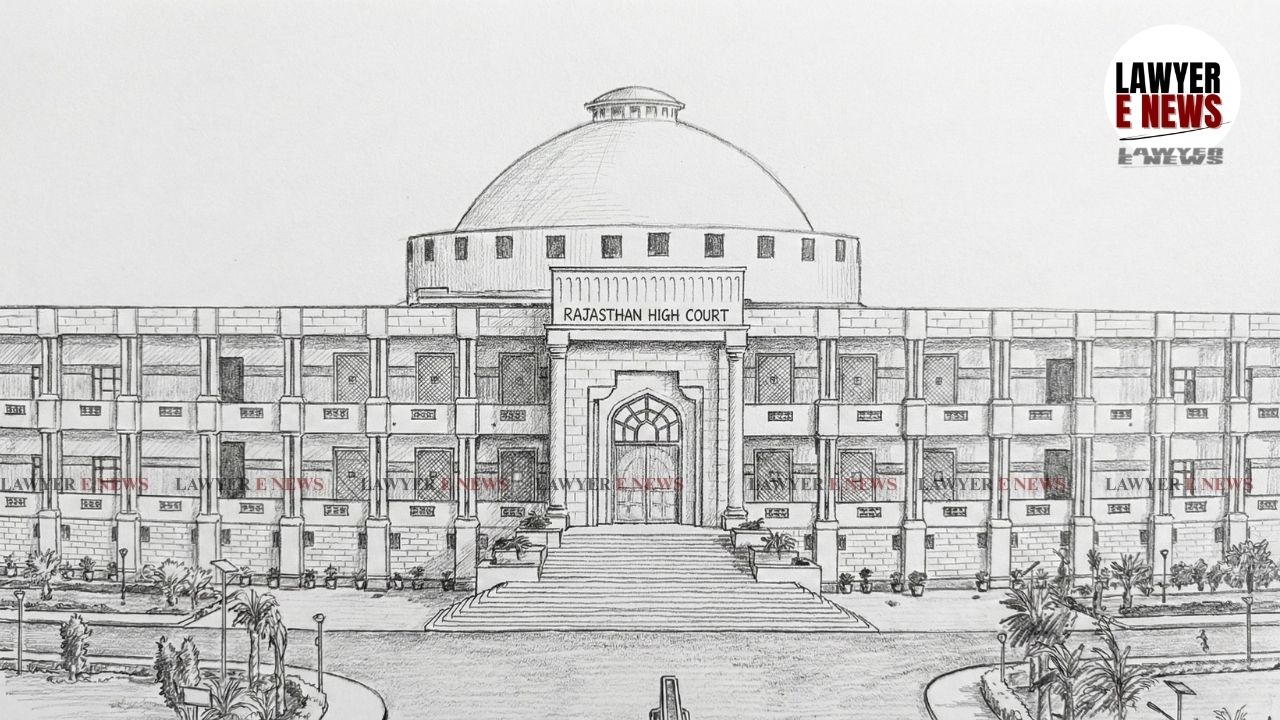
-
by sayum
27 August 2026 3:32 PM








“Section 2(24)(x) Treats Employees' PF Contributions as Employer’s Income Unless Paid on Time”— Supreme Court of India issued a significant order in Woodland (Aero Club) Private Limited v. Assistant Commissioner of Income Tax (SLP (Civil) No. 1532 of 2026), amidst a protracted judicial divergence over the deductibility of employees’ contributions to Provident Fund (PF) and Employees' State Insurance (ESI) under the Income Tax Act, 1961.
In light of starkly conflicting views among various High Courts across the country on whether delayed deposits of employees' PF/ESI contributions—despite payment before the income tax return due date—are deductible, the Supreme Court has decided to examine the issue in depth.
“This is a matter which, in our prima facie view, calls for authoritative determination,” held a Bench comprising Justice J.B. Pardiwala and Justice Sandeep Mehta, issuing notice returnable in four weeks and permitting Dasti service.
“Employees’ Contributions Held in Trust—Non-Compliance With Statutory Deposit Date Bars Deduction”
The impugned High Court decision had taken a strict pro-Revenue stance, ruling that employees’ PF/ESI contributions deducted by employers are deemed to be the employer’s income under Section 2(24)(x) and are deductible only if deposited on or before the ‘due date’ under the respective welfare statutes, such as the EPF Act or ESI Act.
The Court highlighted that Section 36(1)(va), when read with Section 2(24)(x), mandates that such contributions must be deposited within the timeline statutorily prescribed—not the extended date of filing income tax returns under Section 139(1).
“It is a settled proposition that employees' contribution to PF and ESI, once deducted from their salaries, becomes the employer's income unless remitted to the appropriate fund within the prescribed time. The employer, acting as a trustee of such amounts, cannot delay the deposit and still claim deduction,” the High Court had held.
The Bench further observed that Alom Extrusions, the leading Supreme Court judgment which allowed employer contributions deposited before filing of returns, did not address the specific provisions of Sections 2(24)(x) and 36(1)(va) and hence could not be relied upon in respect of employees’ contributions.
Statutory Scheme and the Judicial Divide: Employer and Employee Contributions Not the Same
The case surfaces from a long-running interpretational battle between two judicial schools of thought regarding the applicability of Section 43B, which allows deductions for certain liabilities if paid before the due date of filing returns under Section 139(1).
The petitioner-employer, Woodland (Aero Club) Pvt. Ltd., argued that even delayed employee contributions to PF/ESI—if paid before the return filing date—should be deductible under Section 43B, in line with rulings such as CIT v. Aimil Ltd. (Delhi HC) and CIT v. Ghatge Patil Transport Ltd. (Bombay HC). These judgments treated both employer’s and employees’ contributions at par.
However, the High Court decision under challenge took the opposite view, relying on decisions like CIT v. Gujarat State Road Transport Corporation (Gujarat HC) and CIT v. Merchem Ltd. (Kerala HC), holding that employee contributions are a separate category, deemed income under Section 2(24)(x), and that Section 43B’s non-obstante clause does not override the specific conditions laid down in Section 36(1)(va).
Importantly, the High Court noted that Explanation 5 to Section 43B, inserted subsequently, had not been considered in judgments favoring employers, thus further clouding the legal position.
What the Law Says: The Distinction Between Employer and Employee Contributions
Section 2(24)(x) of the Income Tax Act categorically includes within "income" any sum received by an employer from employees as a contribution to PF, ESI, or other welfare funds.
Section 36(1)(va) allows deduction of this “income” only if the employer credits it to the employee’s account in the relevant fund “on or before the due date”, which, as clarified in the Explanation to the provision, refers to the deadline under the relevant statutory law—not the income tax return filing deadline.
On the other hand, employer’s contribution, governed by Section 36(1)(iv), is covered under Section 43B, allowing deductions if payment is made before filing the return. The High Court concluded that employer’s and employees’ contributions are fundamentally different in nature, both in substance and legal treatment.
Supreme Court’s Prima Facie View: “Employer Cannot Take Shelter of Section 43B for Employee Contributions”
The Supreme Court, noting the prima facie soundness of the distinction made by the High Court, observed:
“The employee’s contribution towards PF, ESI received by the employer is his income under Section 2(24)(x) and if he wants to have it deducted… he must credit the same to the employee’s account… on or before the due date specified under the relevant Act.”
This interpretation aligns with the trust-based relationship between employer and employee concerning statutory deductions.
Still, given the conflicting interpretations across High Courts, the Court refrained from deciding the issue at this stage and issued notice to the Respondent (Income Tax Department) to respond within four weeks.
Awaiting Final Word on a Deeply Contested Issue
While the Supreme Court has not yet adjudicated the core question, its order signals an impending authoritative ruling on an issue that has caused considerable uncertainty for businesses and tax professionals. The divergence has resulted in assessees across different jurisdictions receiving diametrically opposite outcomes depending on the High Court's view applicable in their region.
For now, employers are cautioned: unless the Supreme Court rules otherwise, it remains risky to rely solely on Section 43B when claiming deduction for delayed deposits of employees’ PF/ESI contributions. The safe harbour, as per the current prevailing view in several High Courts, is to deposit such contributions strictly within the statutory timeline under the EPF or ESI laws.
Date of Decision: 27 January 2026