-
by sayum
21 October 2026 1:30 PM







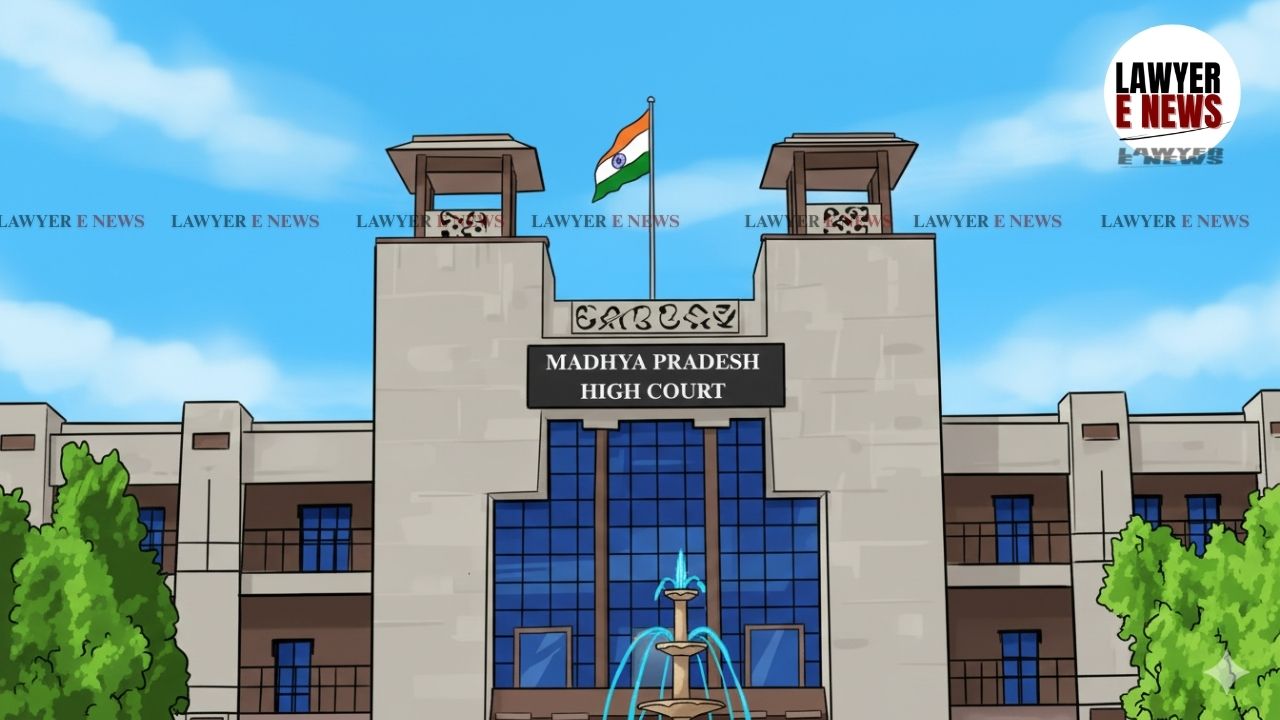
"Law does not give any right to seek additional charge and correspondingly there is no infringement of any right when such additional charge is taken away." High Court of Madhya Pradesh, in a definitive ruling pronounced on October 15, 2026, held that an employee assigned an additional or in-charge arrangement acquires no vested or substantive right to stick to that post, observing that "law does not give any right to seek additional charge and correspondingly there is no infringement of any right when such additional charge is taken away."
A single bench of Justice Anand Singh Bahrawat held that the writ jurisdiction under Article 226 of the Constitution of India cannot be extended to perpetuate temporary administrative arrangements where the substantive service conditions and status of the government employee remain wholly unaffected.
The petitioner, substantively appointed as a Khelkud Shikshak under the Madhya Pradesh State School Education Service (Academic Cadre) Service Conditions and Recruitment Rules, 2018, was entrusted with the additional charge of District Sports and Welfare Inspector, Bhind, via an ad-hoc local arrangement in May 2025. Subsequently, by an order dated June 30, 2026, the competent State authority assigned the charge of the vacant post to private respondent No. 7, who was substantive Physical Training Instructor (PTI) in the relevant feeder cadre. The petitioner approached the High Court under Article 226 of the Constitution seeking the quashment of the posting order, contending that his accrued rights were violated and that the arrangement bypassed the general transfer policy.
The primary question before the court was whether an employee holds an enforceable legal right under Article 226 of the Constitution of India to insist on continuing on an additional charge merely because it was earlier entrusted to him. The bench was also called upon to determine whether assigning charge of a vacant promotional post to an eligible candidate from the prescribed statutory feeder cadre constitutes an impermissible transfer during a transfer ban period.
Entrustment Of Additional Charge Confers No Indefeasible Legal Title
Examining the foundational nature of current duty arrangements, the court observed that temporary administrative entrustments do not generate actionable legal entitlements. An employee asked to take up an additional assignment does so strictly as a stop-gap measure to cater to emergent public exigencies.
The bench emphasized that unless an employee establishes a substantive appointment or regular promotion to the post, no writ of mandamus or certiorari can lie to protect an ad-hoc posting. The mere fact that the incumbent discharged those duties in the past does not create an indefeasible claim in equity or law.
"The grant and taking away of additional charge does not deprive the person concerned of any substantive right so long as the service conditions attached to the post held substantively by the said person are not adversely effected. Additional charge is a temporary and adhoc arrangement made to cater to an emergent eventuality of casual vacancy etc. having no connection with the substantive post."
Discharging Duties Of Higher Post Does Not Equal Regular Promotion
The court analyzed the fundamental distinction between an ad-hoc assignment to a higher post and a statutory promotion. Relying on the Supreme Court's authoritative decision in Ramakant Shripad Sinai Advalpalkar v. Union of India, the bench reiterated that asking an officer holding a lower substantive post to discharge duties of a higher office cannot be treated as a promotion.
Such stop-gap arrangements do not confer the regular pay-scale of the higher post but only entitle the employee to a charge allowance. The court held that administrative exigencies dictate these measures, and principles of cadre seniority cannot be artificially imported to treat an in-charge arrangement as a substantive elevation.
"No One Has A Right To Stick To A Current Duty Charge"
Addressing the maintainability of writ petitions filed against the withdrawal of current duty charge, the bench placed strong reliance on the Supreme Court ruling in State of Haryana v. S.M. Sharma. The bench reiterated that when a competent authority makes a fresh posting arrangement, the incumbent holding current duty charge is automatically relieved without suffering any civil consequences.
The court noted that the extraordinary jurisdiction under Article 226 of the Constitution cannot be trivialized to entertain grievances arising from the divesting of current duty responsibilities, as it causes no financial detriment or legal prejudice to the officer concerned.
"We are constrained to say that the High Court extended its extraordinary jurisdiction under Article 226 of the Constitution of India to a frivolity. No one has a right to ask for or stick to a current duty charge. The impugned order did not cause any financial loss or prejudice of any kind... He had no cause of action whatsoever to invoke the writ jurisdiction."
In-Charge Arrangements Cannot Be Made De Hors Statutory Feeder Cadre
Turning to the governing statutory scheme, the court held that in-charge arrangements must strictly conform to service rules. Referring to its earlier decisions in Sanjay Soni v. State of M.P. and Mahesh Prasad Dixit v. State of M.P., the bench reiterated that an in-charge arrangement cannot be executed de hors the statutory rules, and the post must be manned by an eligible person substantive to the feeder cadre.
The court observed that Schedule IV of the amended Madhya Pradesh Non-Gazetted Class III Academic Services (Non-Collegiate Services) Recruitment and Promotion Rules, 1973, specifically designates Physical Training Instructors as the promotional feeder cadre for the post of District Sports and Welfare Inspector. Since the petitioner was substantively absorbed as a Khelkud Shikshak under the distinct 2018 Rules, which contained no promotional channel to the post, he could claim no cadre-based right over the charge.
Transfer Policy Inapplicable To Internal Work Arrangements
The bench rejected the petitioner's argument regarding the breach of the State's general transfer policy ban. The court held that assigning or withdrawing additional charge does not constitute a substantive transfer of the government servant from their cadre or substantive post.
Because the petitioner's lien and substantive posting at his parent institution remained intact, the administrative assignment in favour of respondent No. 7 could not be tested against the rigours of routine transfer circulars. The employer retains complete prerogative to allocate vacant offices to eligible personnel to preserve administrative efficiency.
The High Court dismissed the writ petition, holding that the petitioner had completely failed to establish any violation of a statutory rule or infringement of any legally enforceable right. The court affirmed that the competent authority acted well within its administrative domain by assigning the charge of the vacant post to an eligible candidate from the statutory feeder cadre.
Date of Decision: 15 October 2026