-
by sayum
24 August 2026 6:22 AM







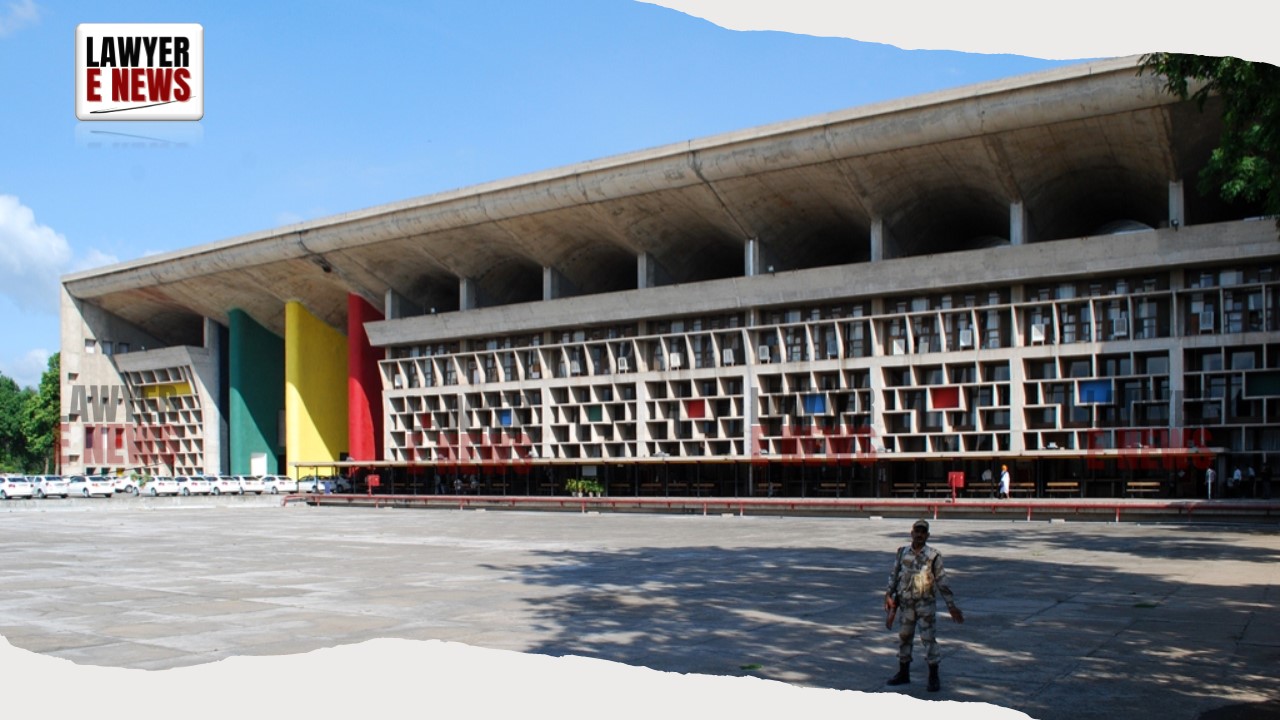
“Assumption That 132 KV Line Can’t Kill Without Contact Is Judicial Guesswork – Electrocution Proved by Medical and Ocular Evidence”, Dismissing a second appeal filed by the Haryana Vidyut Parsaran Nigam Limited, the Punjab & Haryana High Court has upheld a compensation decree awarded to the family of a man who died due to electrocution from a high-voltage transmission line. In a significant reaffirmation of the doctrine of strict liability, the Court held that once death due to electrocution is established, the electricity transmission authority cannot escape liability merely by denying direct contact or pointing to the absence of tripping.
Justice Deepak Gupta observed: “Electricity is an inherently dangerous commodity. The supplier of electricity is under a statutory and non-delegable duty to ensure that transmission lines are erected and maintained in a manner that does not endanger human life.”
The judgment stems from the tragic death of Sita Ram, a cable TV operator, who died on 09.09.2012 while repairing a connection on a rooftop in village Govindpura, Bhiwani. He was electrocuted when a 132 KV high-voltage transmission line, allegedly passing dangerously close to the rooftop and entangled with an overgrown tree, created a lethal induction zone.
Trial Court Dismissed Suit Based on Guesswork – Appellate Court Reversed Findings Based on Evidence
The suit filed by Sita Ram’s wife and children was initially dismissed by the Trial Court, which concluded—without any expert basis—that a 132 KV line could not have caused such death and that perhaps domestic current was involved.
The First Appellate Court, however, reversed the findings, relying on eye-witness testimony, departmental records, and medical evidence that confirmed death due to electrocution and established proximity of the transmission line to the worksite.
Affirming the lower appellate court’s decree, Justice Gupta held: “The Trial Court’s observation that the deceased would have been ‘burnt alive’ had he come in contact with a 132 KV line is not supported by any medical or expert evidence. Courts cannot decide scientific matters based on conjecture.”
Tree Touching the High-Voltage Line Created an Induction Hazard – Statutory Duty Breached
The Court found overwhelming evidence that a tree was either touching or dangerously close to the 132 KV transmission line, and that the cable operator was working on the rooftop underneath it. This created an induction hazard, which the electricity authority failed to address.
The High Court referred to the statutory obligations under Section 68 of the Electricity Act, 2003, and Rules 29, 44, 45, 46, and 91 of the Electricity Rules, 1956, which require the electricity authority to ensure minimum clearances, remove obstructions, and conduct periodic inspections.
Justice Gupta noted: “The evidence on record unmistakably shows that a tree touching or dangerously close to the high-voltage line was allowed to remain, thereby creating a foreseeable risk.”
Strict Liability Applies Even Without Direct Negligence – Once Death Proven, Burden Shifts to Electricity Authority
Relying on the Supreme Court’s judgment in M.P. Electricity Board v. Shail Kumari, AIR 2002 SC 551, the Court reiterated that electricity transmission is a hazardous activity, and liability under strict liability doctrine arises irrespective of specific negligence.
The Court ruled: “Once death due to electrocution is established, the electricity authority must disprove liability. The burden lies heavily upon the authority – and in this case, that burden has not been discharged.”
Plea of Contributory Negligence Rejected – Victim Engaged in Lawful Occupation
Rejecting the argument that the deceased was negligent by working under a transmission line, the Court held: “A person engaged in a lawful occupation on a rooftop cannot be expected to anticipate lethal induction from inadequately maintained high-voltage transmission lines. The duty to ensure safety rests squarely upon the electricity supplier.”
The defence that no “tripping” was recorded in official logs on the date of the incident was also discarded, with the Court pointing out overwriting and inconsistencies in the departmental records. Furthermore, the Court reminded that tripping is not always a reliable indicator, especially in cases involving induction-related electrocution.
Compensation Based on Settled Legal Principles – No Excess or Arbitrariness Found
Regarding the quantum of compensation, the First Appellate Court applied the principles laid down in Sarla Verma v. DTC and Pranay Sethi, including notional income, future prospects, and compensation under conventional heads.
Justice Gupta held: “The First Appellate Court has adopted a method consistent with the principles laid down in Sarla Verma and Pranay Sethi. No perversity is shown warranting interference.”
No Substantial Question of Law – Second Appeal Dismissed
In dismissing the second appeal, the High Court found no substantial question of law arising from the judgment of the First Appellate Court, which was based on a sound appreciation of evidence and settled legal doctrine.
The Court concluded:“The Trial Court’s judgment suffered from conjectural reasoning, whereas the appellate judgment is evidence-based, legally sound, and fully aligned with Supreme Court jurisprudence on electrocution and strict liability. No substantial question of law arises for consideration in the present appeal.”
Date of Decision: 15 January 2026