-
by sayum
14 August 2026 3:21 PM








"Protection under Section 50 is confined to cases where the recovery is sought to be effected through the personal search of the accused. It has no application where the search is of an article, such as a bag, container, suitcase or any other object, which the accused may be carrying." Supreme Court of India, in a significant ruling dated 21st July 2026, held that the failure to draw representative samples of contraband in the presence of a Magistrate under Section 52A of the Narcotic Drugs and Psychotropic Substances (NDPS) Act is a procedural irregularity that does not automatically vitiate the trial.
A bench comprising Justice Sanjay Karol and Justice Nongmeikapam Kotiswar Singh observed that mere delayed compliance or non-compliance with Section 52A cannot entitle an accused to acquittal if the primary evidence of search and seizure is otherwise sound.
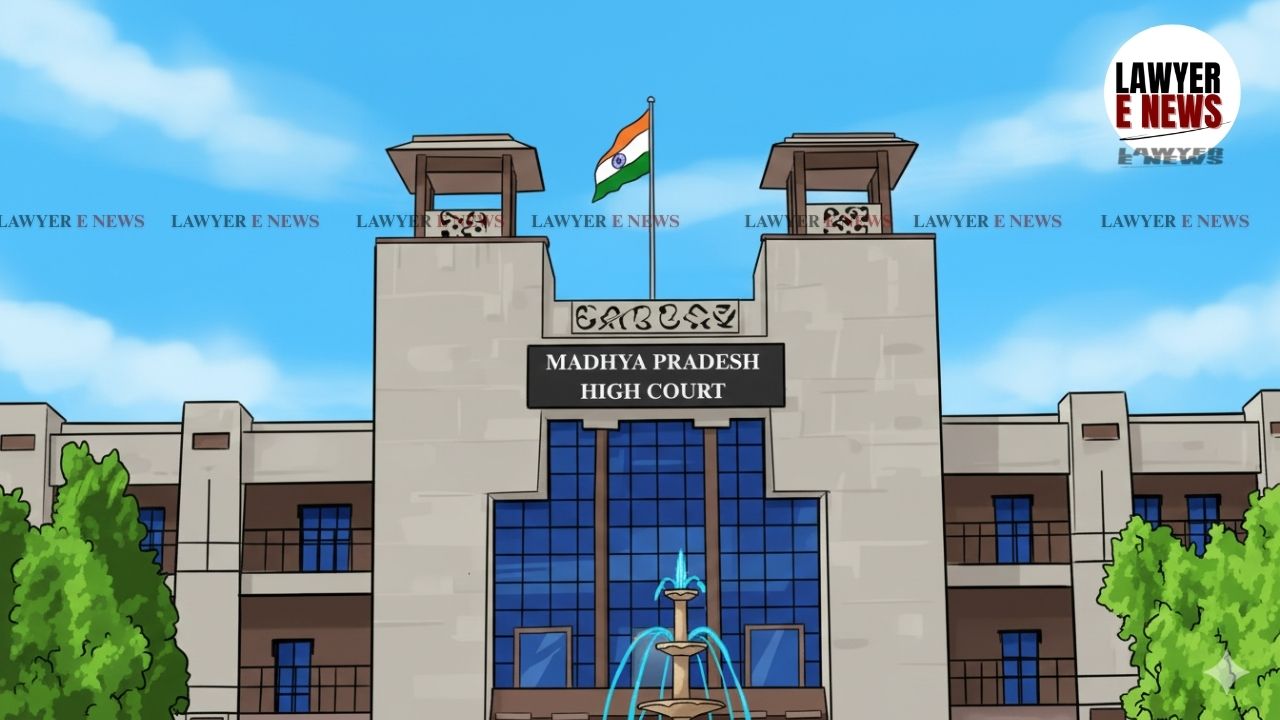
The appellant in the present case was apprehended at a railway station in June 1996 by a police official who had received confidential information. Upon search, 100 grams of smack (heroin) was recovered from a water bottle being carried by the appellant. The trial court convicted the appellant in 1997 under Sections 8 and 21 of the NDPS Act, sentencing him to 14 years of rigorous imprisonment, a decision later affirmed by the Madhya Pradesh High Court in 2011.
The primary question before the court was whether a conviction under the NDPS Act could be sustained solely on the testimony of police officials when independent public witnesses to the seizure turned hostile. The court was also called upon to determine if the search of a water bottle required compliance with Section 50 of the NDPS Act regarding personal search. Further, the bench examined whether drawing representative samples at the spot instead of before a Magistrate violated Section 52A of the Act, and whether the appellant was entitled to a reduced sentence under the 2001 Amendment Act.
Official Witnesses Reliable Despite Hostile Independent Witnesses
Addressing the appellant's contention that the case was doubtful because independent pancha witnesses turned hostile, the Supreme Court firmly rejected the argument. The bench clarified that the testimony of police officials carries substantial weight if found to be trustworthy and cannot be discarded merely due to their official status.
Relying on the precedent in Rizwan Khan v. State of Chhattisgarh, the court noted that the examination of independent witnesses is not an indispensable requirement for a criminal conviction. The court observed that the police witnesses in this case had uniformly deposed about the search and recovery, and the defence failed to discredit their version during cross-examination.
Section 50 Applies Only To Personal Search, Not Containers
The appellant heavily contested the search on the ground that he was not effectively informed of his right to be searched before a Gazetted Officer or Magistrate, as mandated by Section 50 of the NDPS Act. The Supreme Court dismissed this challenge, stating that Section 50 was entirely inapplicable to the facts of the case.
The bench reiterated the established legal position from State of Punjab v. Baldev Singh and State of H.P. v. Pawan Kumar, holding that the strict protections of Section 50 are triggered only during a bodily search of the accused person. Since the contraband in the present case was recovered from a water bottle carried by the appellant, the procedural rigours of a personal search were not attracted.
Non-Compliance With Section 52A Not Fatal To Prosecution
The most crucial aspect of the ruling dealt with the appellant's argument that the representative drug samples were drawn by the Investigating Officer on the spot, rather than in the presence of a Magistrate as required under Section 52A of the NDPS Act. The bench held that such an omission does not automatically entitle an accused to an acquittal.
The court clarified that where non-compliance with Section 52A is alleged, the prosecution must either prove substantial compliance or demonstrate that the non-compliance did not cause prejudice to the accused. Relying on the recent judgment in Narcotics Control Bureau v. Kashif, the bench observed that panchnamas, seizure memos, and arrest memos prepared on the spot remain primary evidence under Section 62 of the Evidence Act.
"The fact that the samples were not drawn in the presence of a Magistrate is merely a procedural irregularity and cannot be ground for acquittal."
2001 Amendment Act Inapplicable To Concluded Trials
The appellant alternatively argued that he should be granted the benefit of the quantity-based sentencing regime introduced by the Narcotic Drugs and Psychotropic Substances Amendment Act, 2001, as the 100 grams of smack recovered from him fell below the commercial quantity.
The bench rejected this plea, citing Section 41 of the 2001 Amendment Act and the precedent in Basheer v. State of Kerala. The court pointed out that the amendment explicitly excluded cases where the trial had already concluded and the matter was pending in appeal before October 2, 2001. Since the appellant's trial had ended in 1997, the unamended statutory provisions applied to his case.
Sentence Reduced To Statutory Minimum
While affirming the conviction, the Supreme Court found merit in reducing the quantum of punishment. The bench observed that the unamended Section 21 of the NDPS Act prescribed a minimum sentence of 10 years. Noting the absence of any aggravating circumstances to justify the higher sentence of 14 years originally awarded, the court intervened to modify the punishment.
The Supreme Court partly allowed the appeals, upholding the conviction but reducing the substantive sentence from 14 years to the minimum prescribed 10 years of rigorous imprisonment. The fine of Rs. 1 Lakh imposed by the trial court was maintained, with a default stipulation of one additional year of imprisonment. The appellant was directed to be taken into custody immediately to serve out the remainder of his sentence.
Date of Decision: 21st July 2026