
-
by kapil
17 October 2026 7:51 AM







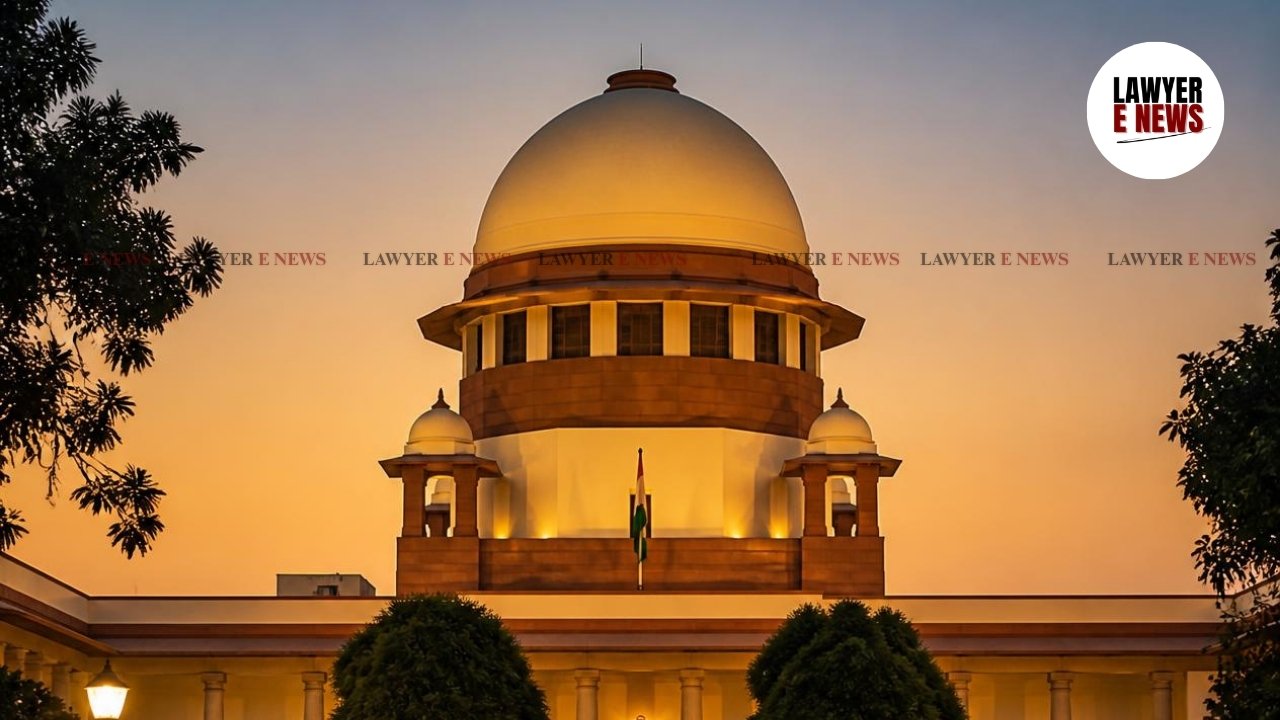
"The judicial service is not service in the sense of 'employment'. The Judges are not employees. As members of the judiciary, they exercise the sovereign judicial power of the State." Supreme Court, in a significant order dated September 1, 2026, has directed States that have consented to the proposal to immediately initiate the process of enhancing the age of superannuation for members of the District Judiciary from 60 to 62 years.
A bench comprising the Hon’ble Chief Justice, Justice Joymalya Bagchi, and Justice V. Mohana observed that the enhancement is a "crying need of the hour" to arrest the loss of experienced judicial talent and bridge the widening gap between the sanctioned and working strength of judicial officers across the country.
Judiciary As A Sovereign Pillar
The Court reiterated the foundational principle that judicial service is distinct from the administrative services of the State. Drawing upon the Constitution of India, the bench underscored that judges are not "employees" in the conventional sense but are holders of public office exercising the sovereign judicial power of the State. The Court emphasized that any attempt to draw parity between judicial officers and other administrative staff is constitutionally and functionally flawed, rejecting concerns regarding "heartburn" among other state employees as "wholly unfounded" and "extraneous" to the efficient administration of justice.
Addressing Financial And Administrative Concerns
Addressing the contention raised by several States regarding the additional burden on the State exchequer, the Court held such concerns to be misconceived. It observed that the cost of training new recruits and the lower disposal rates associated with attrition far outweigh the expenditure of retaining experienced judges for an additional two years. By permitting officers to serve until 62, the State effectively postpones the payment of post-retiral dues, thereby balancing fiscal responsibility with the imperative of judicial efficiency.
Assessment Of Suitability And Performance
While endorsing the move, the Court acknowledged the merit in the suggestion of several High Courts to implement a robust screening mechanism. The bench directed that the extension in service to 62 years shall not be an automatic benefit but shall remain subject to a rigorous assessment of performance and integrity of the judicial officer upon attaining the age of 60. This, the Court noted, effectively balances the retention of institutional memory with the necessity of removing "deadwood" from the cadre.
The Court directed Chhattisgarh, Karnataka, Madhya Pradesh, Maharashtra, Sikkim, Tamil Nadu, and West Bengal to amend their respective service rules within two months. For judicial officers in these States who attained the age of 60 on or after March 31, 2026, the Court granted an option to re-join service, provided they have not accepted other employment, with full consequential benefits of pay and seniority. All other States and Union Territories have been granted a period of two weeks to reconsider their earlier refusals and submit a compliance report in light of the Court's observations.
Date of Decision: 01 September 2026