-
by sayum
13 August 2026 1:48 PM







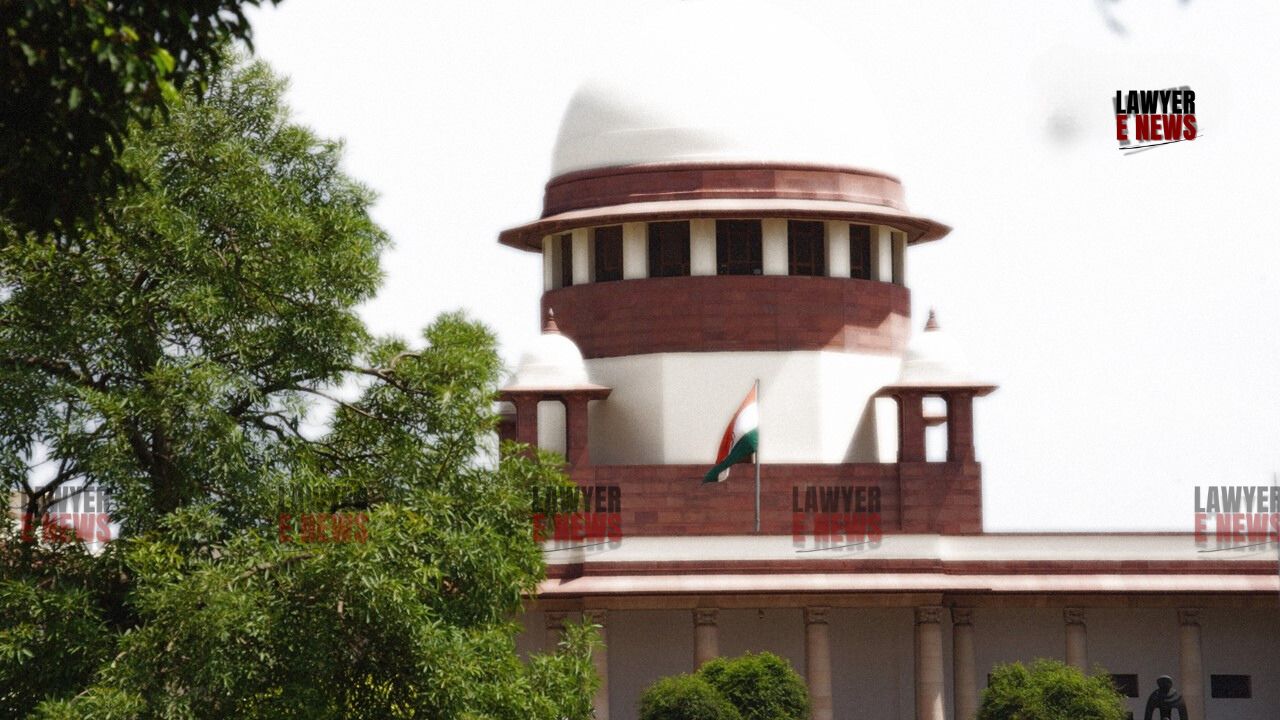
Supreme Court of India quashing the charges against the appellant, Laxmi Das, under Section 306 of the Indian Penal Code (IPC) for abetment of suicide. The case revolved around allegations that Laxmi Das, the mother of the deceased’s lover, had indirectly instigated the deceased, Souma Pal, to take her own life by disapproving of the relationship.
The Court ruled that there was no evidence of direct or indirect instigation, conspiracy, or intentional aid on the part of the appellant, and that her disapproval of the relationship did not meet the legal threshold for abetment of suicide under Sections 306 and 107 IPC. The judgment highlights the necessity of proving specific acts of instigation or mens rea for establishing abetment in suicide cases.
The appellant, Laxmi Das, is the mother of Babu Das, who was allegedly in a romantic relationship with the deceased, Souma Pal. The deceased’s family disapproved of the relationship and wanted her to focus on her studies. On July 3, 2008, Souma Pal was found dead near railway tracks, with the postmortem revealing that her death resulted from injuries caused by jumping in front of a train.
An FIR was lodged by the deceased’s uncle, alleging that Laxmi Das, her husband, and elder son (collectively "the accused") had abetted the suicide by disapproving of the relationship and refusing to cooperate in finding Souma after she went missing. A chargesheet was filed under Sections 306 and 109 IPC, with allegations that Laxmi Das had insulted and disapproved of Souma, causing her emotional distress.
The trial court rejected the appellant’s application for discharge under Section 227 of the Code of Criminal Procedure (CrPC), and the Calcutta High Court, in 2014, dismissed her plea for quashing the charges. Aggrieved, Laxmi Das approached the Supreme Court.
The Supreme Court examined the allegations against Laxmi Das under the lens of Sections 306 and 107 IPC. It reiterated that abetment of suicide requires clear evidence of direct or indirect instigation, conspiracy, or intentional aid, along with mens rea to abet the act.
"Disapproval or Casual Remarks Do Not Constitute Abetment"
The Court held that even if Laxmi Das disapproved of her son’s relationship or made remarks to discourage the marriage, such conduct does not rise to the level of abetment. The Court stated:
"A mere reprimand, casual remark, or expression of disapproval cannot be construed as instigation. For abetment to be proven, there must be a clear and proximate link between the accused’s actions and the deceased’s decision to commit suicide."
"No Direct Instigation or Mens Rea Proven"
Referring to Section 107 IPC, the Court highlighted the need for evidence of direct or indirect instigation or conspiracy:
"To constitute abetment, there must be intentional acts that directly or indirectly provoke or incite the victim to take their own life. The appellant’s actions, even if true, do not reveal any intent or circumstances that compelled the deceased to commit suicide."
The Court relied on precedents such as Ramesh Kumar v. State of Chhattisgarh (2001) and Pawan Kumar v. State of Himachal Pradesh (2017), which emphasize that abetment requires a positive act by the accused that leaves the victim with no option but to take their own life.
The Court noted that the deceased’s family had already opposed the relationship, and the evidence did not establish that the appellant had taken any action that directly led to the suicide. It found the allegations too remote to sustain a charge under Section 306 IPC:
"Even if the appellant expressed her disapproval of the marriage, it does not amount to instigation or create a situation where the deceased was left with no alternative but to commit suicide."
The Supreme Court quashed the charges against Laxmi Das under Section 306 IPC, emphasizing that the evidence on record failed to establish her involvement in abetting the deceased’s suicide. The Court observed that the appellant’s alleged remarks, even if taken at face value, were insufficient to sustain the charges.
The Court clarified that the present decision was confined to the appellant, and the trial against the deceased’s lover, Babu Das, could continue.
The Supreme Court’s ruling in Laxmi Das v. The State of West Bengal & Ors. is a reaffirmation of the principle that criminal liability for abetment of suicide cannot be presumed without clear and proximate evidence of instigation or mens rea. By quashing the charges against Laxmi Das, the Court has reinforced the need for a rigorous evidentiary standard in cases involving Section 306 IPC, ensuring that criminal law is not misused for settling personal grievances or imposing moral judgments.
Date of decision : January 21, 2025