-
by sayum
27 August 2026 7:40 AM







“The Act creates a pool of professionals; it does not confer a right to public employment” – Supreme Court dismisses plea of B.Pharma and M.Pharma holders excluded from Bihar Pharmacist recruitment
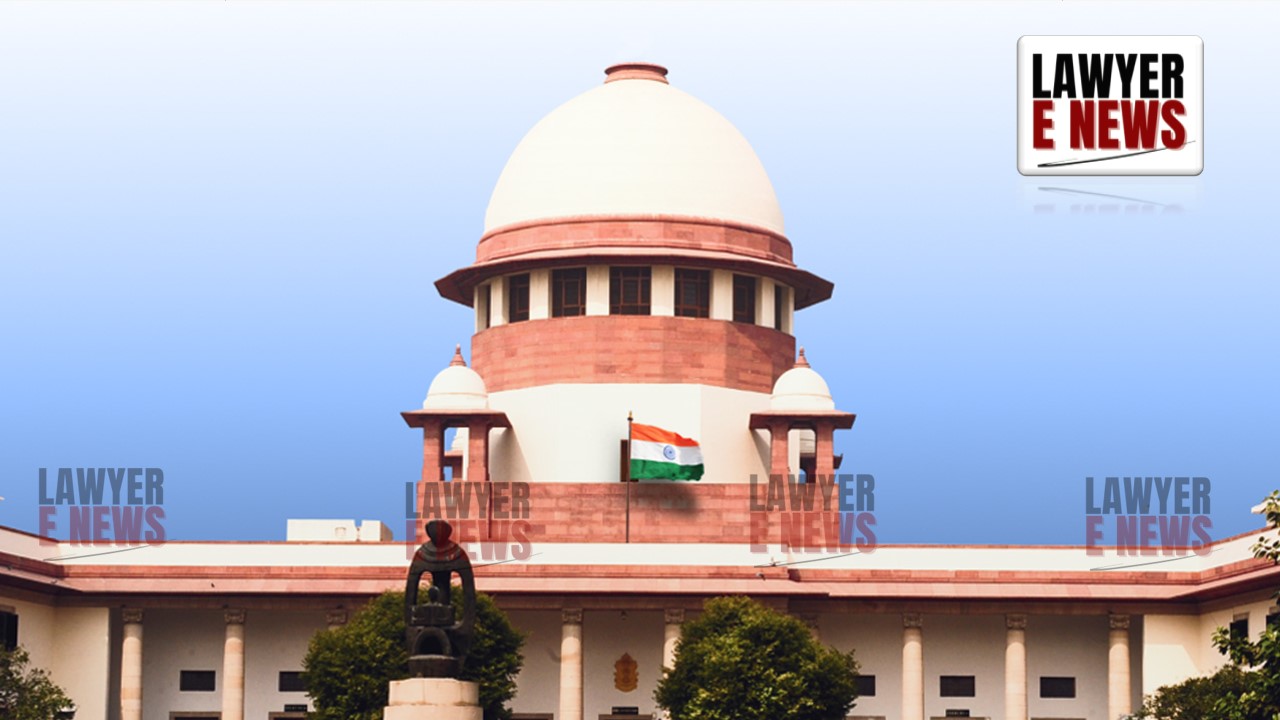
In a significant judgment on January 16, 2026, the Supreme Court of India upheld the constitutional validity of the Bihar Pharmacists Cadre Rules, 2014 (as amended in 2024), ruling that the State Government is within its rights to prescribe ‘Diploma in Pharmacy’ as an essential qualification for the post of Pharmacist (basic category) under its health services. The Court emphasized that public employment is a matter of State policy, and “registration as a pharmacist does not confer a right to appointment in government service.”
Delivering its decision in Md. Firoz Mansuri & Others vs State of Bihar & Others, a bench of Justices Satish Chandra Sharma and M.M. Sundresh rejected the challenge raised by B.Pharma and M.Pharma holders who did not possess a Diploma in Pharmacy but were seeking inclusion in Bihar's public recruitment process for pharmacists.
The Court declared: “Once repugnancy is ruled out, the determination of eligibility criteria squarely falls within the domain of the employer.”
“Fixation of qualifications is a matter of policy – Courts cannot substitute employer’s discretion”
At the heart of the dispute was the State of Bihar's decision to mandate Diploma in Pharmacy as the minimum qualification for appointment, while allowing degree-holders (B.Pharma/M.Pharma) to apply only if they also possess a diploma.
The appellants challenged this prescription on multiple grounds, including alleged repugnancy with the Pharmacy Act, 1948 and Pharmacy Practice Regulations, 2015, which treat both diploma and degree holders as eligible for registration. They argued that excluding degree-holders from public posts despite their registration violated Articles 14 and 16 and was arbitrary and discriminatory.
However, the Supreme Court categorically rejected this argument, stating: “The Pharmacy Act regulates the profession of pharmacy. It does not mandate that every registered pharmacist must be appointed to a government post.”
The Court further noted that no repugnancy arises unless compliance with one law leads to disobedience of another, and clarified:
“The Act and the Regulations certify who is technically competent to practice as a pharmacist, while the Cadre Rules reflect the State’s policy choice in selecting from the broader pool for public employment.”
“A Degree Doesn’t Presuppose a Diploma” – Supreme Court Refuses to Equate Higher Qualification with Basic Eligibility
One of the core contentions by the appellants was that B.Pharma and M.Pharma are higher qualifications, and therefore, possession of these degrees must be presumed to include the foundational diploma.
The Court refused to accept this logic, holding: “Merely because there is provision for lateral entry from diploma to degree, it does not render the degree an in-line higher qualification presupposing diploma. A qualification in one stream does not automatically translate to equivalence in another.”
It was further clarified that the Diploma in Pharmacy and B.Pharma courses are structurally distinct, with different objectives, and cater to different employment markets. While diploma holders undergo 500 hours of compulsory hospital-based training, B.Pharma students have only 150 hours of optional practical training, which can be completed in industry or other settings.
This hospital-based training, the Court found, had a rational nexus with the public interest objective of ensuring effective delivery of health services through pharmacists in public hospitals and primary healthcare centres.
“No Violation of Equality – Degree Holders Have Broader Avenues, State Can Protect Diploma Cadre”
Addressing the plea of discrimination, the Court underscored that degree holders have access to wider employment opportunities including in private industry, academia, and higher-level government posts, whereas diploma holders are largely limited to basic posts in public service.
In the words of the Court: “The decision to offer the post of Pharmacist only to Diploma holders does not amount to such a prohibition against Degree holders that it may allow us to invoke Articles 14 and 16… No disproportionate harm is caused.”
The Court further reinforced its position by citing its own precedents in Zahoor Ahmad Rather, Jyoti K.K., and Anita, reiterating the principle that:
“Courts cannot expand eligibility by interpretative process. The prescription of qualifications is a policy decision of the employer and must be respected unless it is arbitrary, irrational, or violative of constitutional rights.”
The Court emphasized: “The power of judicial review does not extend to rewriting service rules, determining equivalence of qualifications, or substituting judicial opinion in place of administrative wisdom.”
"Diploma Requirement Is Not Arbitrary – Practical Training Focus Justifies State’s Classification"
In rejecting the appellants’ argument that the Diploma requirement was arbitrary and disproportionate, the Supreme Court found a clear rationale behind the State’s decision.
The Court noted: “The State has articulated its rationale with reference to differences in course structure and the comparatively limited avenues of employment available to Diploma holders… The State has merely identified a narrower catchment of candidates it considers most suitable for a particular purpose, from within the larger pool of registered pharmacists.”
It also highlighted that graduate and postgraduate degree holders were not completely excluded, and could still apply provided they also possess the diploma, thereby eliminating any claim of absolute exclusion or blanket discrimination.
No Conflict Between Central and State Laws – “Regulation of Profession Is Not Regulation of Recruitment”
The Pharmacy Council of India (PCI) had argued that the State's Cadre Rules were repugnant to the central law, i.e., the Pharmacy Act and the 2015 Pharmacy Practice Regulations.
The Supreme Court decisively ruled out any repugnancy: “Repugnancy arises only where compliance with one law necessarily results in disobedience of another… The Cadre Rules and the Pharmacy Act operate in different fields.”
The Court drew a constitutional distinction: The Pharmacy Act governs who may practice pharmacy;
The Cadre Rules govern who may be recruited into public employment as a pharmacist.
Thus, registration under the Pharmacy Act creates eligibility to practice, but does not translate into a right to be appointed in public service.
Supreme Court Upholds State's Policy Autonomy in Public Recruitment
In conclusion, the Supreme Court has once again reaffirmed the legal principle that States, as employers, enjoy broad autonomy in setting eligibility criteria for public posts, provided such criteria are not arbitrary or irrational.
The Court found that the requirement of Diploma in Pharmacy for appointment as Pharmacist in Bihar's public health service is neither exclusionary nor discriminatory, but a constitutionally permissible classification grounded in public interest and administrative rationality.
“The appeals are dismissed. The prescription of Diploma as the essential qualification under the Bihar Pharmacist Cadre Rules, 2014 (as amended in 2024) is constitutionally valid.”
Date of Decision: January 16, 2026