-
by sayum
24 August 2026 3:22 PM







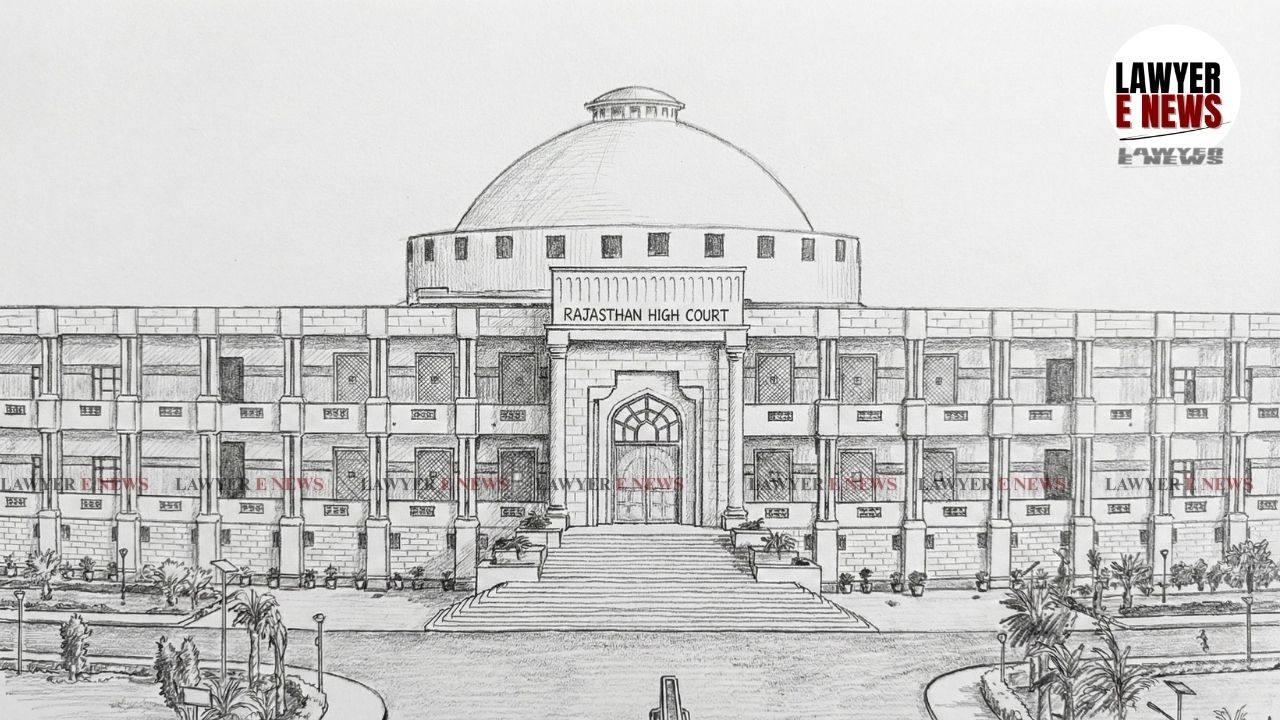
In a strongly-worded judgment overturning a 12-year-old conviction, the Rajasthan High Court ruled that demanding money, without more, cannot constitute abetment to suicide under Section 306 of the Indian Penal Code, especially in the absence of evidence showing intentional instigation. Justice Sandeep Shah, while acquitting Hanuman and Ashok, observed that the suicide note allegedly left by the deceased was of highly doubtful authenticity, and the investigation failed to establish any direct or proximate link between the accused and the act of suicide.
The Court set aside the conviction imposed by the Additional Sessions Judge, Nohar, in 2013, where the two accused were sentenced to seven years’ rigorous imprisonment on the allegation that they abetted the suicide of Manoj Kumar, a local shopkeeper.
“The mere act of demanding repayment, even if harsh or repeated, cannot be stretched into criminal abetment unless the prosecution proves a clear link of instigation and mental coercion. That link is entirely missing here,” the Court remarked.
“Suicide Note Recovered One Day After Death, No Police Witness, No Sealing—Recovery Appears Fabricated”: Court Discards Crucial Evidence
A central piece of the prosecution’s case—the alleged three-page suicide note—was held unreliable by the Court due to the suspicious circumstances surrounding its recovery. According to police, the note was discovered inside a locked drawer at the deceased’s shop a day after the suicide, but the Court noted glaring lapses:
“There was no seal placed on the premises by police after the body was recovered, the keys remained with family members, and no proper panch witness attested the recovery on-site. Signatures were later obtained at the police station, making the entire recovery process appear stage-managed.”
Justice Shah also pointed out that the second page of the suicide note bore a different handwriting style, and the Forensic Science Laboratory (FSL) was unable to confirm its authorship due to lack of proper specimen documents.
“There is no continuity between pages, the ink and letter formation of Page 2 clearly differ, and no explanation is given as to why the FSL was not supplied with admitted handwriting samples. The prosecution chose to avoid scrutiny, and this Court cannot endorse such negligence,” the Court noted.
“Even If Suicide Note Is Accepted, There Is No Mens Rea, No Instigation, No Proximate Cause”: High Court Applies Supreme Court Tests for Section 306 IPC
The High Court meticulously applied settled principles from Supreme Court judgments while deciding the scope of Section 306 IPC. Referring to Ramesh Kumar v. State of Chhattisgarh (2001) 9 SCC 618, the Court emphasised:
“To constitute abetment, there must be active suggestion or encouragement that leads the victim to end his life. Mere harassment or financial dispute is not enough.”
Justice Shah pointed out that even if the suicide note was taken at face value, it only alleged that the accused demanded money allegedly lost during betting.
“Mere demand of money, even if in rude terms, cannot be equated with mental provocation unless accompanied by threats, coercion, or a persistent campaign to push the victim into helplessness. None of these are present here.”
The Court also cited the recent judgment in Ayyub v. State of U.P. (2025 INSC 168), where it was held that:
“Abetment requires a live link between the accused’s act and the suicide—it must be the spark that lights the fire, not just background smoke.”
“Deceased Had Business Losses, Gambling Habits, and Drug Use—No Complaint Ever Made Against Accused”: Circumstances Did Not Support Conviction
The High Court further highlighted that the deceased was himself undergoing personal and financial turmoil, including drug addiction, gambling debts, and repeated business failures.
PW-2 (wife of the deceased) admitted during cross-examination that her husband was involved in betting and had borrowed money from multiple sources. She also conceded that no complaint had ever been filed by her husband against Hanuman or Ashok, nor had there been any police diary entry recording harassment.
“There is no evidence of continuous taunting, no threats, no sudden triggering event, no messages or calls—merely an unverified note which may have been manipulated. That cannot form the foundation of a conviction under Section 306,” the Court observed.
“Investigation Was Sloppy, Witnesses Were Interested, and Trial Court Failed to Evaluate Evidence Properly”: High Court Slams Prosecution
In a scathing critique of the trial proceedings, Justice Shah noted that the trial court relied solely on a disputed suicide note and interested witnesses, without any corroborative evidence.
Key witnesses, including PW-1 and PW-4, admitted that they signed seizure memos not at the scene but later at the police station. The handwriting was not proved, and the chain of custody for the suicide note was broken.
“The prosecution failed to discharge the heavy burden required in cases of abetment to suicide. The conviction, therefore, is not merely unsafe—it is legally unsustainable,” the Court ruled, ordering acquittal of both accused and discharge of their bail bonds.
This judgment marks an emphatic reiteration of the principle that Section 306 IPC cannot be invoked lightly. The Rajasthan High Court has reaffirmed that abetment must be intentional, proximate, and active, and that mere money disputes or personal vendettas do not amount to criminal instigation. By discarding a suspiciously recovered suicide note and rejecting weak circumstantial evidence, the Court has sent a clear message on the need for rigorous evidentiary standards, especially in cases involving loss of life and serious criminal penalties.
“The rule of law demands that courts convict on proof, not presumption—and that justice not be sacrificed to sentiment,” the Court concluded.
Date of Decision: 14 November 2025