-
by sayum
01 August 2026 2:00 PM







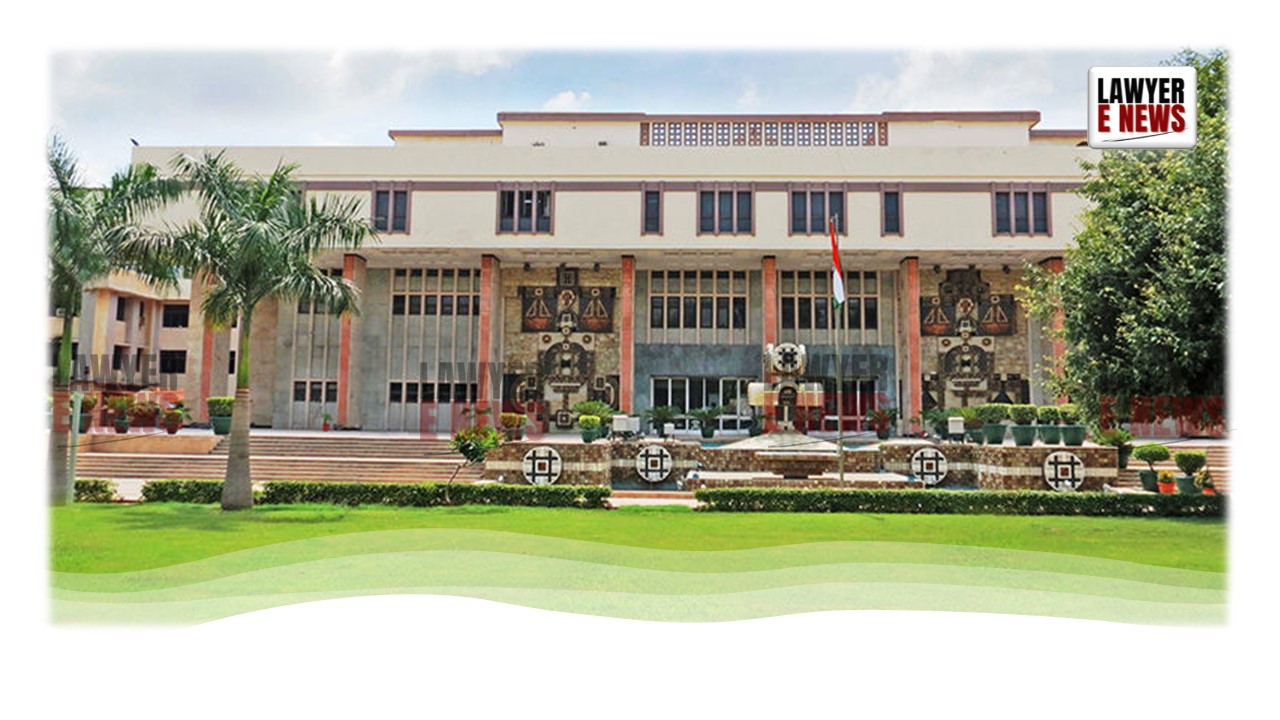
In a landmark judgment, the Delhi High Court, comprising Justice Yashwant Varma and Justice Ravinder Dudeja, dismissed a series of writ petitions challenging the validity of reassessment notices issued by Jurisdictional Assessing Officers (JAOs) post-adoption of the Faceless Reassessment Scheme, 2022. The decision, which addressed a complex interplay between traditional jurisdictional powers and the modern faceless assessment regime, reaffirms the concurrent jurisdiction of the JAO and the National Faceless Assessment Centre (NFAC).
The batch of writ petitions primarily concerned whether reassessment notices issued by JAOs, rather than being processed through the faceless framework set forth under Sections 144B and 151A of the Income Tax Act, 1961, were valid. The petitions were brought forward by various entities and individuals, including T.K.S. Builders Pvt. Ltd., GDR Finance and Leasing Private Limited, Sulochna Goel, and Bishamber Dayal Chander Mohan.
The reassessment notices in question were issued following the Supreme Court's judgment in Union of India v. Ashish Agarwal, which addressed the validity of notices issued after the introduction of Finance Act, 2021 but before the faceless assessment regime came into full force. The Supreme Court had modified High Court judgments to deem these notices as show-cause notices under Section 148A(b) of the Act.
The central issue before the Delhi High Court was whether the JAOs retained the authority to issue reassessment notices under Section 148 after the implementation of the Faceless Reassessment Scheme, which aimed to eliminate direct human interface through a system of automated allocation.
The petitioners contended that the JAO's issuance of reassessment notices contravened the Faceless Reassessment Scheme, 2022, which mandates automated allocation and faceless processing to maintain neutrality and efficiency. They argued that the scheme exclusively vested authority with NFAC and precluded the JAO from independently initiating reassessment proceedings.
Several High Courts, including those of Telangana, Bombay, Gauhati, and Punjab & Haryana, had previously ruled that reassessment notices must follow the faceless protocol, thus invalidating notices issued by JAOs. For instance, the Telangana High Court, in Kankanala Ravindra Reddy v. Income Tax Officer, and the Bombay High Court, in Hexaware Technologies Ltd. v. Assistant Commissioner of Income Tax, concluded that notices under Section 148 needed to be issued through an automated system as per the faceless scheme.
The Delhi High Court undertook a comprehensive analysis of the legislative framework and various judicial interpretations. The judgment delved into the history and rationale behind Sections 144B and 151A and the statutory provisions for automated allocation and risk management. The Court emphasized that the faceless scheme was designed to minimize human interface, but not to completely exclude the JAO from the reassessment process.
Concurrent Jurisdiction Affirmed: The Court concluded that JAOs continue to hold concurrent jurisdiction to issue reassessment notices and initiate proceedings. The judgment underscored that while the faceless assessment scheme modernizes and centralizes processes, it does not completely nullify the powers of JAOs. This concurrent jurisdiction aligns with legislative intent and ensures that the assessment process remains adaptable, transparent, and comprehensive.
Procedural and Substantive Scope of Section 144B: The Court pointed out that Section 144B is primarily procedural, detailing the steps involved in faceless assessments but not serving as the sole authority for reassessment. The judgment stated that the faceless scheme's main aim is to allocate cases without human intervention, reducing biases and potential misconduct, but it did not intend to eliminate the role of the JAO in initiating such processes.
Detailed Interpretation of the Faceless Reassessment Scheme: The Court examined Clause 3 of the Faceless Reassessment Scheme, which outlines that assessments, reassessments, or recomputations under Section 147 and notices under Section 148 should be processed through automated allocation. However, the judgment clarified that "automated allocation" refers to the process of assigning cases randomly to officers rather than the selection of cases themselves. The Court held that JAOs are permitted to issue notices when information is flagged by the Risk Management Strategy (RMS) or other data analysis tools, provided that subsequent assessments are conducted in a faceless manner by NFAC.
The judgment rejected the view expressed by the Bombay High Court in Hexaware Technologies and the High Courts of Telangana, Gauhati, and Punjab & Haryana, which held that JAOs were stripped of authority under the faceless scheme. The Delhi High Court pointed out that those judgments did not sufficiently consider notifications conferring concurrent jurisdiction and the various sources of information JAOs could access independently.
The judgment highlighted the RMS's role in flagging cases based on risk parameters and the Insight Portal's function in providing comprehensive taxpayer data to JAOs. This mechanism allows JAOs to initiate reassessment based on credible, independent information, underscoring their retained jurisdiction within the broader framework of faceless assessment.
The Delhi High Court’s decision has significant implications for tax administration and taxpayers. By upholding the JAO's power to issue reassessment notices, the judgment ensures that procedural flexibility is maintained while adhering to the principles of efficiency and transparency. The ruling also provides a clear interpretation of how concurrent jurisdiction between the JAO and NFAC operates under the law.
The Court dismissed the writ petitions challenging the validity of the reassessment notices, affirming that the notices issued by JAOs were valid. The judgment concluded that the petitioners could raise any other objections to the initiation of reassessment in separate, appropriate proceedings.
“The distribution of functions between the JAO and NFAC is complementary and concurrent, as contemplated under the various schemes and statutory provisions. This balanced distribution underscores the legislative intent to create a seamless integration of traditional and faceless assessment mechanisms within a unified statutory framework.”
The judgment sets a precedent that could impact future cases involving the interpretation of faceless assessment protocols and jurisdictional powers. It provides a blueprint for how reassessment and assessment functions can be effectively harmonized under the dual system of the JAO and NFAC. The ruling also signals that procedural reforms should be implemented with a balanced approach, ensuring that technological advancements do not override statutory provisions and fundamental legal principles.
The Delhi High Court's ruling reinforces the legislative framework supporting concurrent jurisdiction between JAOs and the faceless assessment mechanism. It highlights that while faceless assessment schemes aim to reduce direct interaction, the role of traditional jurisdictional authorities remains vital for maintaining a comprehensive, balanced, and fair tax assessment system.
Date of Decision: October 28, 2024