Employees Cannot Pick Favourable Terms and Reject the Rest: Bombay High Court Upholds SIDBI’s Cut-Off Date for Pension to CPF Optees Rules of the Game Were Never Changed: Delhi High Court Upholds CSIR’s Power to Prescribe Minimum Threshold in CASE-2023 Resignation Does Not Forfeit Earned Pension: Calcutta High Court Declares Company Superannuation Benefit as ‘Wages’ Under Law Fraud Vitiates Everything—Stranger Can File Independent Suit Against Compromise Decree: Bombay High Court Refuses to Reject 49-Year-Old Challenge at Threshold Mere Long Possession By One Co-Owner Does Not Destroy The Co-Ownership Right Of The Other: Madras High Court State Cannot Hide Behind An Illegal Undertaking: Punjab & Haryana High Court Questions Denial Of Retrospective Regularization Article 21-A Cannot Be Held Hostage to Transfer Preferences: Allahabad High Court Upholds Teacher Redeployment to Enforce Pupil–Teacher Ratio Arbitrator Cannot Rewrite Contract Or Travel Beyond Pleadings: Punjab & Haryana High Court Quashes ₹5.18 Crore Award Director’ in GeM Clause 29 Does Not Mean ‘Independent Director’: Gujarat High Court Sets Aside Technical Disqualification Section 25(3) Is Sacrosanct – Removal of a Trademark Cannot Rest on a Defective Notice: Delhi High Court Not Every Broken Promise Is Rape: Delhi High Court Draws Clear Line Between ‘Suspicion’ and ‘Grave Suspicion’ in False Promise to Marry Case Section 37 Is Not A Second Appeal On Merits: Delhi High Court Refuses To Re-Appreciate Evidence In Challenge To Arbitral Award Recovery After Retirement Is Clearly Impermissible: Bombay High Court Shields Retired Teacher From ₹2.80 Lakh Salary Recovery Paying Tax Does Not Legalise Illegality: Bombay High Court Refuses to Shield Alleged Unauthorized Structure Beneficial Pension Scheme Cannot Be Defeated By Cut-Off Dates: Andhra Pradesh High Court Directs EPFO To Follow Sunil Kumar B. Guidelines On Higher Pension Claims Equity Aids the Vigilant, Not Those Who Sleep Over Their Rights: Punjab & Haryana High Court Refuses to Revive 36-Year-Old Pay Parity Claim Students Cannot Be Penalised For Legislative Invalidity: Supreme Court Protects Degrees Granted Before 2005 Yash Pal Verdict Restructuring Without Fulfilment of Conditions Cannot Defeat Insolvency: Supreme Court Reaffirms Default as the Sole Trigger Under Section 7 IBC Section 100-A CPC Slams The Door On Intra-Court Appeals In RERA Matters”: Allahabad High Court Declares Special Appeal Not Maintainable Mental Distance Between ‘May Be’ and ‘Must Be’ Is Long: Patna High Court Acquits Six in Murder Case Built on Broken Chain of Circumstances Where Corruption Takes Roots, Rule of Law Is Replaced by Rule of Transaction: Punjab & Haryana High Court Denies Bail to DIG Harcharan Singh Bhullar Mere Voter List and Corrected SSC Certificate Cannot Prove Paternity: Andhra Pradesh High Court Rejects 21-Year-Old Bid for DNA Test in Partition Appeal Section 147 NI Act Makes Offence Compoundable At Any Stage: Karnataka High Court Sets Aside Concurrent Convictions in Cheque Bounce Case After Settlement Bald Allegations of Adultery Based on Suspicion Cannot Dissolve a Marriage: Jharkhand High Court Once a Document Is Admitted in Evidence, Its Stamp Defect Cannot Be Reopened: Madras High Court

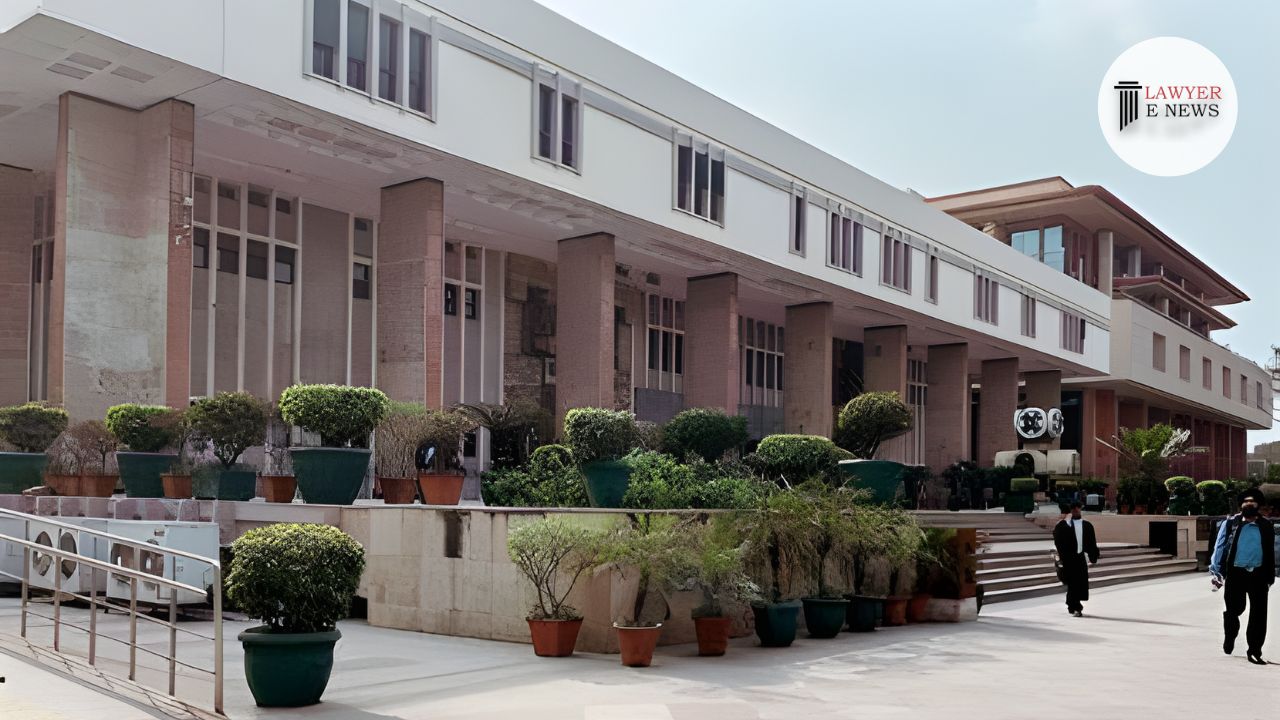
Delhi High Court Upholds Lawful Custody in Tihar Jail Cases: Asserts Custody Continuum in Absence of Physical Court Production

07 May 2024 8:19 AM

By: Admin


In a landmark judgment, the Delhi High Court has dismissed three habeas corpus petitions pertaining to the alleged illegal detention of individuals in Tihar Jail, underlining the principle of “custody continuum” in legal proceedings. The judgment, delivered in the cases of W.P.(CRL) 3641/2023, 3657/2023, and 3662/2023, addressed key issues surrounding the Enforcement Case Information Report No. ECIR/STF/02/2022.

The petitioners, held In Tihar Jail, challenged their detention due to the absence of a judicial remand order. They claimed a violation of their fundamental rights under Articles 14, 21, and 22 of the Constitution, arguing that their detention had become patently illegal due to the lack of a judicial custody order.

In a detailed observation, the court noted, “When the accused is not produced before such a Court on the date of hearing and no production warrant is issued for the said accused on the same date of hearing but is issued subsequently, the custody of the accused will not be in continuum and for the break period, it may be illegal.” This critical remark forms the crux of the court’s decision, emphasizing the legal framework governing custody and remand.

The respondents, represented by the Enforcement Directorate (ED), contended that the custody was lawful and in compliance with procedural norms. They argued that the issuance of valid production warrants and the status of judicial custody negated any claim of illegal detention.

The High Court, after extensive review of the submissions and relevant legal provisions under Sections 167 and 309 of the Code of Criminal Procedure (Cr.P.C.), upheld the lawfulness of the detention. The bench, comprising Hon’ble Mr. Justice Suresh Kumar Kait and Hon’ble Ms. Justice Shalinder Kaur, observed, “The learned ASJ-04 has rightly issued production warrants against the petitioners on 07.12.2023 for production of the petitioners and the petitioners remain in lawful custody of learned ASJ-04.”

Date of Decision: December 19, 2023

NITIN GARG VS UNION OF INDIA & ANR

 

Latest Legal News