Readiness and Willingness Under Section 16(c) Is Not a Ritualistic Phrase — Plaintiff Must Prove It With Substance, Not Just Words: Karnataka High Court FIR in Disproportionate Assets Case Quashed: Patna High Court Slams SP for 'Non-Application of Mind' and 'Absence of Credible Source Information' Ownership of Vehicle Linked to Commercial Quantity of Heroin – Custodial Interrogation Necessary: Punjab & Haryana High Court Denies Anticipatory Bail under Section 482 BNSS Death Caused by Rash Driving Is Not a Private Dispute — No FIR Quashing on Basis of Compromise in Section 106 BNS Cases: Punjab & Haryana High Court No Bank Can Override Court Orders: Rajasthan High Court Slams Axis Bank for Unauthorized Withdrawal from Court-Ordered FD" Indian Courts Cannot Invalidate Foreign Arbitral Awards Passed Under Foreign Law: Madhya Pradesh High Court Enforces Texas-Based Award Despite Commercial Court’s Contrary Decree Sudden Quarrel over Mound of Earth — Not Murder but Culpable Homicide: Allahabad High Court Calling Wife by Her Caste Name in Public Just Before Suicide is Immediate Cause of Self-Immolation: Madras High Court Upholds Husband’s Conviction Under Section 306 IPC No Work No Pay Is Not a Universal Rule: Punjab & Haryana High Court Dock Identification Without Prior TIP Is Absolutely Useless: P&H High Court Upholds Acquittal in Attempt to Murder Case Filing Forged Court Pleadings in Union Government’s Name is Criminal Contempt: Karnataka High Court Sentences Litigant to Jail Execution of Will Proved, But Probate Justly Denied Due to Concealment of Property Sale: Delhi High Court Mere Designation Doesn’t Establish Criminal Liability: Bombay High Court Quashes Proceedings Against ICICI Officials in Octroi Evasion Case Fraud on Power Voids the Order: Supreme Court Quashes FIR Against Karnataka BJP Leader R. Ashoka, Slams Politically Motivated Prosecution Cause of Fire Is Immaterial If Fire Itself Is Insured Peril: Supreme Court Rebukes Insurer’s Repudiation Dragging a Trained Army Officer Up 20 Steps Without Resistance? The Story Lacks Credence: Supreme Court Upholds Acquittal in Army Officer’s Murder Semen Stains Alone Do Not Prove Rape: Supreme Court Acquits Doctor Accused of Rape No Mortgage, No SARFAESI: Supreme Court Rules Against NEDFi, Says Recovery Action in Nagaland Without Security Agreement Was Illegal Parity Cannot Be Denied by Geography: Supreme Court Holds Jharkhand Bound by Patna HC's Judgment, Orders Pay Revision for Industries Officer Once Power Flows Continuously from a Synchronized Turbine, It Is No Longer Infirm: Supreme Court Orders TANGEDCO to Pay Fixed Charges to Penna Electricity

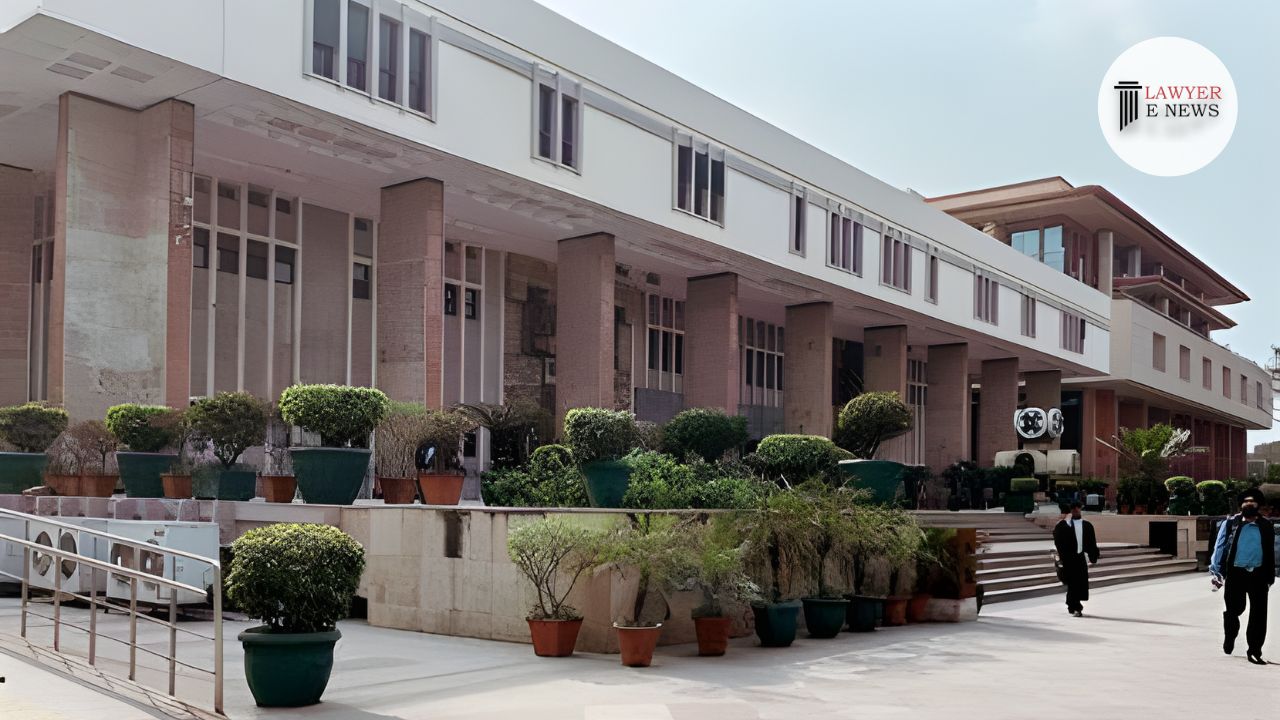
Delhi High Court Upholds Jurisdictional Flexibility in Cross-Border Divorce Case: Emphasizes Comity of Courts and Forum Conveniens Principles”

07 May 2024 8:19 AM

By: Admin


In a significant judgment, the Delhi High Court dismissed an appeal in a cross-border matrimonial dispute, emphasizing the principles of ‘comity of courts’ and ‘forum conveniens’. The case, MAT.APP.(F.C.) 365/2023, involved a dispute over the jurisdiction between Indian and Canadian courts in the divorce proceedings of an Indian couple holding Canadian permanent residency.

The appellant, Damini Manchanda, challenged the Family Court’s decision to dismiss her application seeking an interim injunction to restrain her husband, Avinash Bhambhani, from proceeding with a divorce petition in Canada. Represented by Ms. Preeti Singh, the appellant argued that the Indian courts should have jurisdiction, citing their Indian citizenship and the potential for more comprehensive relief under Indian laws.

However, the High Court, comprising Justice V. Kameswar Rao and Justice Anoop Kumar Mendiratta, upheld the Family Court’s decision. The Court noted, “None of the parties are currently residing in India. The doctrine of forum conveniens... would make it clear that the Court in Canada is the appropriate and convenient forum for the parties to pursue their reliefs.”

The Court’s decision was significantly influenced by the principles laid down by the Supreme Court in Modi Entertainment Network and Anr. The judgment highlighted that “the relief of anti-suit injunction being discretionary in nature, a Court must consider the following aspects: a) The defendant against whom the injunction is being sought must be amenable to the jurisdiction of the Court. B) Refusal to grant the injunction would cause grave prejudice and the ends of justice will be defeated. C) The principle of comity of courts must be borne in mind and due respect must be given to the Court in which the proceedings is sought to be restrained.”

This judgment is a landmark in understanding the nuances of jurisdictional issues in transnational matrimonial disputes and underscores the importance of considering the convenience and competence of foreign courts in such matters. The High Court’s decision paves the way for a more flexible approach in dealing with cross-border legal disputes, especially in the context of family law.

Date of Decision: 19th December 2023

DAMINI MANCHANDA VS AVINASH BHAMBHANI

 

Latest Legal News