-
by sayum
16 August 2026 12:05 PM







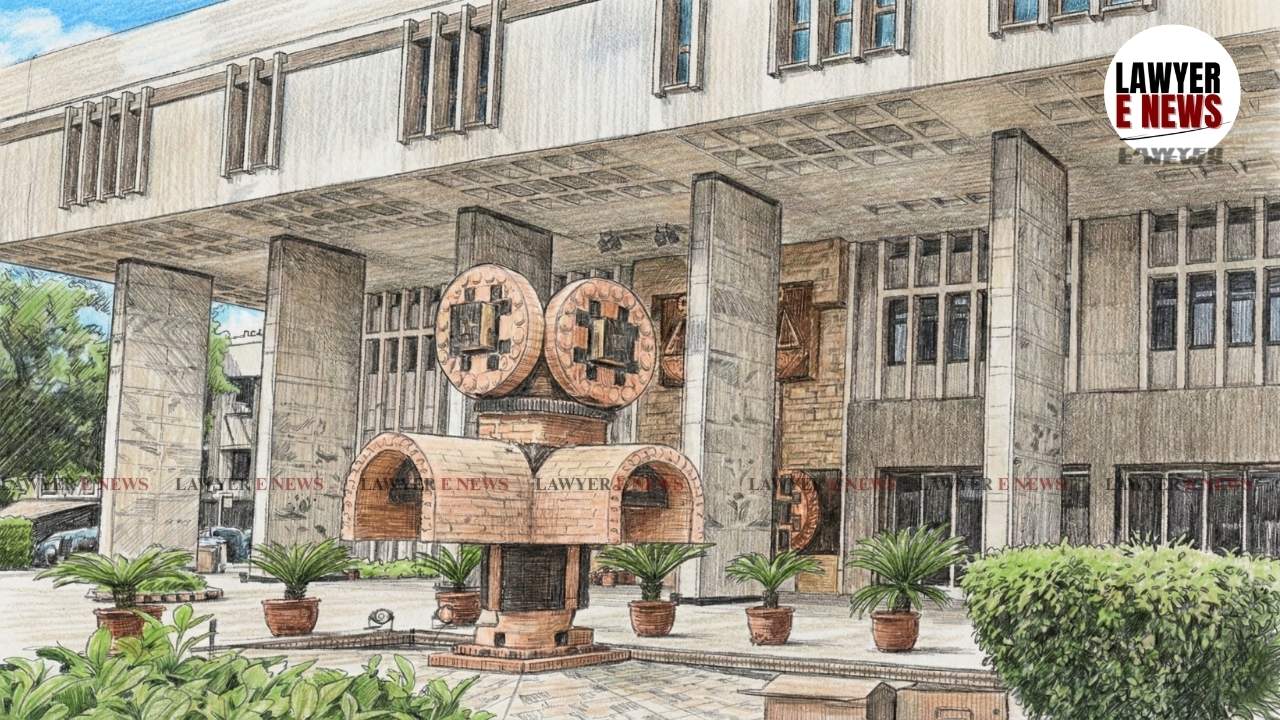
"Expression 'unauthorised occupation' occurring in PP Act would include a person, who is found to have occupied any public premises without lawful authority as well as those whose occupation was initially permissible at the inception but subsequently ceased to be authorised, " Delhi High Court, in a significant ruling, held that a High Court cannot stay statutory eviction proceedings under the Public Premises (Eviction of Unauthorized Occupants) Act, 1971, without recording specific findings on a prima facie case, balance of convenience, and irreparable loss.
A bench of Chief Justice Devendra Kumar Upadhyaya and Justice Tejas Karia observed that the right of the Government to invoke Section 4 of the PP Act for the eviction of an unauthorized occupant is a statutory vested right that should not be lightly interfered with at the show-cause stage.
The case pertains to the Delhi Race Club (1940) Ltd, which occupied 84.484 acres of land under a 1926 lease that stood determined by efflux of time on December 31, 1994. Despite several rounds of litigation, the Club remained in possession. In April 2026, the Estate Officer issued a show-cause notice for eviction, which was stayed by a Single Judge of the High Court. The Union of India challenged this stay, arguing that the Club’s occupation had been unauthorized for over three decades and that the stay was granted without assigning proper legal reasons.
The primary question before the court was whether an intra-court appeal is maintainable against an interlocutory order that merely stays a show-cause notice. The court was also called upon to determine whether a Single Judge can stay statutory proceedings under Article 226 of the Constitution of India without recording a finding on the mandatory triplet of prima facie case, balance of convenience, and irreparable loss.
Intra-Court Appeal Maintainable Against Orders Impacting Statutory Rights
The Court first addressed the maintainability of the appeal under Clause 10 of the Letters Patent. It observed that while the term "Judgment" is not defined in the Letters Patent, it must receive a wider and more liberal interpretation than the definition found in Section 2(9) of the CPC. The bench emphasized that an interlocutory order qualifies as a "judgment" if it possesses the "trappings of finality" and adversely affects a valuable right of a party.
The bench noted that the Government has a statutory right to seek the eviction of unauthorized occupants under Section 4 of the PP Act. By staying the proceedings at the notice stage, the Single Judge effectively halted the exercise of this statutory power. The Court held that such an order impacts a available statutory right and is therefore appealable as a "judgment" before a Division Bench.
"Judgment" Under Letters Patent Includes Interlocutory Orders With Trappings Of Finality
Expired Lease Holders Categorized As Unauthorized Occupants Under PP Act
The Court delved into the definition of "unauthorised occupation" under Section 2(g) of the PP Act. Relying on the precedent in Escorts Heart Institute & Research Centre Ltd. v. DDA, the bench clarified that the Act does not just apply to rank trespassers. It equally applies to those whose initial entry was legal—such as through a lease—but whose authority to occupy the land has since expired or been determined.
Since the Delhi Race Club’s lease expired in 1994 and was not renewed, the Court observed that the Club's continued occupation is, prima facie, unauthorized. The bench held that when the State resorts to statutory recourse under the PP Act for dispossession, such action must be viewed as following the "due process of law" rather than an abuse of process or a pre-meditated move.
Recourse To PP Act For Eviction Constitutes Due Process Of Law
Mandatory Requirements For Granting Interim Relief Under Article 226
The High Court expressed concern that the Single Judge stayed the eviction proceedings without providing detailed reasons. It noted that the impugned order only cited the "chequered history" of the case as a reason for stay. The bench reiterated that even when exercising extraordinary jurisdiction under Article 226, High Courts are bound by the principles governing interim injunctions.
Citing the Supreme Court's decisions in Union of India v. Era Educational Trust and Deoraj v. State of Maharashtra, the bench held that a stay on statutory proceedings requires a "very strong prima facie case" of a standard much higher than usual. The court noted that the Single Judge failed to record any discussion or finding on whether withholding the stay would "prick the conscience of the court" or result in extreme hardship.
Courts Must Record Findings On Prima Facie Case And Irreparable Loss Before Staying Statutory Notices
Ratio Decidendi
The Ratio Decidendi of this judgment is that an interim order staying statutory proceedings under the PP Act is unsustainable if it is passed without recording specific findings on the existence of a strong prima facie case, balance of convenience, and irreparable loss. Furthermore, such an interim order is appealable under the Letters Patent as it affects the statutory rights of the State to recover public premises.
The Division Bench allowed the appeal and set aside the Single Judge’s stay on the eviction proceedings. The Court held that the Delhi Race Club would have the opportunity to raise all its legal defenses before the Estate Officer during the show-cause hearing. The ruling clarifies that the mere "chequered history" of litigation is insufficient ground to bypass the mandatory legal requirements for granting an interim stay against the State.
Date of Decision: 26 May 2026