Non-Production Of Case Property And Missing Link Evidence In Seizure Cases Vitiates Prosecution: Himachal Pradesh High Court Employees Compensation Act | Death Due To Cardiac Arrest During Employment Is An 'Accident' Arising Out Of Stress And Strain Of Duty: J&K High Court Transfer Of Proceedings | Courts Must Issue Fresh Notice To Parties Even If They Had Appeared Before The Transferor Court: Kerala High Court Sets Aside Ex-Parte Award Section 80P(4) IT Act Does Not Deny Deduction To Regional Rural Banks As They Retain The 'Deemed Co-operative Society' Status Under Section 22 RRB Act: Madras High Court Property Purchased In Name Of Child For Family Benefit Is Not A 'Benami Transaction' Under Section 2(9) Of The 1988 Act: Madhya Pradesh High Court Person Without Caveatable Interest Cannot Challenge Will Or Seek Revocation Of Probate: Madras High Court Divorce | Cruelty Must Be Assessed By Cumulative Effect Of Matrimonial Conduct Rather Than Isolated Incidents: Orissa High Court Merely Labeling Insurance Policy As Comprehensive Does Not Create Unlimited Liability: MP High Court Order VII Rule 11 CPC | Plaint Must Be Rejected If Limitation Bar Is Apparent From Face Of Pleadings: Patna High Court Limitation Act | 'Sufficient Cause' Cannot Be Used To Revive Stale Or Dead Claims By State: Orissa High Court Quashes Order Condoning 53-Year Delay Employee Cannot Remain Dormant Like Rip Van Winkle & Awaken At Convenience: Punjab & Haryana High Court Dismisses Stale Service Plea With ₹25K Cost Section 29 NDPS Act | Mere Allegation Of 'Cooperation' Without Specific Overt Acts Cannot Sustain Charge Of Conspiracy: Rajasthan High Court Forest Land Status Does Not Extinguish Private Civil Title: Punjab & Haryana High Court Upholds Decree For Possession Once Admitted In Evidence, Document Cannot Be De-Marked On Grounds Of Insufficiency Of Stamp Duty: Telangana High Court Section 190 BNSS | Mere Presence In Unlawful Assembly With Active Intent Renders Member Vicariously Liable For Homicidal Act: Punjab & Haryana High Court Contributory Negligence Under Motor Vehicles Act Cannot Be Inferred Without Cogent Evidence: Telangana High Court Enhances Compensation Motor Vehicles Act | Section 164 Compensation Of Rs. 5 Lakhs Applicable Even To Pending Claims Arising Prior To 2019 Amendment: Punjab & Haryana High Court Consumer Protection Act | Builder Liable To Pay Interest For Delayed Possession Despite Force Majeure Plea If Agreement Executed Post-Outbreak: State Commission

Delhi High Court Grants Interim Injunction in Trademark Infringement Case: AZIWOK vs. AZIWAKE

07 May 2024 8:19 AM

By: Admin


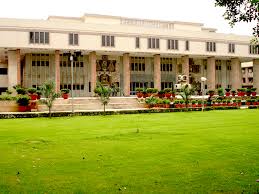
In a significant ruling on trademark infringement, the Delhi High Court has granted an interim injunction in favor of Dr. Reddys Laboratories Limited, against Smart Laboratories Pvt Ltd. The Court’s decision, pronounced on November 16, 2023, in case number CS(COMM) 744/2023, addresses the contentious issue of phonetic similarity between two pharmaceutical products: ‘AZIWOK’ and ‘AZIWAKE’.

Hon’ble Mr. Justice C. Hari Shankar, presiding over the case, underscored the importance of distinctiveness in pharmaceutical trademarks due to potential consumer confusion. “The existence, or otherwise, of confusion is required to be assessed at the ‘initial interest’ stage,” Justice Shankar observed, highlighting the risks associated with confusion in medicinal products.

The plaintiff, Dr. Reddys Laboratories Limited, holds the registered trademark ‘AZIWOK’, used for azithromycin pharmaceutical products. The defendant, Smart Laboratories Pvt Ltd, was alleged to have infringed upon this trademark with their product named ‘AZIWAKE’. The Court’s analysis leaned heavily on the phonetic similarity of the two marks, considering the potential for confusion among consumers, especially given the critical nature of pharmaceutical products.

Applying the ‘Pianotist’ test, Justice Shankar noted, “To the ear of the consumer of average intelligence and imperfect recollection, it is clear that the words ‘AZIWOK’ and ‘AZIWAKE’ are phonetically deceptively similar.” This observation formed a crucial part of the rationale for granting the injunction.

In balancing the equities, the Court found that the balance of convenience and irreparable harm favored the plaintiff. “Continuing infringement, by the defendant, of the plaintiff’s mark, is likely to dilute its brand value,” Justice Shankar stated, highlighting the inadequate nature of monetary compensation in such cases.

However, the Court allowed the defendant to sell their existing stock of ‘AZIWAKE’ already in the market, subject to specific compliance requirements.

Date of Decision: 16 November 2023

DR REDDYS LABORATORIES LIMITED VS  SMART LABORATORIES PVT LTD

 

Latest Legal News