Non-Production Of Case Property And Missing Link Evidence In Seizure Cases Vitiates Prosecution: Himachal Pradesh High Court Employees Compensation Act | Death Due To Cardiac Arrest During Employment Is An 'Accident' Arising Out Of Stress And Strain Of Duty: J&K High Court Transfer Of Proceedings | Courts Must Issue Fresh Notice To Parties Even If They Had Appeared Before The Transferor Court: Kerala High Court Sets Aside Ex-Parte Award Section 80P(4) IT Act Does Not Deny Deduction To Regional Rural Banks As They Retain The 'Deemed Co-operative Society' Status Under Section 22 RRB Act: Madras High Court Property Purchased In Name Of Child For Family Benefit Is Not A 'Benami Transaction' Under Section 2(9) Of The 1988 Act: Madhya Pradesh High Court Person Without Caveatable Interest Cannot Challenge Will Or Seek Revocation Of Probate: Madras High Court Divorce | Cruelty Must Be Assessed By Cumulative Effect Of Matrimonial Conduct Rather Than Isolated Incidents: Orissa High Court Merely Labeling Insurance Policy As Comprehensive Does Not Create Unlimited Liability: MP High Court Order VII Rule 11 CPC | Plaint Must Be Rejected If Limitation Bar Is Apparent From Face Of Pleadings: Patna High Court Limitation Act | 'Sufficient Cause' Cannot Be Used To Revive Stale Or Dead Claims By State: Orissa High Court Quashes Order Condoning 53-Year Delay Employee Cannot Remain Dormant Like Rip Van Winkle & Awaken At Convenience: Punjab & Haryana High Court Dismisses Stale Service Plea With ₹25K Cost Section 29 NDPS Act | Mere Allegation Of 'Cooperation' Without Specific Overt Acts Cannot Sustain Charge Of Conspiracy: Rajasthan High Court Forest Land Status Does Not Extinguish Private Civil Title: Punjab & Haryana High Court Upholds Decree For Possession Once Admitted In Evidence, Document Cannot Be De-Marked On Grounds Of Insufficiency Of Stamp Duty: Telangana High Court Section 190 BNSS | Mere Presence In Unlawful Assembly With Active Intent Renders Member Vicariously Liable For Homicidal Act: Punjab & Haryana High Court Contributory Negligence Under Motor Vehicles Act Cannot Be Inferred Without Cogent Evidence: Telangana High Court Enhances Compensation Motor Vehicles Act | Section 164 Compensation Of Rs. 5 Lakhs Applicable Even To Pending Claims Arising Prior To 2019 Amendment: Punjab & Haryana High Court Consumer Protection Act | Builder Liable To Pay Interest For Delayed Possession Despite Force Majeure Plea If Agreement Executed Post-Outbreak: State Commission

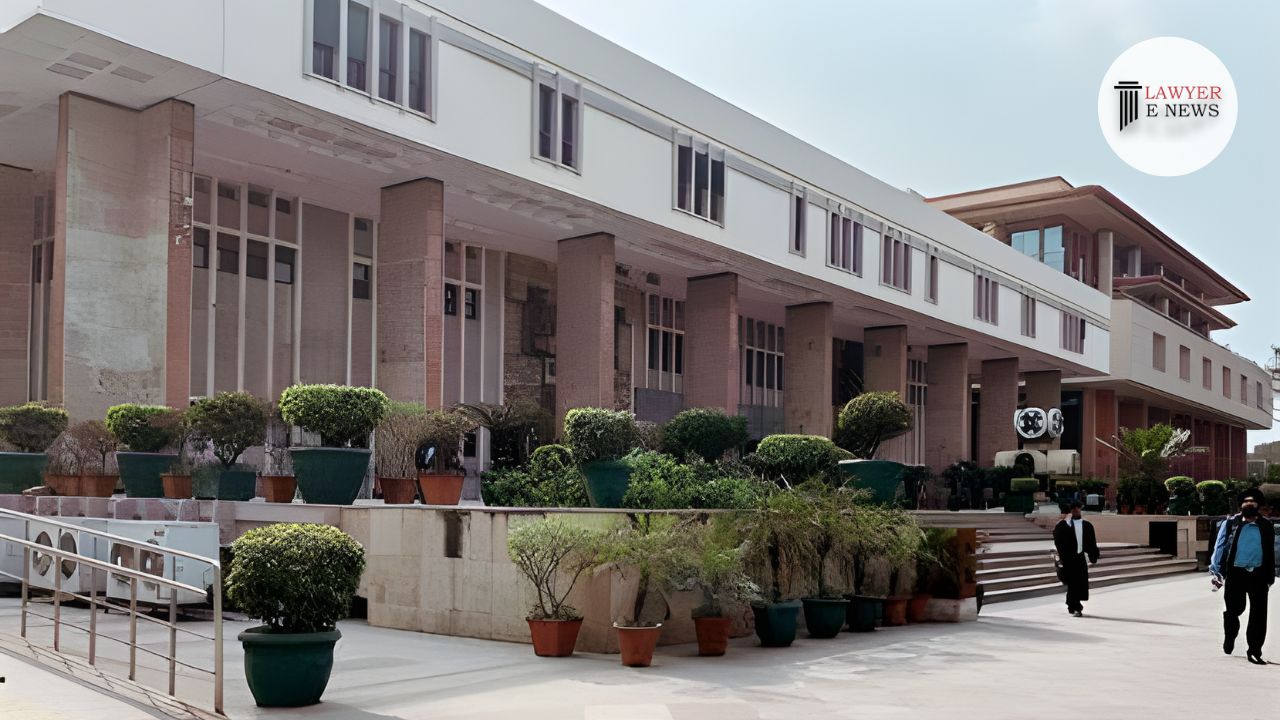
Delhi High Court Dismissed Contempt Petition Against Civil Judge and Advocate

07 May 2024 8:19 AM

By: Admin


In a significant ruling, the Delhi High Court today dismissed a contempt petition against judicial officers, emphasizing the sanctity and independence of the judiciary. Justice Jasmeet Singh, while pronouncing the judgment, highlighted the essence of judicial sovereignty, stating, “The independence of the judiciary is sacrosanct for the rule of law and democracy.”

The contempt proceedings were sought by the petitioner, alleging willful non-compliance with judicial precedents that mandate giving primacy to perjury applications over civil suits. The case revolved around a long-standing civil dispute, with the petitioner accusing the respondents of evading the law.

Justice Singh’s bench meticulously dismissed the petition, clarifying the legal stance on the matter. The Court observed, “The act of seeking initiation of contempt proceedings against a judge is improper and should be deterred,” thereby setting a precedent for the boundaries of contempt jurisdiction.

The Court also made It clear that the bar’s independence is integral to the administration of justice, stating, “There cannot be existence of a strong judicial system without an independent Bar.” The learned judge warned against the misuse of contempt proceedings, which can lead to an unjustified attack on the majesty and honesty of the courts.

This judgment reaffirms the legal protection granted to judicial officers under the Judicial Officers Protection Act, 1850, and the Judges (Protection) Act, 1985, against litigation for actions performed within their judicial capacity. Moreover, the Court underlined that while judges are accountable, their actions in the discharge of judicial duties should not be challenged through contempt proceedings.

The case also addressed the applic”tion’of Section 35B of the CPC, with the Court referencing a Supreme Court judgment to elaborate that non-payment of costs does not automatically result in the dismissal of a suit. The Court dismissed the contempt petition with liberty granted to the petitioner to seek appropriate legal remedies against the impugned order dated 22.07.2023.

The legal fraternity views this de”Isio’ as a reinforcement of the judiciary’s position and a reminder of the legal avenues available to challenge judicial decisions without resorting to contempt proceedings. The judgment comes at a time when the balance between judicial independence and accountability is under close public scrutiny.

Date of Decision: 07.11.2023

VIJAY KUMAR AGARWAL VS  PARVEEN SINGH AND ORS 

Latest Legal News