-
by kapil
03 November 2026 9:16 AM








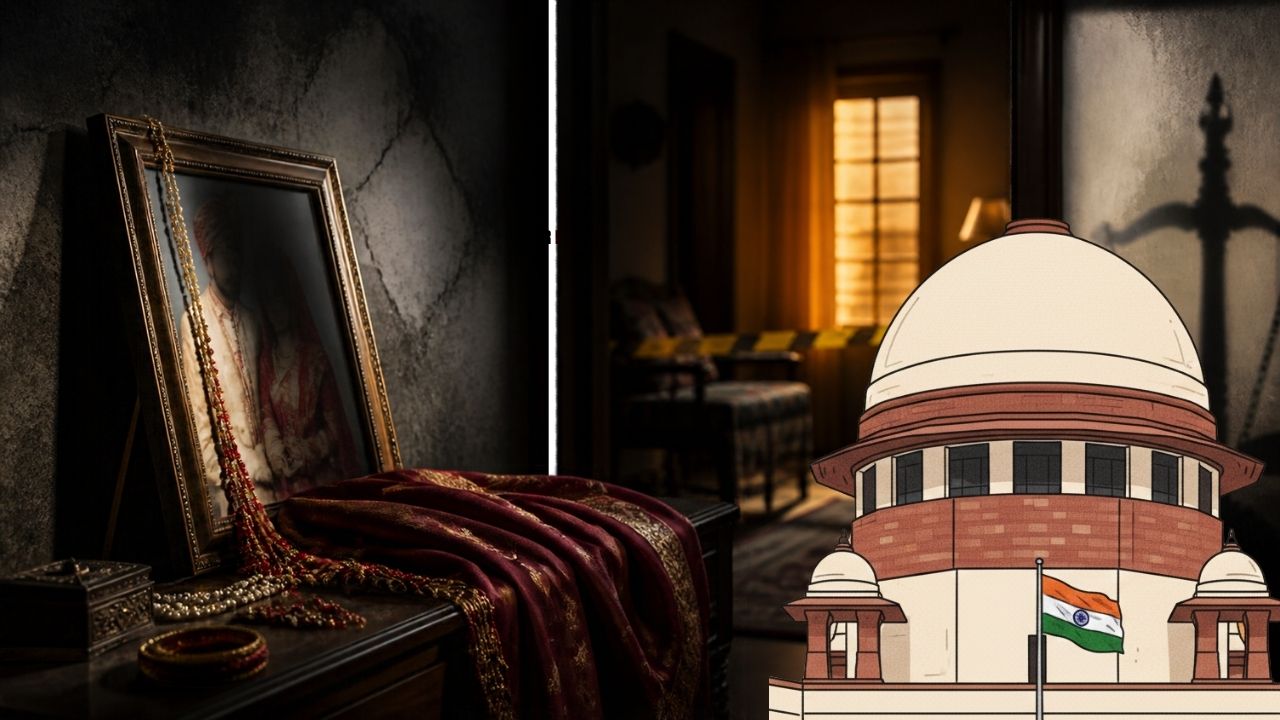
"The very first Diwali after the solemnization of marriage marks a special milestone in the life of newlyweds, where usually both families exchange gifts such as new clothes, jewellery, and sweets as a tradition. In these circumstances, it is very plausible that, while extending gifts to his own daughter on the occasion of Diwali, respondent No.2 extended the same courtesy to his son-in-law and his parents, as a part of custom and tradition. To taint this exchange between the parties with a criminal colour, without any antecedents or substantial material on record, runs afoul of the very basis of the case." Clarifying the crucial boundary between traditional festive presentations and illegal dowry extortions, the Supreme Court bench comprising Justice B.V. Nagarathna and Justice Manmohan on November 2, 2026, held that customary presents given out of love, affection, and social tradition cannot be criminalized as unlawful dowry demands under Sections 3 and 4 of the Dowry Prohibition Act, 1961 or Section 304B of the Indian Penal Code, 1860.
The appellant married the complainant’s daughter in January 2021, and the couple subsequently moved to Toronto, Canada in February 2022. On June 11, 2023, the wife died by suicide after jumping from the 22nd floor of their apartment, leaving behind a handwritten note indicating severe distress over unemployment and academic struggles, without attributing any blame to her spouse. Canadian police and coroner reports confirmed the death was a suicide devoid of foul play or struggle, yet the deceased's father lodged an FIR in Aurangabad alleging dowry harassment and cruelty, citing gold jewellery given during the wedding and first Diwali. The Bombay High Court quashed proceedings against the in-laws but refused relief to the husband, prompting the present appeal.
Whether voluntary customary gifts presented to newlyweds and in-laws during traditional festivals like Diwali fall within the statutory mischief of dowry demands under Sections 3 and 4 of the Dowry Prohibition Act, 1961?
Whether an indictment under Sections 304B and 498A of the Indian Penal Code, 1860 can survive when the deceased’s suicide note explicitly attributes death to professional frustrations, showing no proximate nexus to any dowry-related cruelty?
Customary presentations given out of love and affection cannot be equated with dowry demands
Scrutinizing the statutory definitions under Sections 3 and 4 of the Dowry Prohibition Act, the Supreme Court observed that the penal framework explicitly accommodates presents of a customary nature exchanged without any demand. The Court pointed out that giving ornaments to newlyweds to mark auspicious occasions is an entrenched social custom in Indian households that must not be routinely given a sinister complexion.
The bench stressed that parents commonly gift gold to both spouses at the time of the wedding out of parental goodwill rather than unlawful coercion. The father’s act of presenting gold ornaments to his daughter and son-in-law cannot be construed as an illicit transaction when it stems from affection.
Exchanging gifts during the first Diwali is an ordinary milestone devoid of criminal intent
Turning specifically to the allegation that the husband demanded gold and clothes during the first Diwali following the wedding, the bench firmly rejected criminalizing established festive etiquette. The Court underscored that festive exchanges between newly allied families represent a customary courtesy rather than an extortionate enterprise.
The bench highlighted that such isolated festive exchanges occurring nearly a year prior to the suicide cannot logically establish a proximate cause-and-effect relationship with the tragic demise. The Court observed that without any supporting antecedents or contemporaneous complaints, treating traditional courtesies as offences under Section 3 of the DP Act erodes the legal foundation of dowry prosecutions.
Suicide note citing career struggles and lack of contemporaneous complaints negate dowry death presumption
The Court meticulously examined the handwritten suicide note recovered from the Toronto residence, which confirmed the deceased took the extreme step solely due to acute frustration over her inability to secure employment. Emphasizing that the note completely omitted any reference to the husband or dowry harassment, the bench held that the statutory presumption under Section 113-B of the Evidence Act could not be triggered.
To attract the rigours of Section 304B IPC, the prosecution must establish that the woman was subjected to cruelty or harassment soon before her death in connection with a dowry demand. The bench noted that general and belated assertions raised only after the bereavement cannot substitute the mandatory legal requirement of proximate and sustained cruelty.
Isolated financial transactions between spouses cannot be torn out of context to substantiate penal charges
Addressing the allegation that the husband accepted one lakh rupees as dowry from the deceased’s brother, the Court observed that the transfer coincided with the booking of international flight tickets for the wife. Examining the husband's bank statements showing frequent reciprocal financial transfers and spousal nominations, the Court held that legitimate family support cannot be selectively isolated to manufacture criminal liability.
The bench cautioned that grieving families often search for reasons behind an inexplicable tragedy, but courts must guard against allowing criminal law machinery to become an instrument of harassment based on vague, omnibus allegations.
Courts must exercise inherent powers under Section 482 CrPC to prevent matrimonial complaints from becoming personal vendettas
Applying the parameters laid down in State of Haryana v. Bhajan Lal, the Supreme Court ruled that continuing prosecution against the appellant would constitute a manifest abuse of judicial process. The bench emphasized that temperamental incompatibilities or ordinary marital disagreements cannot be inflated into criminal intimidation under Section 504 IPC or cruelty under Section 498A IPC.
The Court reiterated that High Courts exercising jurisdiction under Section 482 CrPC bear an imperative duty to undo patent wrongs and quash untenable proceedings where the primary ingredients of the alleged offences are wholly missing from the uncontroverted record.
Allowing the appeal, the Supreme Court set aside the impugned order of the Bombay High Court and quashed FIR No. 212/2023 along with all consequential proceedings pending against the appellant.
Date of Decision: November 02, 2026