-
by sayum
28 July 2026 8:17 AM







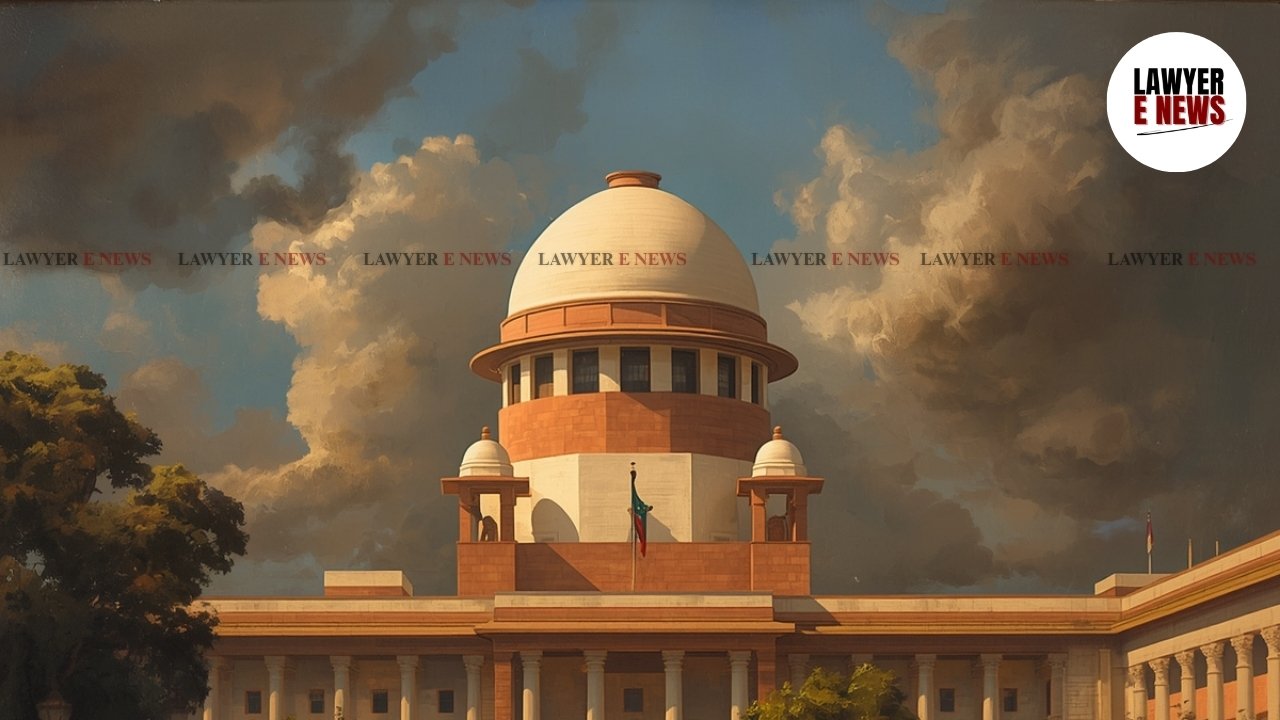
"This litigation is an eye-opener for the appellate courts reminding that they owe a duty to comply with the provisions of Order XX Rule 12A of the CPC. Where an appeal is filed against the decree passed by the trial court and the appeal is disposed of, the appellate court should specify time to deposit the balance sale consideration," Supreme Court of India.
The Supreme Court, in a significant ruling, held that trial and appellate courts are mandatorily required under Order XX Rule 12A of the CPC to specify a clear timeline for the payment of purchase money in decrees for specific performance. A bench of Justice Manoj Misra and Justice Manmohan observed that the power to rescind a contract under Section 28 of the Specific Relief Act is discretionary and should not be exercised mechanically without considering the conduct of the parties and the equities involved.
The appellant had obtained a decree for specific performance of a sale agreement in 2017, which directed him to pay the balance consideration within one month. While the appellant issued a notice to the respondent to execute the sale deed, he failed to deposit the amount within the stipulated month, and subsequently, the respondent filed an appeal against the decree. During the pendency of the appeal, which was eventually dismissed for non-prosecution in 2023, the execution court allowed the appellant to deposit the money in 2020 to "test his bona fides," yet later dismissed the execution application on the grounds of delay.
The primary question before the court was whether the non-deposit of purchase money within the period specified in a conditional decree leads to an automatic rescission of the contract. The court was also called upon to determine the extent of a court's duty under Order XX Rule 12A of the CPC and whether a trial court decree merges with an appellate order when the appeal is dismissed for non-prosecution.
Court Not Functus Officio After Passing Specific Performance Decree
The Supreme Court clarified that a court which passes a decree for specific performance does not lose its jurisdiction over the matter after the decree is signed. Relying on Section 28 of the Specific Relief Act, 1963, the bench noted that the court retains control over the decree as it is in the nature of a preliminary decree.
The bench observed that Section 28(1) explicitly empowers the court to either rescind the contract or extend the time for making the payment. This power remains with the court until the sale deed is actually executed, ensuring that the court can adapt to the circumstances of the case to subserve the ends of justice.
Rescission Of Contract Is Discretionary, Not Automatic
"The legislative intent is clear that it is a discretionary power and, therefore, there is no automatic rescission in the event of default."
The Court emphasized that the power to rescind a contract under Section 28 is not to be exercised mechanically upon a mere default in payment. A justice-oriented approach is required, wherein the court must look at the "attending facts and circumstances" and the "conduct of the parties."
The bench noted that the real test is whether the conduct of the plaintiff/decree-holder amounts to a "positive refusal" to complete his part of the contract or "willful negligence." Unless such negligence is established, the court should be inclined to extend the time, possibly by putting the decree-holder to terms such as paying additional compensation to the judgment-debtor.
Mandatory Duty Of Courts Under Order XX Rule 12A CPC
Court Highlights Mandatory Nature Of Order XX Rule 12A CPC
Turning to the procedural requirements, the Court noted that Order XX Rule 12A of the CPC mandates that every decree for specific performance of a contract for the sale or lease of immovable property must specify the period within which the purchase money shall be paid.
The bench observed that this provision is intended to prevent ambiguity and ensure both parties are aware of their reciprocal obligations. It further noted that if the trial court’s decree is challenged, the appellate court, while disposing of the appeal, also owes a duty to fix a fresh time limit for the deposit of the balance consideration.
"What is executable is the decree passed by the appellate court. The appellate court owes a duty to specify the time period."
Doctrine Of Merger Not Applicable In Dismissal For Non-Prosecution
On the issue of whether the trial court decree merged with the appellate order, the Court held that since the respondent's appeal was dismissed for non-prosecution and not on merits, the doctrine of merger does not apply. Referring to Section 2(2) of the CPC, the bench explained that a decree specifically excludes an order of dismissal for default.
Consequently, the trial court's original decree remained the operative one. However, the Court found that the execution court and the High Court adopted a "hyper-technical approach" by dismissing the execution application solely on the ground of delay without considering the appellant’s efforts to deposit the money during the pendency of the litigation.
The Supreme Court concluded that neither the execution court nor the High Court considered the matter in the proper perspective of Section 28 of the Specific Relief Act. It set aside the impugned orders and restored the execution application for fresh consideration. The Court directed the lower court to treat the rescission and extension applications as interlocutory applications within the original suit and decide them by balancing the equities between the parties.
Date of Decision: May 8, 2026