-
by sayum
19 August 2026 1:58 PM







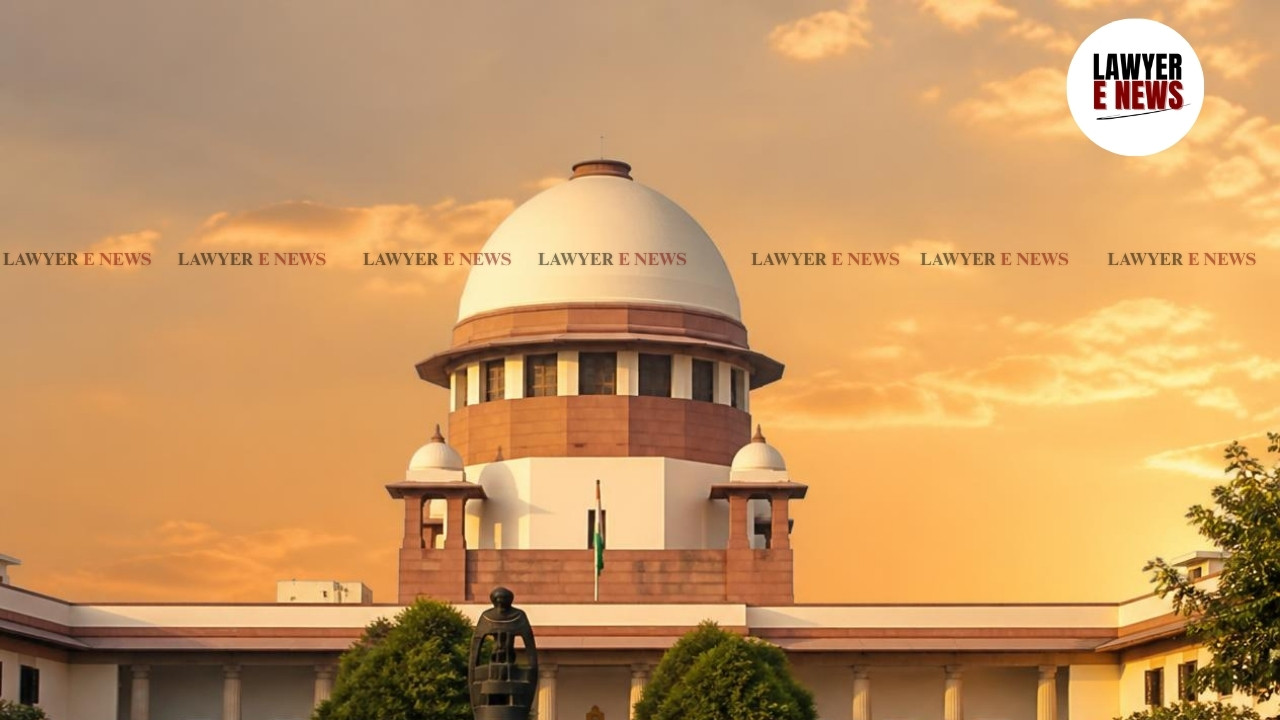
"Constitutional role of the judiciary is primarily to interpret and apply the law, and not to legislate. In appropriate cases, particularly where a legislative vacuum exists, this Court may issue directions... such directions, however, are inherently interim in nature and are intended to operate only until the Legislature enacts an appropriate law," Supreme Court of India, in a landmark judgment dated April 29, 2026, held that the judiciary cannot create or expand criminal offences or prescribe punishments in the absence of legislative sanction.
A bench of Justice Vikram Nath and Justice Sandeep Mehta, while dealing with a batch of petitions seeking specific legislation on "hate speech," observed that the existing framework under the Indian Penal Code (IPC) and the Bharatiya Nyaya Sanhita (BNS) is sufficient. The Court noted that "the problem is not one of legislative vacuum but of inadequate or uneven invocation of the legal processes designed to give effect to the law."
The proceedings arose from 13 writ petitions seeking directions to the Union of India to examine international hate speech laws and implement the Law Commission’s 267th Report by enacting new penal provisions. The petitioners alleged that a "legislative vacuum" had allowed communal vitriol and "rumour-mongering" to proliferate, particularly during the COVID-19 pandemic. They sought a "continuing mandamus" for judicial monitoring of hate speech incidents across the country.
The primary question before the court was whether it could create or expand criminal offences in the absence of legislative action under the doctrine of separation of powers. The court was also called upon to determine if a legislative vacuum exists regarding hate speech and whether prior sanction is a prerequisite for a Magistrate to direct the registration of an FIR under Section 156(3) CrPC.
Judiciary Cannot Usurp Legislative Functions
The Court emphasized that under the Indian Constitution, the functional demarcation between the three organs of the State is fundamental. While the doctrine of separation of powers is not recognized in its absolute rigidity, the Court held that one organ cannot's usurp the essential functions of another.
Court Highlights Limits Of Judicial Power In Criminal Law
The bench observed that for conduct to constitute a crime, it must be expressly prohibited by the sovereign authority of the State through legislation. Citing Dr. Ashwini Kumar v. Union of India, the Court noted that legislating involves a choice to prioritize political, moral, and social values, which is the exclusive province of the Legislature.
Judiciary Not Empowered To Create Offences
The Court held that in the absence of constitutional silence, the judiciary cannot determine what ought to constitute an offence or prescribe punishments. "At the very outset, we must make it clear that the courts neither create offences nor do they introduce or legislate punishments. It is the duty of the legislature," the bench observed.
No Legislative Vacuum Exists Regarding Hate Speech
The Court rejected the petitioners' contention that the field of hate speech is legislatively unoccupied. It noted that provisions such as Sections 153A, 153B, 295A, and 505 of the IPC (and corresponding BNS provisions) already penalize acts promoting enmity and outraging religious sentiments.
Existing Laws Sufficient If Enforced Rigorously
The Court observed that the Law Commission’s 267th Report itself surveyed a vast array of existing laws, including the Representation of the People Act and the Cable Television Network Regulation Act. The bench remarked that the mere occurrence of hate speech incidents does not prove a vacuum, but rather a deficit in enforcement.
Statutory Remedies For Non-Registration Of FIR Are Comprehensive
The judgment reiterated that the Code of Criminal Procedure (CrPC) and the Bharatiya Nagarik Suraksha Sanhita (BNSS) provide a multi-tiered mechanism for citizens. If the police fail to register an FIR under Section 154, the aggrieved person can approach the Superintendent of Police or invoke the Magistrate’s jurisdiction.
Magistrate’s Power Under Section 156(3) Is Wide
The Court emphasized that Section 156(3) of the CrPC confers a check on the police. Citing Sakiri Vasu v. State of U.P., it noted that a Magistrate has implied powers to ensure a proper investigation, including the power to monitor the same to ensure it is done fairly.
Prior Sanction Not Required For Section 156(3) Investigation
In a significant legal clarification, the Court set aside a Delhi High Court ruling which held that prior sanction was needed for a Magistrate to order an investigation. The Supreme Court held that the requirement of sanction under Sections 196 and 197 CrPC operates only at the stage of "taking cognizance."
Investigation Is A Pre-Cognizance Stage
The bench clarified that an order directing investigation under Section 156(3) does not amount to taking cognizance. "The requirement of sanction is a condition precedent only for taking cognizance and not for the registration of an FIR or for the conduct of investigation," the Court held.
Prior Sanction Cannot Shield Investigative Process
The Court observed that while sanction protects public servants from frivolous prosecution, it cannot prevent the initiation of the investigative process. Any interpretation that makes the registration of an FIR contingent upon prior sanction would render the provisions relating to investigation unworkable.
Hate Speech Antithetical To Constitutional Fraternity
In a detailed epilogue, the Court discussed the Preamble's vision of 'Fraternity' and the civilizational ethos of Vasudhaiva Kutumbakam. It observed that hate speech strikes at the very root of a cohesive society founded upon plurality and multiculturalism.
Constitutional Duty Of Citizens To Promote Harmony
The Court reminded citizens of their Fundamental Duties under Article 51A(e) to promote harmony and the spirit of common brotherhood. It noted that the most enduring safeguard against hate speech is not just the law, but the collective constitutional conscience of society.
Court Refuses Continuing Mandamus For Monitoring
The bench declined to issue a "continuing mandamus" for monitoring hate speech, stating it would amount to "micro-management" of executive functions. It held that judicial intervention is warranted only upon a demonstrated failure of duty, not on a mere apprehension of future commission of offences.
The Supreme Court dismissed the writ petitions seeking a new hate speech law, concluding that the existing legal architecture is complete. However, it partly allowed the criminal appeal, clarifying that Magistrates can order investigations into provocative speeches without waiting for prior government sanction. The Court left it to the wisdom of Parliament to decide on further legislative measures based on the Law Commission's recommendations.
Date of Decision: 29 April 2026