-
by sayum
21 October 2026 5:27 PM







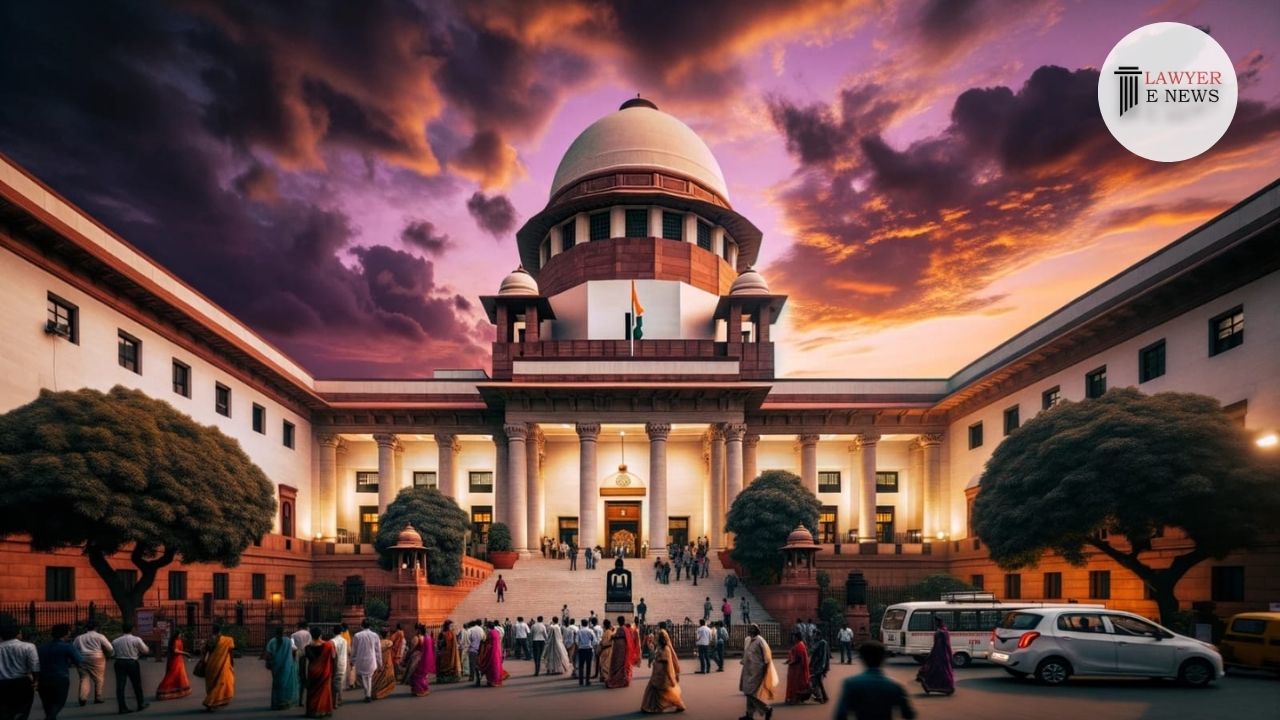
Tuesday, the Supreme Court stayed a Karnataka High Court ruling from March 23 that refused to dismiss a charge of rape under Section 376 of the Indian Penal Code (IPC) against a man accused of raping and keeping his wife as a sex slave [Hrishikesh Sahoo v. State of Karnataka].
A bench composed of the Chief Justice of India, NV Ramana, and Justices Krishna Murari and Hima Kohli stayed the proceedings related to the pending FIR at the Additional City and Sessions court.
"Until further orders, there shall be an ad-interim stay of the common impugned judgement and final order dated March 23, 2022 passed by the High Court of Karnataka in Writ Petitions No.48367/2018 and 50089/2018 and further proceedings in relation to Special C.C. No. 356 of 2017 arising out of FIR bearing Crime No. 19/2017, pending before the Additional City and Sessions and Special Court for cases under the POCSO Act, Bangalore," stated the order
The court will reconsider the case in one week.
The Court was hearing the husband's appeal against the High Court's decision, which had been rendered by Justice M Nagaprasanna.
The High Court had said that the institution of marriage cannot be used to confer any special male privilege or a licence for unleashing of a "brutal beast" on the wife.
In this instance, after a few years of living together, the couple's relationship had become strained.
The wife filed a complaint against the husband for offences punishable under Sections 506 (punishment for criminal intimidation), 498A (cruelty to wife), 323 (Punishment for voluntarily causing hurt), and 377 (Unnatural offences) of the Indian Penal Code (IPC) and Section 10 (aggravated sexual assault) of the Protection of Children from Sexual Offences Act, 2012 (PCSOA) (POCSO).
The Special Court charged the petitioner-husband with crimes punishable under Sections 376 (rape), 498A, and 506 of the Indian Penal Code, as well as Sections 5(m) and (l) read with Section 6 of the POCSO Act.
The husband then petitioned the High Court to have the divorce annulled.
The single-judge of the High Court refused to grant the prayer, noting that men have donned the robes of husband for centuries in order to use the wife as his property, but this age-old notion and tradition that husbands are the masters of their wives' body, mind, and soul should be eradicated.
The court noted that the alleged brutal sexual acts by the husband against the wife, as well as sexual abuses against the child, prompted the wife to file the complaint.
The High Court ruled that a man who sexually assaults or rapes a woman is punishable under Section 376 of the Indian Penal Code.
"The argument of the learned senior counsel that the man is exempt if he is the husband and performs the same acts as another man. In my informed opinion, such an argument cannot be accepted "The Supreme Court had emphasised.
It was also noted that the charge sheet filed by the police after the investigation depicted graphic details of the husband's "demonic lust," including that he had unnatural sex and sexual relations with the wife or daughter while torturing or abusing them or threatening to beat them.
Moreover, during the pendency of the proceedings before the Sessions Court, the wife sought assistance from various sources and made clear how brutally the petitioner had sex and anal sex with the wife in the presence of his 9-year-old daughter. Later, he would touch the daughter's private areas and engage in sexual acts with her.
In light of these facts, the High Court concluded that the Sessions Judge's indictment of the husband for an offence punishable under Section 376 of the Indian Penal Code for the alleged rape of his wife did not warrant any interference and was a matter for trial.
This ruling is currently being challenged before the highest court.
D.D:19-07-2022
Hrishikesh Sahoo Versus State of Karnataka