-
by sayum
29 August 2026 9:28 AM







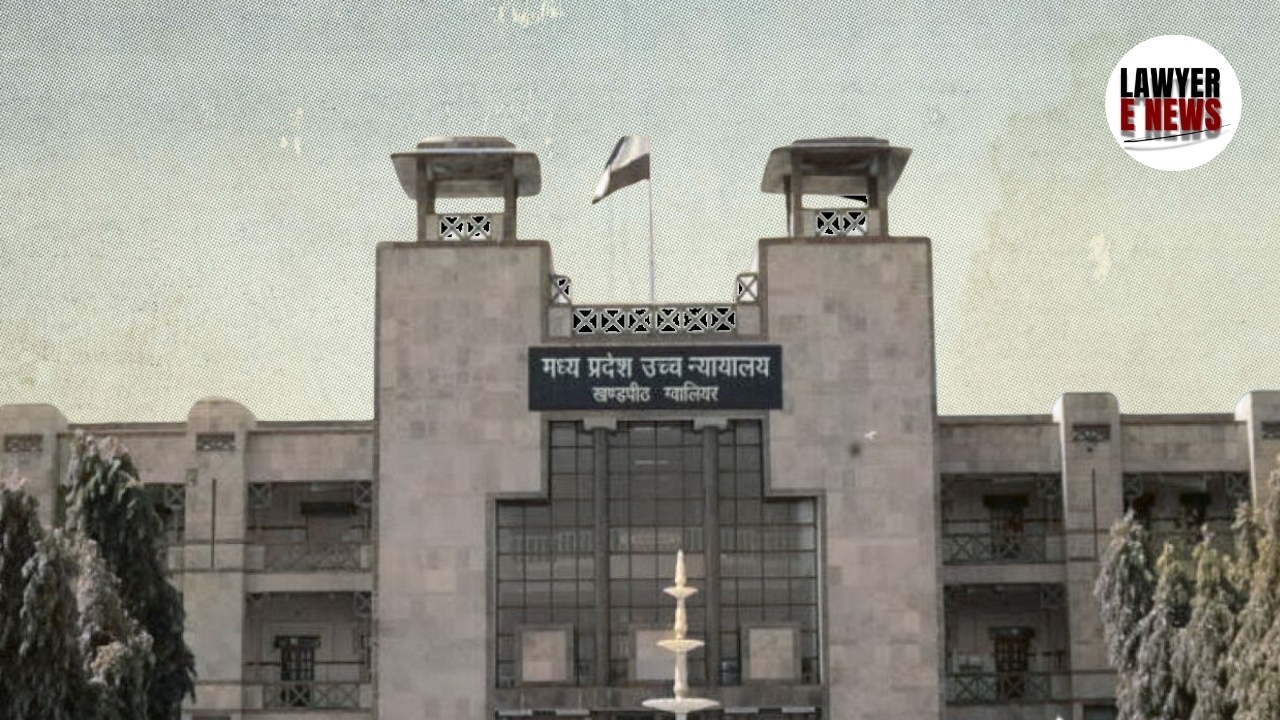
“Forcing a person to live in a dead marriage is nothing but cruelty. The law cannot be a tool to perpetuate suffering” – High Court of Madhya Pradesh at Jabalpur delivered a judgment that speaks as much to legal principle as to the lived reality of failed marriages. The Division Bench of Justice Vishal Dhagat and Justice Anuradha Shukla, allowing the husband's appeal for divorce, invoked both statutory interpretation and inherent powers of the court to dissolve a marriage broken beyond repair, marking an important departure from rigid adherence to the “fault theory” under the Hindu Marriage Act, 1955.
The case had been languishing since 2014, and the parties had lived separately since 2007—an 18-year estrangement, riddled with false criminal cases, a dismissed petition for restitution, and a failed police complaint of dowry cruelty. Ultimately, the Court held that denying divorce would amount to “enhancing the pain of the parties”, and equated the continued resistance to divorce as an act of cruelty under Section 13(1)(ia).
“Breakdown of Marriage is a Reality, Not Just a Ground”: Divorce Granted Despite No Specific Provision in the Act
The appellant-husband had approached the Family Court at Jabalpur seeking divorce on grounds of cruelty and desertion under Sections 13(1)(ia) and 13(1)(ib) of the Hindu Marriage Act, 1955. He alleged that:
“She refused to cohabit with me, misbehaved with my family, filed false dowry cases, and repeatedly left for her parental home without consent.”
The trial court dismissed the petition, noting the pendency of a dowry harassment complaint and the absence of a decree in an earlier petition for restitution of conjugal rights.
But the High Court noted a substantial change in circumstances:
“The appellant and his family members were acquitted in the criminal case by judgment dated 28.01.2020... The prosecution failed to prove the case beyond reasonable doubt.”
“When the Marital Tie Has Been Dead for 18 Years, Law Cannot Insist on Its Resurrection”: Court Calls for Judicial Compassion
In perhaps the most striking observation in the judgment, the Court noted: “Not granting divorce to a party will mean they are stopped at a particular stage of life... forced to live their life denying marital happiness... They are not permitted to settle themselves in pursuit of peace and happiness.”
The Court rejected the passive resistance of the respondent-wife, who despite receiving notices, chose to remain ex parte. Her silence, the Court implied, was either apathy or deliberate obstruction, both of which only prolonged the misery of the estranged spouse.
“Sadistic Refusal to Divorce Becomes Cruelty in Itself”: Court Applies Section 13(1)(ia) to Continuing Misuse of Process
The judgment took an unconventional yet thoughtful route by holding that:
“Husband or wife often adopts a sadistic approach... intentionally resist granting of divorce to harass their partner... Such conduct amounts to cruelty under Section 13(1)(ia).”
This view reflects the evolution in judicial understanding—away from purely event-based cruelty, towards psychological and procedural abuse by misuse of legal delay.
“When Fault Theory Fails, Justice Must Prevail”: Court Draws on Supreme Court’s Evolving Jurisprudence on Irretrievable Breakdown
Although irretrievable breakdown of marriage is not a statutory ground under the Hindu Marriage Act, the High Court leaned on multiple Supreme Court precedents, including:
V. Bhagat v. D. Bhagat [(1994) 1 SCC 337]
Ashok Hurra v. Rupa Bipin Zaveri [(1997) 4 SCC 226]
Naveen Kohli v. Neelu Kohli [(2006) 4 SCC 558]
Shilpa Shailesh v. Varun Shreenivasan [T.P. (Civil) No. 1118/2014]
These rulings recognise that continued separation, false litigation, and loss of mutual respect make marriage a mere legal fiction.
While the Supreme Court can exercise Article 142 of the Constitution to dissolve such dead marriages, the MP High Court took recourse to its inherent powers under Section 151 of CPC and Section 482 of CrPC, noting:
“Where CPC and CrPC are silent, civil courts and High Courts can act in the interest of justice... Law cannot contemplate every future situation.”
“Law Must Recognize the Death of Marriage, Not Just Its Birth”: Judgment Draws Curtain on 2006 Marriage
The Court formally allowed the appeal, stating:
“There is long separation of 18 years... no purpose will be served overlooking the reality and sticking to the fault theory.”
The marriage dated 20.04.2006 was dissolved by decree, ending an 18-year ordeal that had outlived not only affection but also basic human patience.
Date of Decision: 18th August 2025