-
by sayum
30 October 2026 12:40 PM







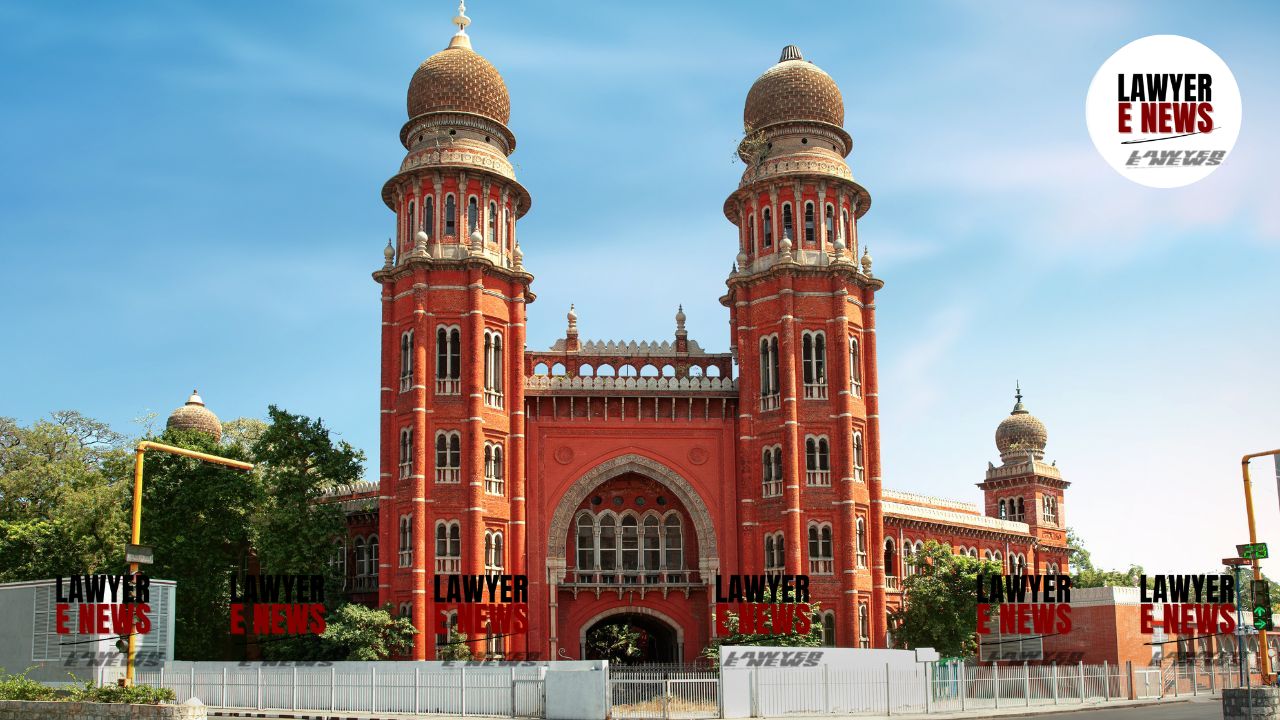
"The scope of consideration in an application seeking leave under Clause 12 is limited. The Court is required to examine the averments in the proposed plaint and determine whether the plaintiff has disclosed a substantial part of the cause of action within the jurisdiction of this Court." Madras High Court, in a significant ruling dated October 5, 2026, held that an application for leave under Clause 12 of the Letters Patent is restricted to assessing whether the plaint discloses that a substantial part of the cause of action arose within the court's jurisdiction, and that issues regarding the suit's ultimate maintainability should not be adjudicated at this threshold stage.
A bench of Justice K. Govindarajan Thilakavadi observed that "the Court is not required to conduct a mini trial or conclusively determine disputed questions concerning the ultimate maintainability of the suit" while deciding on the grant of leave.
The applicant, the Dravida Munnetra Kazhagam (DMK), represented by its General Secretary, filed a suit seeking damages for alleged defamation stemming from publications made by the first and second respondents, and their subsequent dissemination via digital platforms operated by the third to sixth respondents. The applicant contended that the defamatory imputations were accessed within Chennai, where the party’s office is located, and that the resulting injury to its reputation occurred within the court's territorial jurisdiction. Consequently, the applicant sought leave under Clause 12 of the Letters Patent to proceed against defendants located outside the jurisdiction.
The respondents raised multiple preliminary objections, arguing that the suit was not maintainable. Key contentions included the mandatory requirement of notice under Section 80 of the Code of Civil Procedure (CPC) for suits against public officers, the alleged lack of juristic personality of the third respondent, and the lack of locus standi of the General Secretary to represent the political party in a civil defamation suit without complying with Order 1 Rule 8 of the CPC.
Threshold Determination vs. Final Adjudication
The court clarified that its function at the Clause 12 stage is essentially a prima facie examination of the pleadings to establish the territorial nexus. Rejecting the respondents' attempt to conflate jurisdictional leave with the ultimate maintainability of the action, the court noted that the respondents are not precluded from raising these substantive objections—such as the applicability of Section 80 CPC or the legal capacity of the plaintiff—during the regular course of the suit.
Court Clarifies Scope Of Clause 12
The court further emphasized that in cases involving digital defamation, the cause of action is not tethered exclusively to the technical location of servers or the registered offices of platform operators. Rather, the court recognized that the communication of defamatory material and the subsequent injury to reputation in a specific location constitute a material part of the cause of action.
"The respondents should not be permitted to collapse these distinct issues into one jurisdictional objection. This Court is not inclined to adjudicate those disputed questions finally, while considering an application for leave under Clause 12."
Regarding the contention that the suit against public servants is barred for want of Section 80 CPC notice, the court observed that whether an act is performed in an "official capacity" is a factual and legal inquiry that cannot be resolved in a preliminary leave application. Similarly, objections regarding the juristic status of a political party and the authority of its General Secretary were deemed matters to be tested on evidence, rather than grounds to stifle a suit at the inception.
No Absolute Bar To Suit At Preliminary Stage
Ultimately, the court allowed the application, granting leave to the plaintiff to proceed against the respondents. By keeping all contentions regarding Section 80 CPC, the legal capacity of the parties, and the merits of the defamation claim open for consideration at the trial stage, the court reinforced the principle that procedural technicalities should not prematurely impede the pursuit of legal remedies where a substantial cause of action is pleaded.
Date of Decision: 05 October 2026