-
by kapil
16 October 2026 4:47 PM







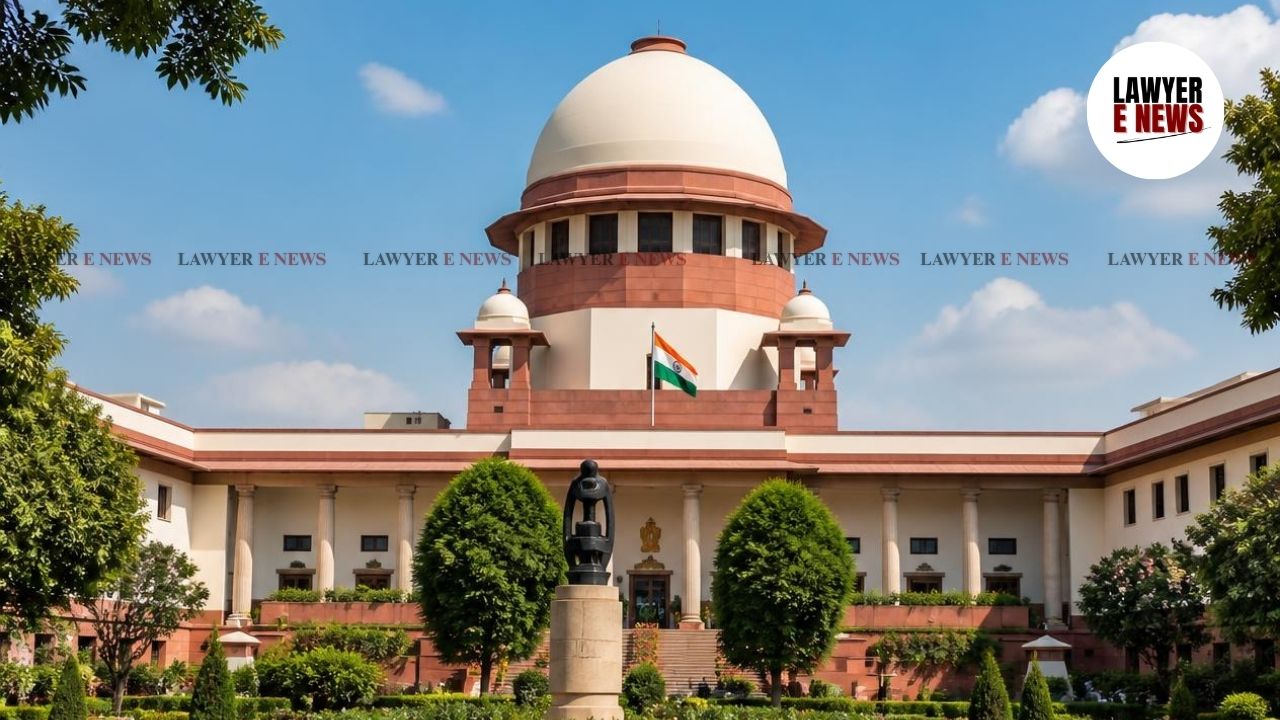
"The adjudication by the Controlling Authority with regard to the liability was beyond its jurisdiction, as the only power conferred on the Controlling Authority under the statute was to compute the amount which may be payable to the concerned 'employee'." Supreme Court, in a judgment, held that a Controlling Authority constituted under the Payment of Gratuity Act, 1972 lacks the jurisdiction to adjudicate upon the liability of a principal employer concerning gratuity claims made by contract labourers.
A bench comprising Justice Ahsanuddin Amanullah and Justice Manmohan observed that the jurisdiction of the authority is strictly confined to the computation of gratuity amounts payable to an "employee," and it cannot extend its scope to determine the existence of an employer-employee relationship or fasten liability onto a principal employer where the claimant was engaged through a contractor.
The appellant, M/s Oil and Natural Gas Corporation Ltd (ONGC), challenged a common order dated August 23, 2023, passed by the Bombay High Court. The High Court had fastened the liability to pay gratuity to various private respondents, who had worked for the appellant through contractors, upon the appellant. ONGC contended that no employer-employee relationship existed between them and the claimants, rendering the provisions of the Gratuity Act inapplicable, and further challenged the jurisdictional competence of the Controlling Authority to decide the issue of liability.
The primary question before the court was whether the Controlling Authority under the Gratuity Act is competent to adjudicate upon the liability of a principal employer regarding the payment of gratuity to contract labourers. Additionally, the court examined whether the nature of a job contract at arm's length precludes the existence of an employer-employee relationship sufficient to trigger the obligations under the Gratuity Act and the Contract Labour (Regulation and Abolition) Act, 1970.
Jurisdiction of the Controlling Authority
The court underscored that the statutory mandate of the Controlling Authority is specific and limited. It is empowered solely to compute the amount payable to an employee, and it does not possess the roving jurisdiction to delve into the underlying contractual obligations or to determine the identity of the employer in cases involving complex contract labour arrangements.
Authority Lacks Power To Determine Liability
The bench emphasized that the Controlling Authority is not a civil court of general jurisdiction. By attempting to fasten liability on the principal employer, the authority exceeded its statutory authority, as the legislative intent behind the Gratuity Act was to create a summary mechanism for payment, not a forum for complex employment litigation.
"The Appellate Authority, before whom the appellant succeeded, had rightly interfered in the matters and we find that the reversal of the order of the Appellate Authority by the High Court vide the impugned order was not justified."
Non-Applicability of Employer-Employee Relationship
The court noted that the agreement between the appellant and the contractor was a clear "job contract" at arm's length. Consequently, there was no privity of contract between the appellant and the employees of the contractor that would satisfy the definition of an "employee" under the Gratuity Act.
Interpretation of CLRA and Payment of Wages Act
The court further observed that under the Contract Labour (Regulation and Abolition) Act, 1970, the responsibility of the principal employer is distinct. The court found merit in the submissions that the statutory framework does not automatically extend the definition of "wages" to include gratuity in the context of principal employer liability, especially when the statutory definitions remain distinct.
Finding the proceedings before the Controlling Authority to be fundamentally non-maintainable due to a lack of jurisdictional competence, the Supreme Court allowed the appeals. The impugned orders of the High Court were set aside, and the orders passed by the Appellate Authority, which had previously ruled in favor of ONGC, were restored. The court noted that because the gratuity amounts had already been paid to the claimants pursuant to an earlier interim order dated December 15, 2023, no recovery would be made from the respondents.
Date of Decision: 09 September 2026