-
by sayum
04 October 2026 12:06 PM







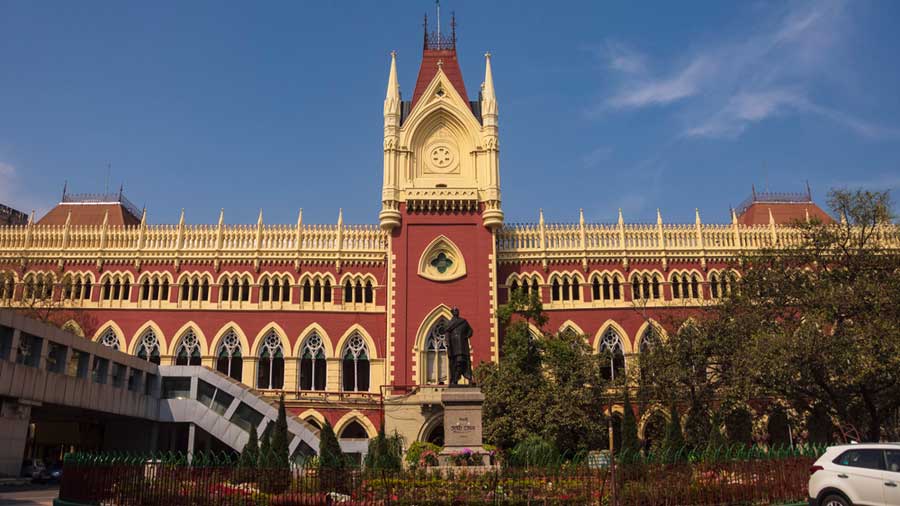
In a landmark judgment, the Calcutta High Court, presided over by the Hon’ble Justice Sabyasachi Bhattacharyya, dismissed a series of writ petitions filed by M/s. Kayal Construction against the State of West Bengal, concerning the inclusion of Goods and Services Tax (GST) in contractual agreements post its introduction in 2017.
In the case of M/s. Kayal Construction Vs. The State of West Bengal & Ors, the petitioner contended that the introduction of the GST Act imposed unforeseen additional tax burdens, beyond the scope of their contractual obligations. However, the court held that the contracts should be interpreted to “give efficacy rather than to invalidate it,” emphasizing the need for a pragmatic approach in contract interpretation.
Justice Bhattacharyya stated, “The relevant clause clearly indicates that all indirect taxes are also to be paid by the petitioner. By way of example, VAT, Sales Tax, etc., have been mentioned and similar other statutory levy has also been included in the contract, to be borne by the contractor.” This observation underscored the court’s stance that the shift to the GST regime did not fundamentally alter the tax liabilities agreed upon in the contracts.
The court’s ruling hinged on the interpretation of contract clauses concerning tax liabilities, asserting that the GST Act merely subsumed existing indirect taxes and did not introduce new taxes. Therefore, the petitioner was found liable for GST under both the contract and the statutory obligations as a supplier under the GST Act.
Furthermore, the judgment addressed the principles of business efficacy and commercial viability in commercial contracts, rejecting the petitioner’s arguments regarding the commercial impact of tax regime changes. The court affirmed that commercial contracts inherently involve calculated business risks, including tax changes, and that the introduction of the GST regime did not remove the certainty of price or terms agreed upon in the contract.
The decision also referenced sever”l key judgments to reinforce its findings, including Nabha Power Limited (NPL) v. Punjab State Power Corporation Limited (PSPCL) and Enercon (India) Ltd. V. Enercon GMBH.
Representing the petitioner were Mr. Subhabrata Datta and Mr. Aranya Saha, while the state’s defense was led by Mr. Tanay Chakraborty, Ms. Mrinalini Majumder, Mr. Somnath Ganguli, Mr. Balarko Sen, and Mr. Sk. Md. Galib in various capacities.
Date of Decision: 17.11.2023
M/s. Kayal Construction Vs. The State of West Bengal & Ors