-
by kapil
16 October 2026 11:10 AM







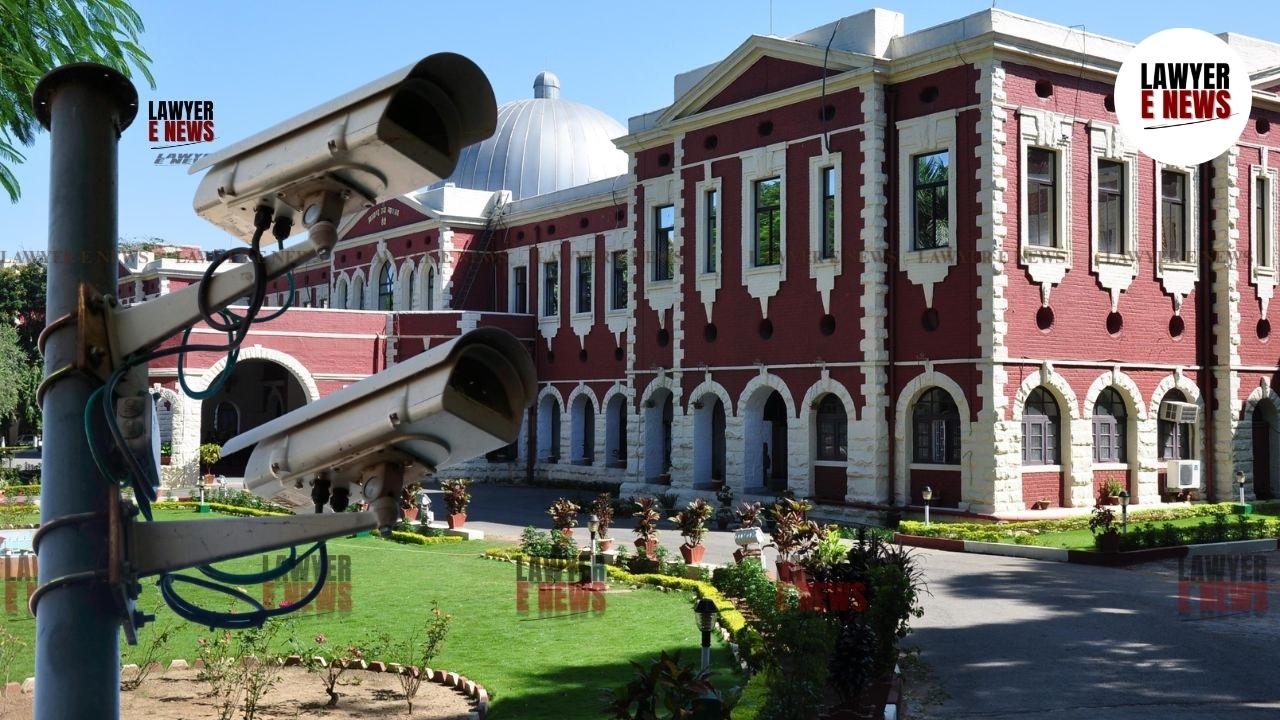
"At least in a State where the official records admit to about 427 custodial deaths during the short period between 2018 and 2026, there should have been no delay in complying with the Court’s orders to install CCTV cameras in all the police stations. At least prima facie, we get the impression of a systematic effort to delay, if not outright disobedience." High Court of Jharkhand, in a stern order passed, initiated contempt proceedings against senior state administration over non-compliance with court directives mandating the installation of CCTV cameras across police stations, observing that bureaucratic buck-passing amounts to a "systematic effort to delay, if not outright disobedience."
A Division Bench comprising Chief Justice M.S. Sonak and Justice Manoj Prasad observed that in a State confronting the menace of custodial violence, official reluctance to implement oversight mechanisms cannot be countenance.
The present proceedings arise out of a suo motu public interest litigation registered by the High Court to secure the mandatory installation of functional CCTV cameras across all police stations in Jharkhand to prevent custodial violence. The Court had previously dealt with the issue in W.P.(PIL) No. 1218 of 2022, wherein the State Government's own statistical data disclosed an alarming figure of 427 custodial deaths between 2018 and 2026. Despite explicit, repeated directions issued by coordinate benches over time, compliance remained stalled due to continuous tender cancellations and administrative delays.
The primary question before the Court was whether senior police leadership and executive departments can escape responsibility under the Contempt of Courts Act for non-compliance with binding judicial mandates by shifting institutional blame onto one another. The Court was also called upon to determine whether prima facie willful disobedience was established to justify issuing a show-cause notice of contempt to the administrative head of the Home Department.
DGP's Attempt To Abdicate Responsibility Unacceptable
Scrutinizing the compliance affidavit submitted by the Director General of Police (DGP), Jharkhand, the Bench expressed grave displeasure at the stance taken by the state's highest police officer. The DGP contended that she lacked independent authority to direct the procurement and installation of CCTV cameras, claiming the Home, Prison and Disaster Management Department was the sole competent parent department.
The Court held that this belated defense was nothing more than an impermissible attempt to evade constitutional and statutory accountability. The Bench noted that the affidavit merely reiterated previously rejected excuses, demonstrating that the DGP "at least prima facie wishes to abdicate all responsibility for compliance with judicial orders made from time to time regarding the installation of CCTV cameras in police stations in Jharkhand."
Tender Cancellations Used As Modus Operandi To Defy Court Orders
"A Time-Tested Modus Operandi To Delay Implementation"
The Division Bench highlighted the recurrent, procedural obstruction adopted by state authorities whenever the matter was listed for monitoring. The Court noted that the typical administrative pattern was to float tenders ahead of court hearings, report ongoing bid evaluations, cite technical obstacles, and subsequently cancel the entire tender process to start afresh.
The Bench observed that coordinate benches had repeatedly reprimanded this practice, finding it to be a calculated mechanism to bypass judicial scrutiny. The judges remarked that through such bureaucratic red tape, the State had successfully delayed the implementation of binding orders, noting that the conventional, repetitive tender of "unqualified and unconditional apologies" in government affidavits rang completely hollow in the absence of actual compliance.
Urgency Paramount In Light Of 427 Custodial Deaths
Reiterating the human rights imperative underlying the installation of surveillance equipment in police stations, the Court recalled the disturbing findings in W.P.(PIL) No. 1218 of 2022. The Bench emphasized that the earlier bench was "shocked beyond words at this alarming figure of 427 custodial deaths between 2018 and 2026" admitted in the State's own statistical submissions.
Given this grim factual reality, the Bench held that the State apparatus ought to have acted with the utmost expedition to ensure accountability in police custody. Instead, the administration indulged in institutional buck-passing, prompting the Court to observe that the departmental heads were actively shifting blame to avoid personal and official liability for continuous default.
Contempt Notice Issued To Additional Chief Secretary (Home) - Notice Under Contempt Of Courts Act Issued
Taking cognizance of the DGP's affidavit pointing the finger at the parent administrative department, the Court issued a notice to Ms. Vandana Dadel, Additional Chief Secretary heading the Home, Prison and Disaster Management Department, calling upon her to show cause why contempt proceedings should not be initiated against her under the Contempt of Courts Act.
The Registry was directed to issue notice in Form-I along with copies of the petition, affidavits, and previous judicial orders, with a specific instruction that the notice be served personally upon the DGP within ten days. The Court permitted the DGP and the private respondents to submit their respective reply affidavits on or before October 14, 2026.
Chief Secretary Directed To Assume Direct Responsibility
Addressing the State's request for additional time to present a concrete implementation schedule, the Court granted the learned Advocate General time until October 14, 2026, to file an affidavit placing on record a definitive timeline for the completion of CCTV installations in all police stations.
The Bench categorically clarified that institutional evasion will no longer be tolerated and placed the onus squarely on the highest executive office of the State. The Court held that it expected the Chief Secretary of Jharkhand to assume direct personal responsibility, specifically recording that any compliance affidavit submitted through intermediary agencies such as JAP-IT or private contractors would be summarily rejected.
The High Court held that systemic bureaucratic delays and inter-departmental blame-shifting constitute prima facie willful defiance of judicial mandates, particularly where human rights in police custody are at stake. By issuing a show-cause contempt notice to the Additional Chief Secretary (Home) and mandating an affidavit directly from the Chief Secretary, the ruling establishes that administrative heads cannot dilute their accountability for installing vital custodial safeguards.
Date of Decision: September 24, 2026