-
by sayum
14 October 2026 10:05 AM







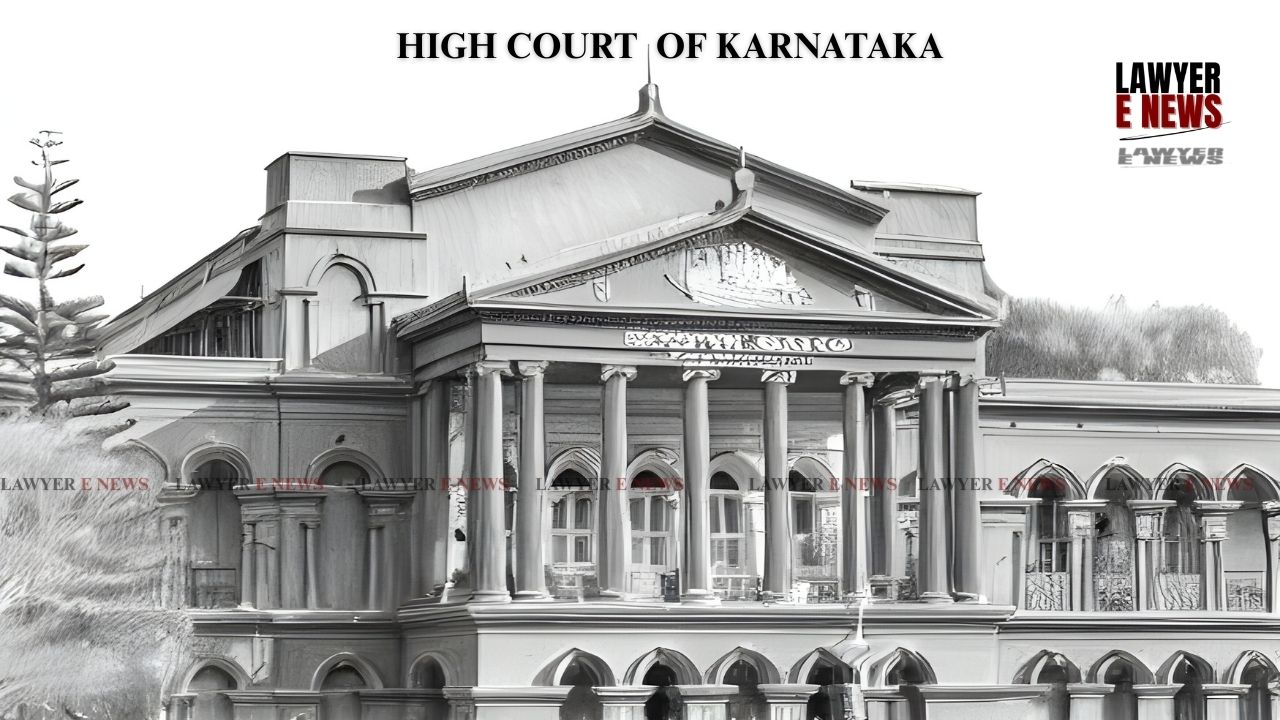
"The Criminal Contempt Jurisdiction is an extraordinary jurisdiction of the Contempt Court. While adjudicating upon the complaint regarding committing of criminal contempt by the accused, the conduct of the complainant should be unblemished." Karnataka High Court, in a significant ruling dated 09 October 2026, held that an accused who issues a cheque with an endorsement requiring the withdrawal of pending judicial proceedings as a condition for encashment is liable for criminal contempt for obstructing the administration of justice.
A division bench of Justice Anu Sivaraman and Justice T.P. Vivekananda observed that such conduct constitutes an attempt to scuttle judicial proceedings, stating, "the accused has stood in the way of administration of justice and intimidated the complainant to withdraw a Civil Contempt Petition."
The matter arose from a long-standing personal dispute between the complainant and the accused. The complainant had previously filed a civil contempt petition (CCC.No.1228/2015) against police officers, alleging that they had filed a ‘B’ report in a criminal case despite an interim stay. It was alleged that the accused in the present case approached the complainant, intimidated him, and handed over a cheque for Rs. 1,00,000 with a written endorsement on the reverse explicitly linking the encashment of the cheque to the withdrawal of the pending contempt petition.
The primary question before the court was whether the act of issuing a cheque conditioned upon the withdrawal of a pending court proceeding constitutes criminal contempt under Section 2(c) of the Contempt of Courts Act, 1971. The court was also called upon to evaluate whether the complainant’s own conduct, including the encashment of the cheque and the subsequent filing of contempt proceedings, rendered him complicit in the misuse of judicial time for personal vengeance.
Nature of Criminal Contempt
The Court reaffirmed that criminal contempt jurisdiction is an extraordinary power intended to uphold the majesty of the court. By placing an endorsement on the cheque that it should be presented only after the withdrawal of the contempt petition, the accused directly interfered with the judicial process. The court noted that there was no denial from the accused regarding the issuance of the cheque for the purpose of scuttling the ongoing litigation.
Court Explains Conduct of Parties
The bench emphasized that parties seeking to invoke the court’s extraordinary contempt jurisdiction must come with clean hands. The complainant had admitted to encashing the cheque, which was clearly intended to compromise the court's proceedings. The court noted that instead of producing the cheque before the court to demonstrate the intimidation, the complainant chose to encash the funds first, thereby actively participating in the compromise of justice.
Misuse of Contempt Jurisdiction
The court expressed strong disapproval of the complainant's strategy to use criminal contempt proceedings as a tool to settle personal scores. The bench observed that the complainant’s blameworthy conduct, including his withdrawal of the original contempt petition after encashing the cheque, demonstrated that the petition was driven by mala fides rather than a genuine concern for the rule of law.
"This Court would have appreciated the complainant, if he has not encashed the cheque and agitated the same before the Co-ordinate Bench where CCC.No.1228/2015 was pending. The conduct of the complainant in instituting this criminal contempt proceeding and during the pendency of the same, withdrawing of CCC.No.1228/2015 is liable to be deprecated."
Finding the charges proved beyond reasonable doubt, the Court convicted the accused under Section 12(1) of the Contempt of Courts Act. The accused was sentenced to simple imprisonment until 5:00 PM on the day of the order and a fine of Rs. 2,000. Regarding the complainant, while the court refrained from a conviction due to his age and health, it imposed a cost of Rs. 10,000 payable to the High Court registry for the unwarranted consumption of judicial time.
Date of Decision: 09 October 2026