-
by sayum
24 October 2026 1:47 PM







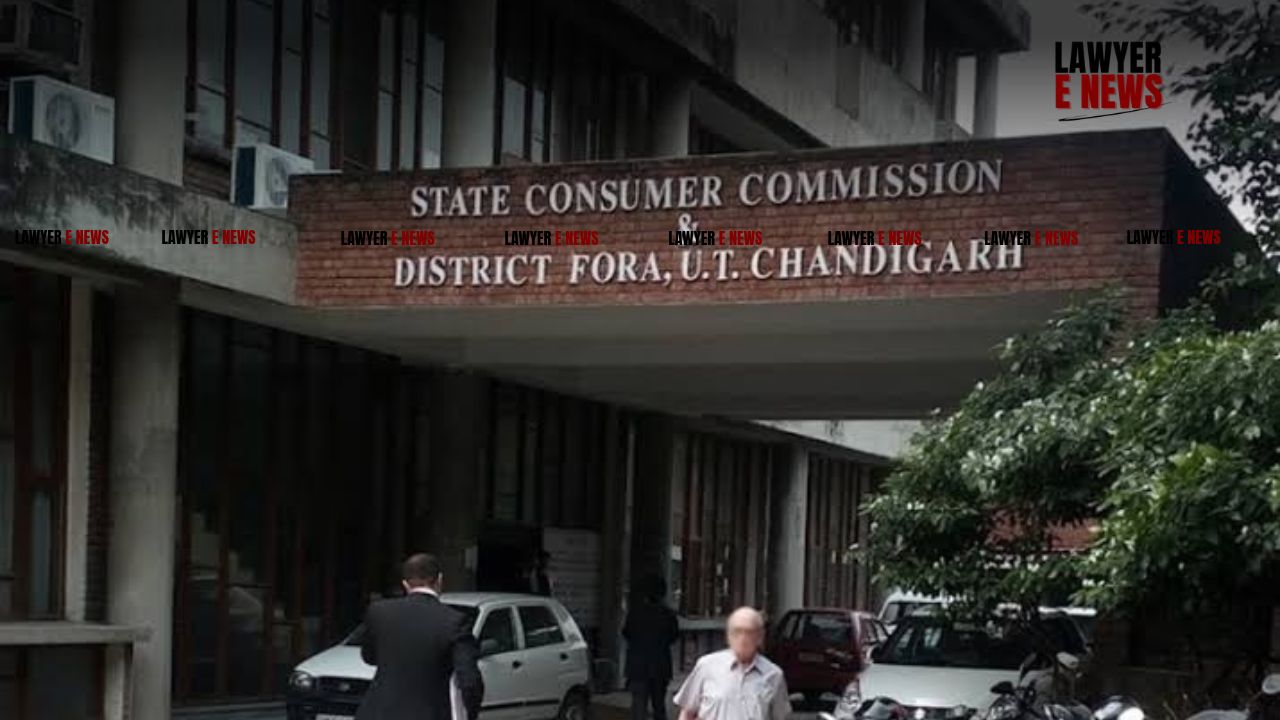
"The proceedings before the Commission being summary in nature, the complaints involving highly disputed questions of facts or the cases involving tortious acts or criminality like fraud or cheating, could not be decided by the Forum/Commission under the said Act." Punjab State Consumer Disputes Redressal Commission, in a significant ruling dated October 15, 2026, held that consumer forums operating under summary jurisdiction cannot adjudicate complex contractual disputes involving highly disputed questions of fact that necessitate elaborate evidence and cross-examination of witnesses.
A bench comprising Justice Daya Chaudhary (President) and Simarjot Kaur (Member) dismissed a consumer complaint alleging defective and incomplete house construction, reiterating that "there could not be any presumption with regard to the wilful fault, imperfection, shortcoming or inadequacy in the quality, nature and manner of performance in service."
The complainant had engaged M/s Neev Construction under an agreement dated November 28, 2021, to construct a residential building on a one-kanal plot in SAS Nagar, Mohali, for an agreed estimate exceeding Rs 1.06 crore. Alleging defective construction, hazardous fungal growth, and abandonment of work, the complainant engaged a second contractor and approached the State Commission seeking refunds, damages, and compensation totaling over Rs 63 lakh. The contractor countered that the delays were attributable to the complainant's severe payment defaults, unapproved structural alterations, and mid-project design deviations.
The primary question before the Commission was whether the contractor's failure to complete the residential construction within the stipulated timeframe amounted to an actionable deficiency in service under Section 47 of the Consumer Protection Act, 2019. The Commission was also called upon to determine whether contested claims regarding financial delays, contractual alterations, and unilateral private valuation reports could be adjudicated within the summary proceedings of consumer commissions.
Unilateral Valuation Reports Unsupported By Affidavits Lack Expert Evidentiary Value
Addressing the complainant’s reliance on a private survey conducted by M/s Arora Consultants assessing damages at Rs 38 lakh, the Commission noted that the valuer’s certificate contained significant ambiguities and explicit disclaimers stating that the findings were subjective. The bench observed that the contractor was never associated with the survey, rendering the evaluation unilateral and inconclusive.
The Commission held that such private assessments cannot be accorded the status of expert testimony in the absence of corroborative procedural safeguards. The bench observed that the authenticity of the report could not be ascertained because no supporting affidavit of the valuer was tendered by the complainant.
Claims Of Delayed Payment And Breach Involve Detailed Evidence Beyond Summary Jurisdiction
Examining the rival assertions on financial default, the Commission observed that while the contractor produced contemporaneous WhatsApp records demonstrating the complainant’s inability to arrange funds, the complainant submitted an uncertified statement of accounts. The bench underlined that determining financial liability in such circumstances exceeds the purview of summary trial.
The bench observed that the issue pertaining to delayed payment is a matter of evidence requiring cross-examination of witnesses, which cannot be undertaken in summary proceedings before the Commission.
Structural Deviations And Inconsistent Conduct Cannot Be Examined Summarily
The Commission also highlighted that the complainant had repeatedly deviated from the initial contract specifications, such as insisting on dismantling walls built with agreed fly-ash bricks and changing window frameworks, thereby disrupting construction timelines. The bench found that these reciprocal allegations of contractual deviation demanded extensive trial scrutiny.
The Commission further took note of contemporaneous WhatsApp communications where the complainant had initially praised the ongoing construction with remarks like "Good Job" and "very nice love it", only to subsequently allege gross deficiency. The bench held that such glaring self-contradictions in party conduct cannot be resolved without examining evidence at length.
Consumer Forums Cannot Presume Deficiency In Highly Contested Factual Claims
Relying on the authoritative precedent of the Supreme Court in Chairman & Managing Director, City Union Bank Ltd. v. R. Chandramohan (2023 AIR SC 1762), the Commission reiterated the circumscribed nature of consumer adjudication. The Apex Court had clarified that proceedings before consumer commissions being summary in nature, complaints involving highly disputed questions of fact cannot be adjudicated under the Act.
The bench stressed that the burden of proving deficiency in service under Section 2(1)(g) of the Act rests squarely upon the person alleging it, and consumer commissions cannot draw presumptions of wilful fault or inadequacy where facts are intensely contested.
"The proceedings before the Commission being summary in nature, the complaints involving highly disputed questions of facts or the cases involving tortious acts or criminality like fraud or cheating, could not be decided by the Forum/Commission under the said Act."
Concluding that the dispute required full-scale trial proceedings, the State Commission dismissed the consumer complaint for lack of merit under summary jurisdiction. The Commission, however, granted liberty to the complainant to approach an appropriate civil court or competent forum to seek redressal for her contractual claims.
Date of Decision: 15 October 2026