-
by sayum
27 August 2026 3:32 PM







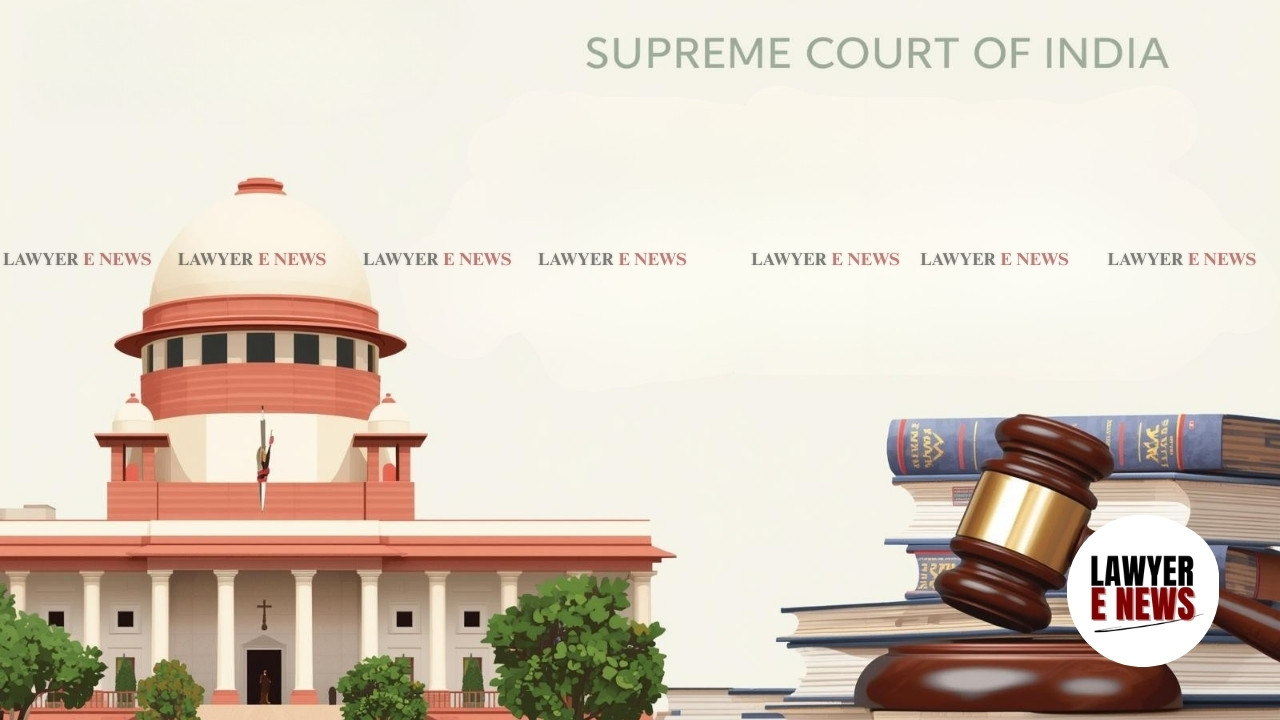
“Liberty granted by the Court to pursue remedies cannot be nullified by invoking constructive res judicata” – In a ruling that significantly reinforces litigants’ right to seek civil remedies even after earlier judicial proceedings, the Supreme Court of India has held that constructive res judicata cannot be invoked to bar a civil suit when the Court has expressly preserved liberty to sue.
Delivering the verdict, the Bench of Justices Sanjay Kumar and K. Vinod Chandran categorically rejected the argument that a civil suit challenging a family partition deed and an alleged Conciliation Award was barred under the doctrine of constructive res judicata.
“Based on the decisions in the earlier rounds of litigation, there can be no plea taken of a constructive res judicata insofar as the independent challenge now raised against the KBPP and the document dated 02.01.2019 is permitted by the High Court in the earlier rounds and liberty left by this Court too,” the Court ruled.
Challenge to Partition Deed Blocked by Courts Below
The plaintiffs (Jegatheesan group), who had earlier participated in proceedings before the High Court and the Supreme Court regarding their family property dispute, filed a civil suit challenging the Kaithadi Baga Pirivinai Pathiram (KBPP) as having been executed under coercion, undue influence, and misrepresentation. They also sought to invalidate a follow-up document dated 02.01.2019, which the opposite party claimed to be a valid Conciliation Award under the Arbitration and Conciliation Act, 1996.
The Trial Court and Madras High Court dismissed the suit under Order VII Rule 11 of the CPC, holding that it was barred by constructive res judicata. They reasoned that the plaintiffs had already participated in prior litigation—including proceedings under Section 11 of the Arbitration Act and revisions related to execution—that dealt with the same subject matter.
But the Supreme Court found that both the High Court and this Court, in earlier stages of the dispute, had explicitly left open the plaintiffs’ right to challenge the documents in appropriate legal forums.
Liberty Once Granted Cannot Be Withdrawn by Implication
The Supreme Court emphasised that once a party has been granted liberty by the Court to initiate a suit or pursue a remedy under the law, such liberty cannot be later defeated by arguing constructive res judicata:
“We are of the opinion that the challenge against the KBPP and the Award is still at large,” the Court observed. It held that earlier proceedings only foreclosed arbitration as a remedy, not the civil suit which was filed to contest the validity of the partition deed on separate and independent grounds.
The Court found that neither the issue of fraud alleged in the Conciliation Award, nor the coercion alleged in execution of the KBPP, had been finally adjudicated in any earlier round. On the contrary, the earlier High Court decision had itself stated that:
“If the execution of the deed was on account of undue influence, coercion and misrepresentation, the document is only voidable which has to be set aside in the manner known to law, ‘by the Civil Court after trial’.”
This express recognition of the right to sue rendered any attempt to invoke constructive res judicata legally untenable.
Constructive Res Judicata: Explained and Limited
Constructive res judicata, under Explanation IV to Section 11 of the CPC, bars a party from raising in a subsequent proceeding any claim or ground which could and should have been raised in an earlier proceeding. However, the doctrine does not apply when the Court itself has preserved liberty to pursue future remedies.
The apex court decisively reaffirmed this principle:
“There can be no plea taken of constructive res judicata… liberty was reserved to avail remedies in accordance with law, at the earlier point.”
This ruling reinforces a fundamental safeguard in Indian civil jurisprudence—that liberty once granted by a Court to pursue legal remedies cannot be extinguished by subsequent procedural objections. The Supreme Court’s clear delineation between issues finally decided and those left open for future adjudication prevents the unjust foreclosure of remedies, particularly in high-stakes family disputes.
For litigants navigating parallel remedies such as arbitration, execution, and civil suits, the decision provides a powerful precedent on the scope and limits of constructive res judicata.
Date of Decision: February 10, 2026