-
by sayum
16 August 2026 12:05 PM







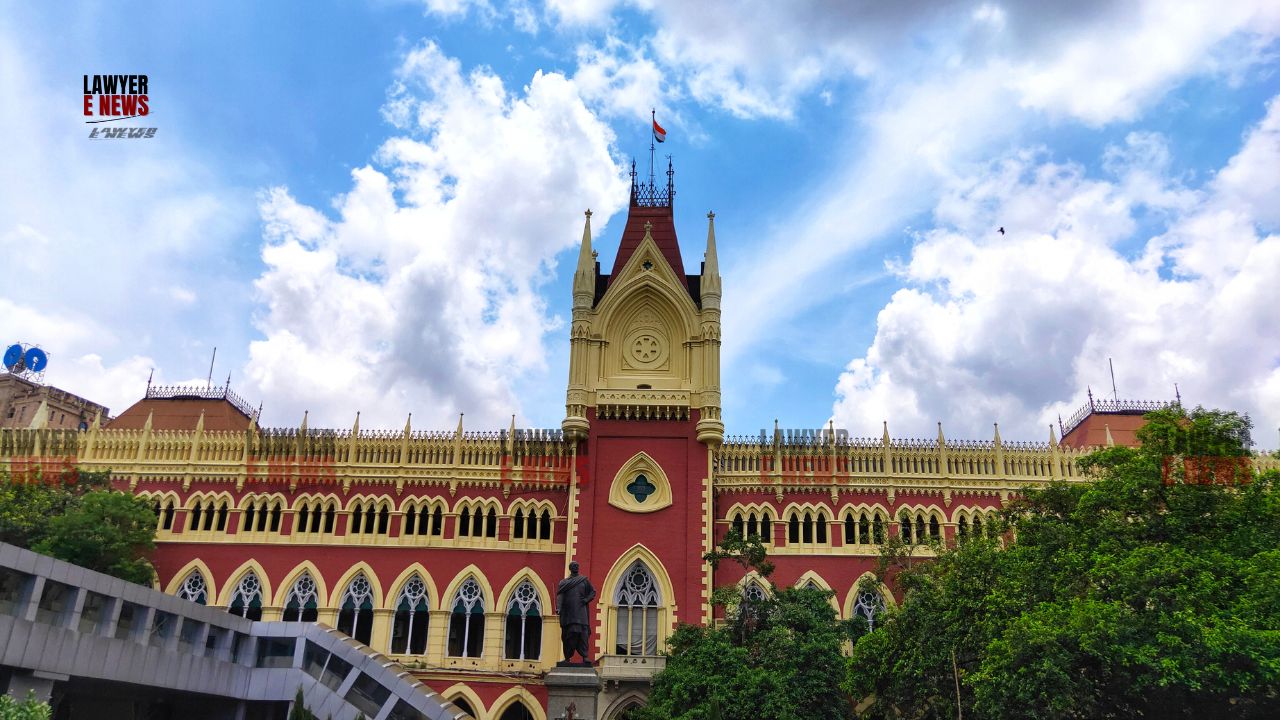
"Non-deliberate delay cannot stand on the way of dispensing with justice and adopting a justice oriented liberal approach," Calcutta High Court, in a significant ruling, held that courts must adopt a justice-oriented liberal approach while dealing with applications for condonation of delay, especially when the delay is non-deliberate.
A single-judge bench of Justice Sugato Majumdar observed that technicalities should not supersede the cause of substantial justice, particularly in light of the global pandemic which impacted communication between litigants and their counsel.
The matter arose from a title suit filed in 2020 by the Petitioner seeking a declaration of title and permanent injunction. After the Respondents failed to appear despite receiving summons, the Trial Court passed an ex-parte decree on May 11, 2022. The Respondents subsequently filed an application under Order IX Rule 13 of the CPC along with a Section 5 Limitation Act application to condone a delay of 461 days, citing illness, the Covid-19 pandemic, and lack of communication from their previous advocate.
The primary question before the court was whether the Trial Court and the First Appellate Court were justified in condoning a delay of 461 days in filing the restoration application. The court also considered whether the explanation provided for the delay was acceptable or if the orders were passed in a mechanical manner without sufficient cause being shown.
Liberal Approach to Delay
Court Emphasizes Substance Over Technicality In Condonation Matters
The Court observed that while dilatory tactics must be dealt with strongly as they oppose the ends of justice, a distinction must be drawn between intentional and unintentional delays. The bench noted that the explanation for the delay is the most critical factor in determining whether a party intended to bypass the legal process or was genuinely prevented from appearing.
"It is explanation of delay which matters most while considering condonation and to decide on whether the delay was intentional or unintentional," the Court remarked.
Impact Of Pandemic Extensions On Limitation Periods
Justice Majumdar highlighted that the ex-parte decree was passed in May 2022, a period immediately following the prolonged disruptions caused by the Covid-19 pandemic. The Court pointed out that the Supreme Court of India had, from time to time, extended the period of limitation during this era. Even though the Trial Court had not explicitly noted this extension, the High Court found it to be a valid contextual factor.
"The facts and circumstances of this case is different in view of the fact that Covid-19 preceded and period of limitations has been extended from time to time by the Supreme Court of India," the Bench observed.
Judicial Discretion And Imposition Of Compensatory Costs
The Court found that the Trial Court had balanced the equities by imposing compensatory costs of Rs. 25,000/- while setting aside the ex-parte decree. This exercise of discretion indicated a justice-oriented approach rather than a mechanical one. The Bench noted that neither the Trial Court nor the District Judge committed any jurisdictional error or exceeded their powers under the law.
"Neither of the Courts committed any jurisdictional error nor exceed jurisdiction in exercise of their powers. Therefore... there is no need for interference and exercise jurisdiction under Article 227 of the Constitution of India," the Court held.
Applicability Of Precedents In Condonation Cases
The Petitioner had relied on various precedents including Jai Gopal Goyal v. Bishen Dayal Goyal and Rajneesh Kumar v. Ved Prakash to argue against mechanical condonation. Conversely, the Respondents cited landmark rulings such as Collector, Land Acquisition, Anantnag v. Mst. Katiji and N. Balakrishnan v. Krishnamurthy. The Court held that while precedents provide guidance, each case must be decided on its own specific factual conspectus.
"Each case is decided on his own merit and in conspectus of facts specific to it," the Bench clarified.
The High Court ultimately dismissed the revisional application, upholding the orders of the lower courts that allowed the restoration of the suit. However, to ensure that the Petitioner is not further prejudiced by the delay, the Court directed the Trial Court to expedite the hearing of the original title suit. The proceedings are to be concluded without undue delay, preferably within a period of eight months.
Date of Decision: 11 June 2026