
-
by sayum
03 October 2026 9:56 AM







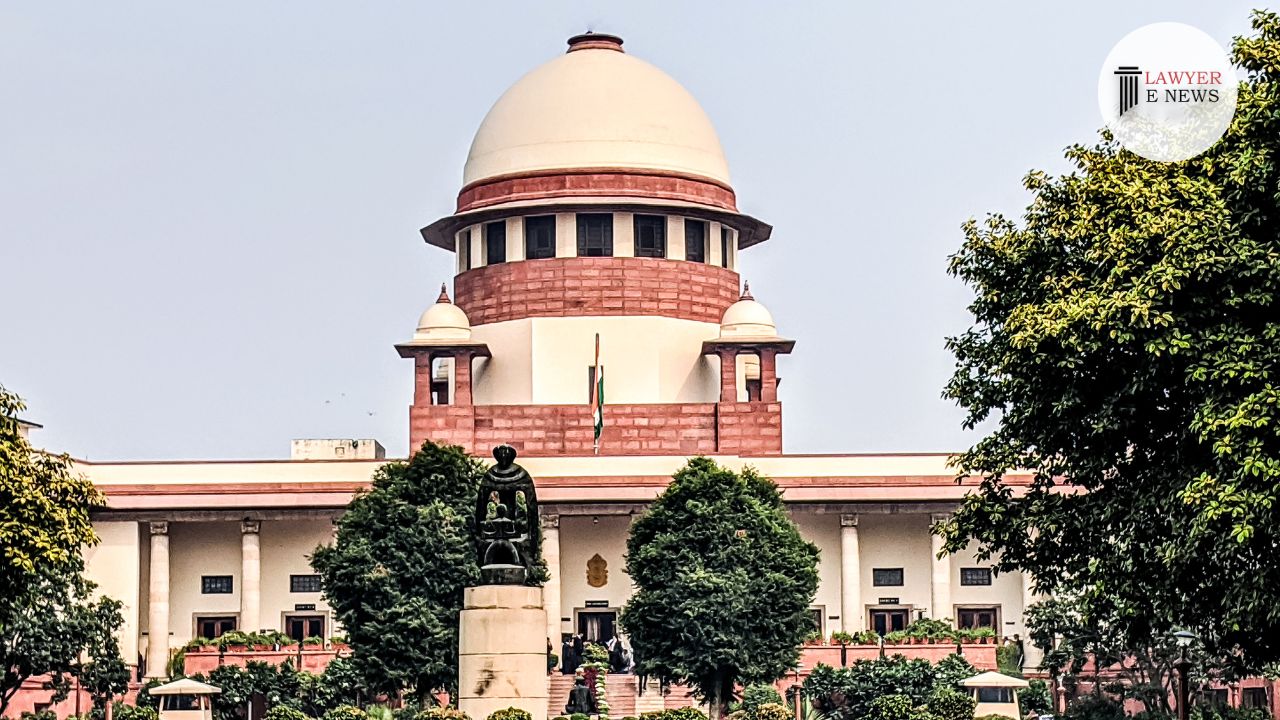
Supreme Court, in a recent Judgement (CAPTAIN PRAMOD KUMAR BAJAJ Vs UOI AND ANOTHER D.D. 03 March 2023), held that the scope of judicial review for compulsory retirement orders is limited. If the order casts a stigma on the employee's conduct or character, it can be treated as an order of punishment. However, if the order only refers to the assessment of the employee's work and does not cast aspersions on their conduct or character, it cannot be considered an order of punishment. The test for determining whether the statement in the order is stigmatic or not is how a reasonable person would read or understand it.
The appellant was a Permanent Commissioned Officer in the Indian Army and was demobilized due to a physical disability. In 1989, he qualified for the Civil Services Examination and appointed as an Officer in the Indian Revenue Service. He was promoted to higher posts and was selected and empanelled for appointment as a Member of the Income Tax Appellate Tribunal in 2014. However, his appointment did not mature due to litigations.
The appellant faced an adverse Intelligence Bureau report, which led him to approach the Tribunal for relief. The Tribunal directed the respondents to resubmit his adverse IB Report to the Selection Committee for reconsideration. The High Court dismissed the writ petition filed by the respondents against the Tribunal's judgment and issued further directions to make the entire process of reconsideration timebound. The Special Leave to Appeal preferred by the Union of India against the High Court's order was also dismissed by this Court.
Later, a vigilance inspection was carried out in the office of the appellant, and the respondents issued a show cause notice and withheld the appellant's earlier granted vigilance clearance. The Tribunal passed interim orders stating that the show cause notice and withholding of the vigilance clearance would not impede the appellant's consideration for the post of Member, ITAT. The appellant was later placed on the "Agreed List," a list of Gazetted Officers of suspect integrity prepared by the Department. A second Petition for Special Leave to Appeal filed by the respondents against the interim relief granted by the Tribunal in favour of the appellant was dismissed by this Court.
The appellant filed a contempt petition before the High Court due to non-compliance of an order passed in his favor. The Tribunal issued similar notices on two other contempt petitions filed by the appellant.
While disciplinary proceedings against the appellant were pending, the respondents compulsorily retired him, which the appellant challenged before the Tribunal. The Tribunal dismissed the petition, which was upheld by the High Court in May 2022.
Challenged Compulsory Retirement On Following Grounds
Firstly, on the ground of serious prejudice caused due to the bias of the Additional Director General (Vigilance) and the then Chairman of the CBDT. Secondly, the order of his pre-mature retirement is argued to be punitive in nature and solely intended to deprive him of an opportunity to be appointed as Member ITAT, a post for which he was selected long back in 2014. Lastly, it is urged that the High Court has overlooked the fact that all the Annual Performance Assessment Reports of the appellant over the past 30 years were blemishless, and he was graded as 'Outstanding' and his integrity was assessed as 'Beyond Doubt' for the immediately preceding 10 years' APARs after he was promoted to the post of Commissioner, Income Tax in 2012.
Supreme Court observed that the Fundamental Rule 56(j) includes two elements: the government's right to retire an employee and the requirement to meet the condition of public interest. The provision also requires a notice period of at least three months and can only be invoked after the employee has attained the age of 55.
And the scope of judicial review for compulsory retirement orders is limited. If the order casts a stigma on the employee's conduct or character, it can be treated as an order of punishment. However, if the order only refers to the assessment of the employee's work and does not cast aspersions on their conduct or character, it cannot be considered an order of punishment. The test for determining whether the statement in the order is stigmatic or not is how a reasonable person would read or understand it.
Supreme Court found that the appellant's personal file and character were examined and found to have an unimpeachable record, with no adverse entries or aspersions cast on their character. The respondents had cited nine complaints against the appellant that cast a cloud on their integrity, but four of them had already been closed, one was made by an officer who was later arrested for corruption, and two were still under examination. The appellant's ex-wife had made a complaint of bigamy and moral turpitude against them, but a divorce decree had been granted and a settlement was reached between the parties, with the appellant arranging for a residential flat for his ex-wife.
Supreme court noted that despite the judicial orders, the respondents continued to withhold the clearance claiming adverse findings in an Inspection Report dated 20th April, 2018. The inspection was conducted within days of the court upholding the order to resubmit the IB report. The irregularities in the inspection report were known to the respondents ten days before but they had issued a clearance letter to the appellant on 11th April, 2018.
The court acknowledges that the rule of law is fundamental to a well-governed society and that bias or malice in the governance system would undermine the values of a regulated social order. The appellant has accused the respondents of institutional bias and malice, claiming that the Chairman of the CBDT who a member of the Review Committee was facing contempt proceedings related to the appellant's service dispute. The presence of bias or malafides in the system of governance would undermine the rule of law, and any exercise of power that exceeds the parameters prescribed by law or is driven by malicious intent must be struck down.
After examining the evidence, the Court found merit in the other grounds raised by the appellant. The respondents had not exercised their right to retire the appellant in public interest until the very end of his career, despite having graded him as "Outstanding" and assessed his integrity as "beyond doubt" just a few months earlier. The order of compulsory retirement was passed just three months before the appellant was due to superannuate, and it appears to be punitive in nature and was passed to circumvent the pending disciplinary proceedings against the appellant. As a result, the Court concludes that the order of compulsory retirement cannot be sustained and does not serve the interest of the public.
Supreme Court reverses the impugned judgment and quashes the order of compulsory retirement. Any adverse consequences resulting from the order are also set aside. Appeal Allowed.
CAPTAIN PRAMOD KUMAR BAJAJ Vs UOI AND ANOTHER