-
by sayum
06 October 2026 10:09 AM







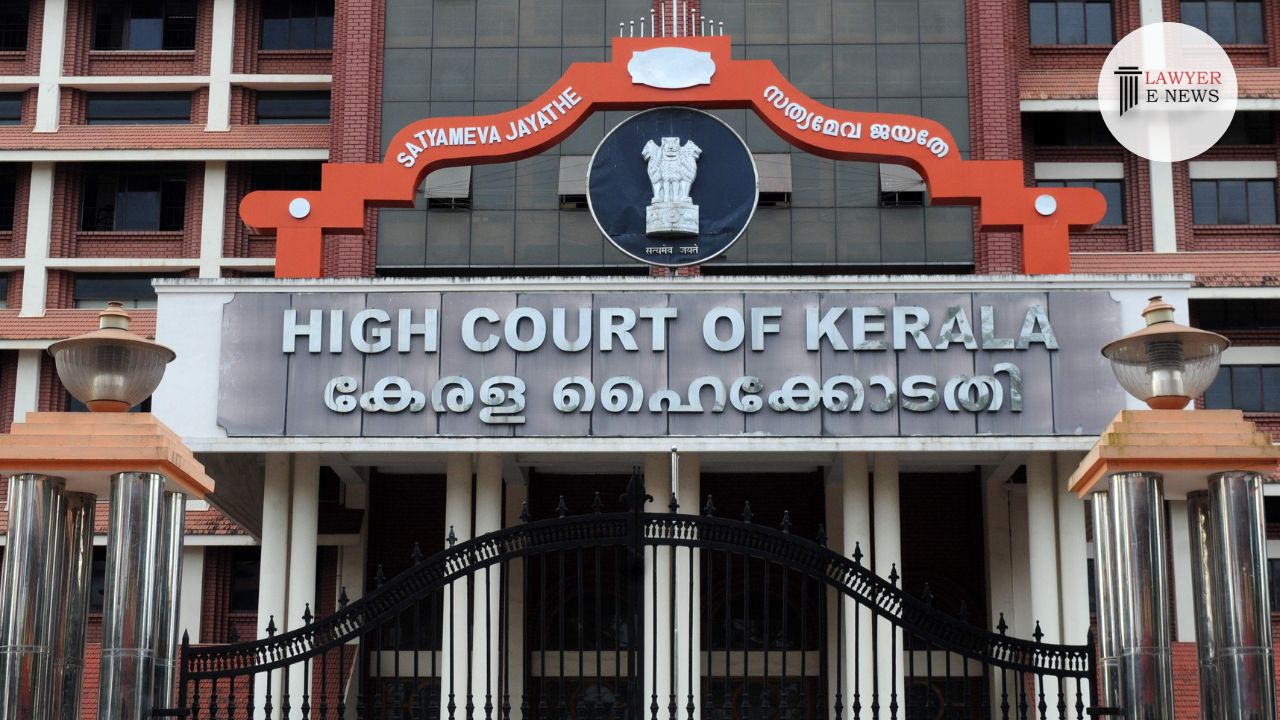
In a significant ruling, the Full Bench of the Kerala High Court comprising Justices P.B. Suresh Kumar, P.G. Ajithkumar, and C.S. Sudha clarified the eligibility criteria for higher grade pay for headmasters in aided secondary schools. The Court held that "completion of 7 years service in the pay scale of Headmaster is the requirement for getting the first grade pay" for headmasters, decisively interpreting the pertinent rules under the Kerala Education Rules, 1959 (KER).
Legal Point of Judgement: The key legal issue revolved around whether the eligibility for a higher grade for a headmaster in an Aided Complete Secondary School is determined by seven years of service as a headmaster or by seven years of service in the headmaster’s scale of pay.
Facts and Issues of the Judgement: The appellant, State of Kerala, contested the interpretation that mere service as a headmaster for seven years was sufficient for eligibility for a higher grade. The respondent, a retired headmaster, contended for eligibility based on tenure in the position. The Court noted the existence of conflicting decisions in previous judgments, necessitating a definitive interpretation.
Court Assessment: The Court thoroughly analyzed Rule 44A of Chapter XIV-A and Rule 3 of Chapter XXVI of KER, emphasizing that a graduate teacher is eligible for the Headmaster's scale of pay only after 16 years of continuous service. The Court observed, “holding the post of Headmaster does not enable a teacher to draw the salary of a Headmaster.” The Court further noted the importance of service in the pay scale for eligibility for higher grades, referencing various precedents including 'Indira v State of Kerala' and 'Shivadasan v. State of Kerala'.
Decision: The Court clarified that for Headmasters of Aided Complete Secondary Schools, eligibility for a higher grade is based on service in the pay scale of the Headmaster, rather than merely the duration of holding the position. The Court declared the judgment in W.A.No.1577 of 2010, which had held to the contrary, as per incuriam (not according to law due to lack of consideration of a legal rule or principle), thereby affirming the decision in W.A.No.1886 of 1997.
Decision Dated 16th February 2024.
State of Kerala vs C. Kunhikkamma, Headmaster