-
by sayum
24 October 2026 1:47 PM







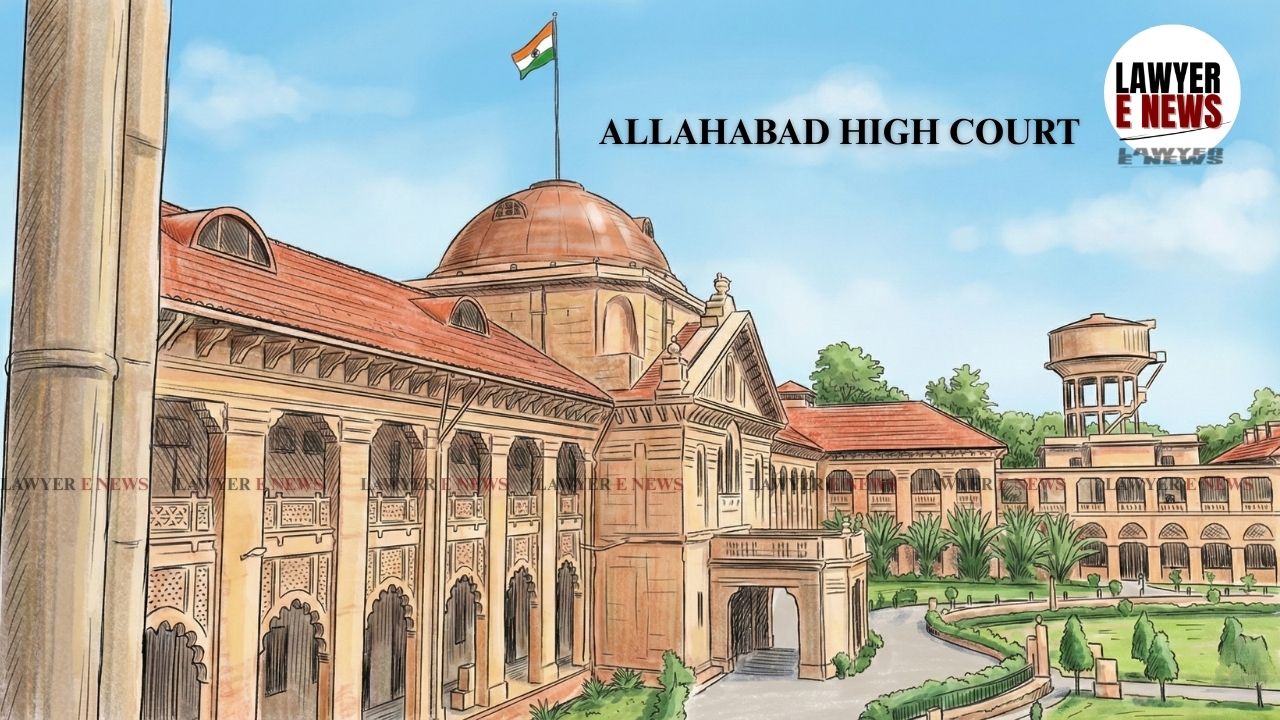
"The fact that the statutory amendment/notification came subsequently cannot, by itself, efface the legal consequence flowing from the earlier declaration of law in Vimla Srivastava. A subsequent formal amendment bringing the statutory text into conformity with the constitutional position cannot be construed as conferring, for the first time, a right which had otherwise been legally unavailable; rather, it evidences the consequential alignment of the statutory framework with the law already declared by this Court." Allahabad High Court, in a significant ruling dated October 16, 2026, held that a married daughter cannot be foreclosed from seeking compassionate appointment solely on the ground of her marital status, reaffirming that the judicial striking down of the word "unmarried" operates retrospectively.
A single-judge bench of Justice Manju Rani Chauhan quashed an administrative order rejecting a petitioner's claim under the Uttar Pradesh Recruitment of Dependants of Government Servants Dying in Harness Rules, 1974, observing that administrative delay consumed in processing a timely application cannot be subsequently turned into an objection of limitation against the dependent.
The petitioner’s father, a primary school Assistant Teacher, died in harness on May 14, 2015, following which she moved an application for compassionate appointment on May 17, 2016. The District Basic Education Officer rejected her application initially in 2016 on the ground of her marital status, and after the High Court remanded the matter for reconsideration, rejected it again on November 14, 2024, citing both her marital status and an alleged delay of six years. Aggrieved by the second rejection, the petitioner approached the High Court through the present writ petition.
The primary questions before the Court were whether a married daughter whose claim arose prior to the formal 2021 statutory amendment to Rule 2(c) of the 1974 Rules could be denied compassionate appointment on account of her marital status, and whether the time consumed in departmental consideration and prior litigation could be attributed to the claimant as a delay barring the application under limitation.
Exclusion Of Married Daughters Violates Articles 14 And 15 Of The Constitution
Examining the primary ground of rejection, the Court observed that the administrative authority had completely misdirected itself by treating marital status as a bar under Rule 2(c) of the 1974 Rules. The bench emphasized that the Division Bench of the High Court in Vimla Srivastava v. State of U.P. had already examined the constitutional validity of excluding married daughters from the definition of "family" and struck down the word "unmarried" occurring in Rule 2(c)(iii) as violative of Articles 14 and 15 of the Constitution of India.
The Court noted that the subsequent notification issued by the State Government on November 12, 2021, which formally omitted the word "unmarried" from Rule 2(c)(iii), was not a fresh grant of rights but an administrative alignment with the law already settled by constitutional courts. The legislative and executive response merely brought the statutory text into harmony with the non-negotiable constitutional principle that marital status cannot constitute an automatic disqualification for an otherwise eligible dependent daughter.
"The declaration in Vimla Srivastava was not an isolated judicial pronouncement divorced from the statutory scheme; rather, the State Government itself, in recognition of the legal position so declared, issued the notification dated 12.11.2021, whereby the word 'unmarried' was omitted from the aforesaid statutory provision."
Judicial Declarations Of Law Operate Retrospectively Unless Specifically Stated Otherwise
Addressing the respondents' contention that the petitioner’s claim arose prior to the 2021 statutory notification, the Court relied upon the Supreme Court's pronouncement in Government of India v. Sri Devaraj URS Medical College. Justice Chauhan reiterated that a declaration of law made by a competent constitutional court governs the legal position from its inception unless the court expressly limits its pronouncement to prospective application.
The bench also drew support from the Supreme Court's ruling in Sayara Khatoon @ Shayara Khatoon v. State of Bihar, holding that a married daughter's claim cannot be non-suited by invoking marital status when such exclusion stands judicially invalidated. Consequently, the authorities could not deny the petitioner consideration by contending that her father passed away before the executive formalized the rule change through the November 2021 notification.
Administrative Processing Time Cannot Be Converted Into A Delay Disqualification
The Court firmly rejected the secondary objection raised by the department that the claim was barred by limitation under Clause 8 of the Government Order dated September 4, 2000, which prescribed a five-year consideration period. The record unequivocally established that the employee passed away on May 14, 2015, and the petitioner had submitted her application on May 17, 2016, which was well within the prescribed period.
Justice Chauhan observed that the subsequent passage of time was solely attributable to the respondents' wrongful rejection and the time taken in administrative and judicial proceedings. The Court ruled that permitting authorities to exploit the duration of their own decision-making process to defeat a timely claim is fundamentally unjust and legally impermissible.
"To permit the respondents to take advantage of the time consumed in their own administrative process would amount to converting an administrative delay into a disqualification against the claimant. Such an approach would be manifestly inequitable and legally unsustainable."
Reconsideration Directed On Merit Without Reference To Marital Status
Setting aside the impugned rejection order dated November 14, 2024, the Court clarified that while the petitioner did not acquire an automatic right to immediate appointment, she was entitled to a fair evaluation. The bench remitted the matter back to the District Basic Education Officer, Saharanpur, to reconsider her claim afresh within eight weeks in terms of the 1974 Rules and governing precedents.
The Court directed that the fresh assessment must proceed uninfluenced by marital status, taking into account the family's dependency, financial condition, the petitioner's qualifications as possessed at the time of the initial application dated May 17, 2016, and the availability of a suitable post.
Allowing the writ petition in part, the High Court held that the exclusion of married daughters from compassionate appointment is unconstitutional, and prior declarations of law cannot be bypassed by relying on the date of subsequent executive notifications. The ruling establishes that administrative delay consumed in rejecting a claim on an invalid ground cannot subsequently be weaponized as a bar of limitation against the dependent applicant.
Date of Decision: October 16, 2026