-
by sayum
24 August 2026 6:22 AM







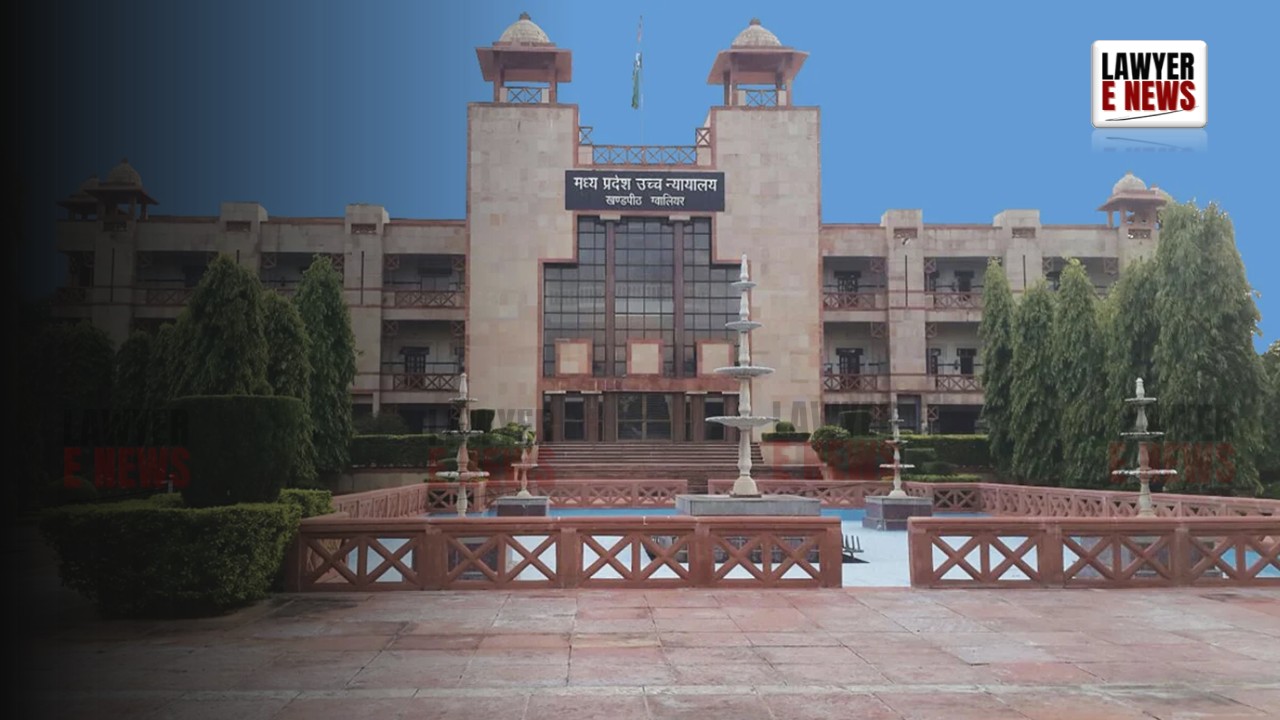
“It Is Not the Duty of a Litigant to Act as a Watchdog Over His Advocate” – In a recent judgement Madhya Pradesh High Court at Indore delivered a significant ruling where it set aside an ex-parte second appeal judgment passed on 15.04.2025, and restored the matter for rehearing. Justice Pavan Kumar Dwivedi held that a litigant cannot be penalised for the failure of his advocate to appear or inform him of the case status, especially when the litigant had taken all steps expected of him.
“It is no part of a litigant’s duty to patrol the corridors of the Court to check if his counsel is appearing. Once a party has engaged a lawyer and complied with all procedural requirements, he cannot be punished for what the lawyer failed to do,” the Court observed, invoking the well-settled principle laid down by the Supreme Court in Rafiq & Another v. Munshilal & Another.
“Absence of Special Notice to Litigant and Silence of Counsel Amounts to Denial of Fair Opportunity”
The applicants in this case — legal heirs of Dayaram, the original respondent — sought rehearing of Second Appeal No. 105/2005 which had been allowed ex-parte in favour of the plaintiffs. The applicants contended that while they had duly engaged counsel who appeared initially, the advocate abruptly stopped appearing from January 2016 onwards. Despite the repeated non-appearance of their lawyer, the Court never issued a Special Process or notice (SPC) to alert them.
The Court noted, “From 14.01.2016 onwards, counsel for the respondents stopped appearing but at no stage was any SPC issued. The respondents had no knowledge of the listing of the case, and no opportunity to present their defence.”
When questioned, the counsel who had earlier represented the applicants offered no explanation for his continued absence from 2016 to 2025, nor for failing to inform his clients about the status of the appeal. The Court held that this unexplained dereliction on part of the counsel was enough to establish “sufficient cause” for the litigants’ absence under Order 41 Rule 21 of the CPC.
“Ignorance of Judgment Is Irrelevant – What Matters Is Ignorance of the Hearing”
The respondents had strongly opposed the application, arguing that the applicants were aware of the ex-parte judgment at least by May 2025 when they appeared before the Tehsildar in execution proceedings. However, the Court made a crucial distinction — the relevant test is not whether the applicants knew about the judgment later, but whether they had a fair opportunity to be heard before it was passed.
“What this Court must examine is the reason for absence on the date of hearing. Subsequent knowledge of the ex-parte order is immaterial to decide whether a party was denied the opportunity to be heard,” held Justice Dwivedi, rejecting the objection that participation in execution proceedings disentitled the applicants from seeking recall.
“A Litigant Cannot Be Expected to Snoop Over His Counsel’s Attendance”
Referring to the Supreme Court’s decision in Rafiq v. Munshilal, the Court reiterated that the justice system cannot expect ordinary litigants — particularly those from rural backgrounds — to supervise the day-to-day attendance of their legal representatives.
“The disturbing feature is that under our present adversary system, the obligation of the party ends with engaging the advocate and trusting him to do the rest. The party cannot be faulted if the lawyer fails to appear,” quoted the Court from Rafiq, emphasising that an innocent party must not be made to suffer for the defaults of the professional he engaged.
Similarly, reliance was placed on Ram Kumar Gupta v. Har Prasad, where the Apex Court held that once a party is diligent and has taken all steps in good faith, the Court must ensure that justice is not defeated by procedural defaults of counsel.
“No Evidence of Deliberate Avoidance – Delay Condoned, Appeal to Be Reheard”
The Court found that there was no material to suggest that the applicants had deliberately remained absent or were trying to stall proceedings. The 86-day delay in filing the present application was accordingly condoned. The Court directed that the second appeal be restored to file and listed for final hearing.
Justice Dwivedi was clear in his finding: “The applicants had a bona fide belief that their counsel would represent them. There is no document to show that they were aware of the listing. The absence is thus explained by sufficient cause.”
At the same time, the Court sought to balance equities by imposing ₹10,000 as costs to be paid by the applicants to the respondents, observing that while the right to hearing must be preserved, the inconvenience caused to the opposing party could not be ignored.
Justice Must Not Be Denied for Lapses of Legal Agents
In setting aside the ex-parte judgment and restoring the matter for full hearing, the Madhya Pradesh High Court underscored the centrality of fair hearing in the judicial process.
“Once a party has entrusted the matter to an advocate and there is no intentional negligence, the Court must ensure that justice is not denied merely due to professional lapse. The litigant should not be sacrificed at the altar of technicality.”
This ruling stands as a crucial reaffirmation that procedural justice must never eclipse substantive fairness. Courts, while being vigilant against abuse of process, must remain equally vigilant to ensure that no party is condemned unheard due to counsel’s silence.
Date of Decision: 15 January 2026