-
by sayum
25 August 2026 12:32 PM







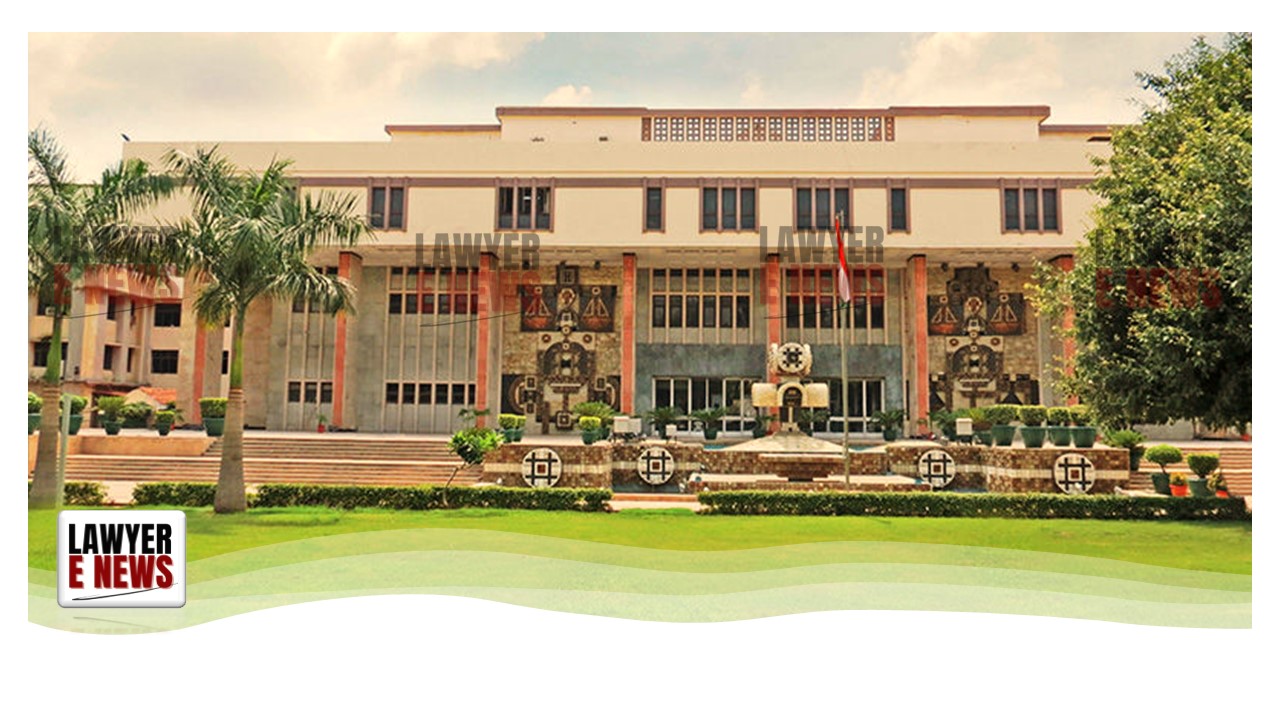
“Back-to-Back Payment Clauses Do Not Override Buyer-Seller Liability in Commercial Contracts” – Delhi High Court, in a decisive reaffirmation of commercial accountability and the scope of Order XIII-A and Order XII Rule 6 of the Code of Civil Procedure, decreed a summary judgment of ₹16,77,73,384 in favour of Mapsa Tapes Private Limited, a registered MSME, against Shiv Naresh Sports Private Limited, for unpaid dues under a supply contract.
Justice Amit Bansal, while pronouncing judgment in CS(COMM) No. 689 of 2023, held that undisputed ledger entries, admitted invoices, and unambiguous pleadings constituted clear admissions of liability, warranting decree without trial. The Court ruled:
“In light of the averments made in the written statement read in conjunction with the ledger, a clear and unambiguous admission has been made... that a sum of ₹16,77,73,384.10 is due and payable to the plaintiff.”
“Defence of Profit-Sharing or Contingent Payment Lacks Legal Foundation in Absence of Written Agreement”
At the heart of the dispute was the supply of over 46 lakh school bags by the plaintiff to defendant no.1, under a sales confirmation agreement, forming part of a Government of Andhra Pradesh tender executed by defendant no.1. Though defendant no.1 argued that the payment was contingent upon its own receipt of funds from the State Government, the Court categorically rejected such a defence.
The Court observed: “There is no written agreement between the parties which provides for back-to-back payments... Only bald averments have been made about the existence of a profit-sharing arrangement.”
Relying on the decision in National Projects Construction Corporation v. Harvinder Singh, the Court clarified that liability under a direct contractual relationship cannot be evaded on the ground of non-payment by a third party with whom the plaintiff had no privity.
“Escrow Mechanism Was to Secure Plaintiff’s Interest, Not to Make Liability Conditional”
The defendant placed heavy reliance on the Tripartite Escrow Agreement dated 31 August 2021, involving HDFC Bank, as evidence of conditional liability. However, the Court categorically held:
“The purpose of an escrow agreement is to secure the interest of the creditor... It does not mean that the liability to pay is contingent upon funds being received in the escrow account.”
The Court highlighted that defendant no.1 had acknowledged in the agreement itself that it had received supplies worth ₹57.09 crores from the plaintiff and undertook to deposit its receivables of ₹66.93 crores from the Government into the escrow account.
“Ledgers Are Valid Admissions When Acknowledged by the Defendant”
Justice Bansal referred extensively to the ledger accounts maintained by defendant no.1, which were themselves filed in appellate proceedings and clearly showed outstanding dues of ₹16.77 crores. The Court held that these constitute valid admissions under Order XII Rule 6 CPC and are sufficient to meet the threshold for a summary decree under Order XIII-A.
Citing Deluxe Dentells v. Ishpinder Kocher, the Court noted: “An admission may be discernible in any writing of a party – be it a pleading, a letter, a communication, an internal document such as a statement of account or balance sheet...”
“GST Paid by Supplier and Availed by Buyer Further Establishes Buyer-Seller Relationship”
The plaintiff also placed on record that it had paid ₹9.80 crores in GST on the invoices, and defendant no.1 had availed input credit of the same. The Court emphasized that this commercial conduct aligned with a principal-to-principal buyer-seller relationship, undermining the defendant's claim of a joint execution or revenue-sharing arrangement.
“Admissions in Written Statement Are Binding – Defendant Cannot Resile From Its Own Ledgers”
The Court dissected the written statement filed by defendant no.1 and pointed to several paragraphs where the defendant expressly admitted the principal dues, even while disputing interest. The Court concluded:
“The liability to pay the principal amount i.e. ₹16,77,73,384 stands unequivocally admitted... There remains no real prospect of the defendants succeeding in the suit.”
Summary Decree Granted – Trial to Continue for Other Reliefs
Accordingly, the Court decreed the suit in part: “The suit is decreed in favour of the plaintiff and against defendant no.1 for the sum of ₹16,77,73,384/-. The suit shall continue for further reliefs.”
This judgment stands as a robust precedent in commercial litigation, particularly for MSMEs seeking recovery of dues under admitted invoices. It reinforces the judicial principle that ledger acknowledgments, if not rebutted, are binding admissions, and third-party payment dependencies cannot override contractual obligations between buyer and seller.
Date of Decision: 4 December 2025