-
by sayum
27 July 2026 3:39 PM







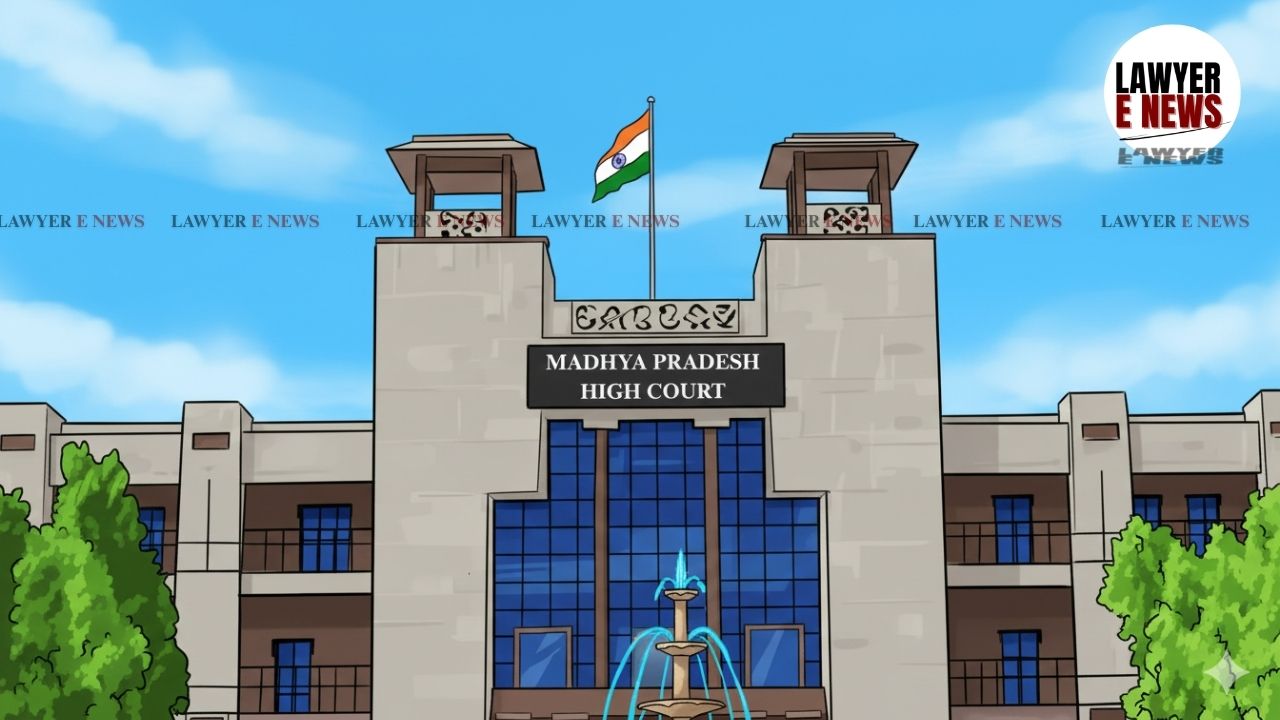
"Suspicion however strong cannot take the place of proof. It was the bounden duty of the prosecution to establish beyond reasonable doubt that death was not on account of accidental fall when there is no clear cut cause of death in the post-mortem report," Madhya Pradesh High Court, in a significant judgment, set aside the life imprisonment of two men convicted of murder, holding that a conviction based on circumstantial evidence cannot stand if the prosecution fails to conclusively prove that the death was homicidal and not accidental.
A division bench of Justice Vivek Agarwal and Justice Avanindra Kumar Singh observed that when medical evidence remains ambiguous regarding the nature of death, the benefit of doubt must necessarily extend to the accused.
The appellants, Premnarayan and Parmanand, were convicted by the Trial Court for the alleged murder of Jamuna Prasad Patel, whose body was found on the boundary of an agricultural field with injuries to his nostrils and mouth. The prosecution’s case rested primarily on the "last seen together" theory and the recovery of a stone allegedly used in the crime. The Trial Court at Panna had sentenced both appellants to life imprisonment under Section 302 and 302/34 of the IPC.
The primary question before the court was whether the prosecution had established a complete chain of circumstantial evidence to prove the appellants' guilt beyond reasonable doubt. The court was also called upon to determine whether the medical evidence and the "last seen" circumstances were sufficient to rule out the possibility of an accidental death resulting from the deceased's intoxicated state.
The Court began its analysis by scrutinizing the medical testimony of Dr. Ashish Tiwari (PW-16) and the post-mortem report. The bench noted that the medical professional failed to provide a categorical finding on whether the death was homicidal or accidental. While the doctor noted ante-mortem injuries, he also confirmed the presence of ethyl alcohol in the deceased’s body.
Medical Evidence Must Differentiate Homicidal From Accidental Death
The Court highlighted a critical admission made by the doctor during cross-examination, where he stated that the injuries found on the deceased could potentially result from a fall from a height onto a hard surface while in an intoxicated state. The bench observed that during the investigation and trial, it was the duty of the prosecution to establish that the death was not an account of an accidental fall.
"If there is no clear cut cause of death in the post mortem report, then how can the Court be sure that only by throwing a stone on the deceased, the appellants caused the death and it was not an accidental death, especially when the deceased was drunk."
Failure Of 'Last Seen Together' Theory In Agricultural Context
Addressing the "last seen" evidence, the Court found that the presence of the accused and the deceased in the fields at night was a routine practice for farmers guarding their crops. Citing the testimony of the deceased’s wife and other witnesses, the Court noted that the parties frequently went to the fields together and even consumed liquor together without any prior enmity.
"If the deceased or the accused persons went to the field together then it is not a suspicious circumstance, as it is a usual practice of many farmers that for the safety of their crop and for irrigating them, they stay in the field at night."
Absence Of Motive And Forensic Corroboration
The bench further pointed out the lack of any established motive for the crime. It noted that the FSL report (Ex. P/56) did not find any human blood on the clothes of the appellants or on the stone allegedly used as the murder weapon. The Court emphasized that in cases of circumstantial evidence, the absence of motive and forensic links creates a significant gap in the prosecution's story.
Strict Standards For Circumstantial Evidence
The Court invoked the landmark precedent of Sharad Birdhichand Sarda vs. State of Maharashtra (1984), reiterating the five-fold golden principles (Panchsheel) for circumstantial evidence. The bench emphasized that the circumstances must be of a conclusive nature and must exclude every possible hypothesis except the one to be proved.
"The conviction cannot be based upon surmises and conjectures. The circumstances from which the conclusion of guilt is to be drawn should be fully established and should not be explainable on any other hypothesis except that the accused is guilty."
Deceased's Intoxication Supports Theory Of Accidental Fall
The Court noted that the deceased had a "drinking habit" and was found with ethyl alcohol in his system. Given that the field had a mud boundary (medh) about 4 to 5 feet high, the possibility of the deceased falling while intoxicated and sustaining fatal injuries could not be ruled out. This alternative hypothesis, the Court held, broke the chain of circumstantial evidence required for a conviction.
Allowing the appeals, the High Court set aside the Trial Court's judgment of conviction and ordered the immediate release of both appellants. The Court concluded that the prosecution had failed to bridge the gap between "may be true" and "must be true," leading to the failure of the entire case.
Date of Decision: 18 June 2026