-
by sayum
25 August 2026 9:55 AM







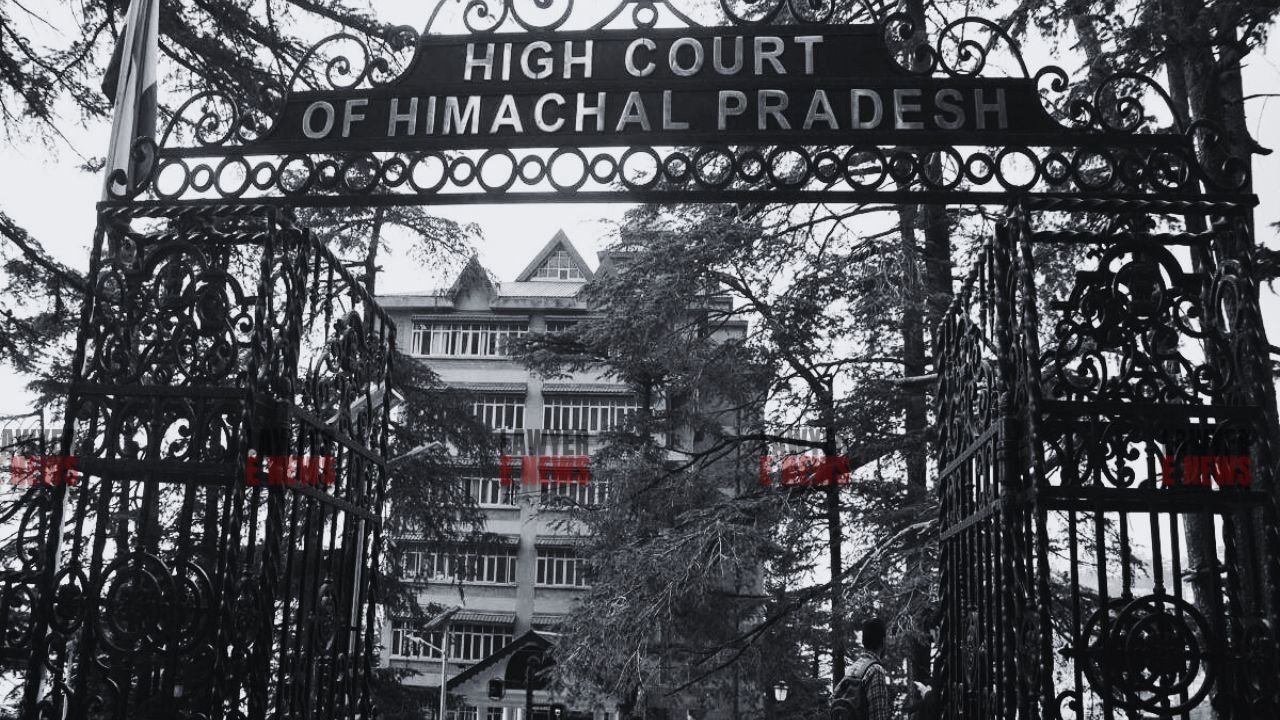
“When suit and counter-claim are decided together, both decrees must be challenged separately—failure to do so seals the unchallenged decree with finality”, In a significant reaffirmation of procedural rigour and finality in civil litigation, the High Court of Himachal Pradesh held that non-challenge to a decree in a civil suit, when both the suit and a counter-claim are decided by a common judgment, operates as res judicata, rendering the appeal against only the counter-claim unsustainable.
Justice Satyen Vaidya, allowing the second appeal filed by Ranjit Kumar (defendant/counter-claimant), reversed the judgment and decree passed by the First Appellate Court, and restored the decree in his favour passed by the Trial Court in the counter-claim. The appeal arose from a land dispute where the plaintiff Kanta Devi had lost the suit for declaration based on adverse possession, while the defendant had succeeded in his counter-claim for possession based on title.
By applying the principle laid down in Ramesh Chand v. Om Raj, 2022 (2) SLC 1145, the Court ruled that once the decree in the civil suit was left unchallenged, it attained finality and barred reconsideration of issues in the counter-claim through the backdoor.
“Single Appeal Against Counter-Claim Decree Impermissible Without Challenging Decree in Civil Suit Decided by Same Judgment”High Court dealt with a nuanced legal issue arising from a common judgment passed by the Trial Court in a civil suit and a counter-claim. While the civil suit filed by Kanta Devi for declaration and injunction based on adverse possession was dismissed, the counter-claim by Ranjit Kumar for possession based on title was decreed.
However, Kanta Devi filed an appeal only against the decree in the counter-claim, leaving the decree in the main suit unchallenged. The First Appellate Court, despite this, reversed the decree in the counter-claim—an error the High Court found fatal.
Justice Satyen Vaidya held:
"The decree in the civil suit having not been appealed, attained finality. The First Appellate Court could not have reversed the effect of such final decree indirectly through an appeal confined only to the counter-claim." [Para 17]
“Res Judicata, Waiver and Estoppel Apply—Decree in Original Suit Becomes Conclusive if Not Appealed”
The High Court noted that the Trial Court had separately registered and decided the civil suit and counter-claim—yet both were decided through a single common judgment. The plaintiff's failure to file an appeal against the decree in the civil suit meant that the findings in that suit became final and binding.
Citing the authoritative judgment in Ramesh Chand v. Om Raj, the Court observed:
"When both the suit and the counter-claim are decreed by a common judgment, regardless of whether separate decrees are prepared, both must be challenged by separate appeals." [Para 15]
Quoting sub-paragraphs (iv) and (v) of paragraph 42 from Ramesh Chand, the Court reiterated:
"Non-filing of an appeal against one decree attaches finality thereto and attracts the doctrines of res judicata, waiver, and estoppel." [Para 16]
Hence, filing an appeal only against the counter-claim, while allowing the dismissal of the suit to go unchallenged, created an irreversible bar against reopening the same issues through the appeal.
“Adverse Possession Fails Where Title Is Admitted—Findings in Dismissed Suit Cannot Be Reopened Indirectly”
The Trial Court had found that Kanta Devi’s claim of adverse possession was unsustainable, especially since title of the defendant (Ranjit Kumar) was admitted. It had accordingly decreed the counter-claim for possession.
However, the First Appellate Court set aside this decree in the counter-claim without disturbing the dismissal of the suit, thus effectively reversing findings that had already attained finality.
The High Court held:
"Since the title of the defendant was admitted, and adverse possession was rejected by the Trial Court in findings that were never appealed, the Appellate Court had no jurisdiction to reach a contradictory conclusion in the counter-claim alone." [Para 14]
It concluded:
"Learned First Appellate Court had clearly failed to take notice of this important aspect. The appeal against the decree in the counter-claim could not have been entertained in isolation." [Para 17]
“Failure to Appeal Against Suit Decree Makes All Other Questions Redundant”: Substantial Question of Law Decided
The appeal had initially been admitted on questions relating to appreciation of evidence and demarcation rules, but the High Court held that these became redundant once it was established that only one of the two decrees had been challenged.
Justice Satyen Vaidya observed:
"In result, the substantial question of law framed today is answered in favour of the appellant. The other substantial questions framed earlier have become redundant and need not be answered separately." [Para 18]
Accordingly, the High Court:
Allowed the Second Appeal, Set aside the judgment and decree dated 25.02.2016 of the First Appellate Court and Restored the decree dated 24.04.2014 passed by the Trial Court in the counter-claim
This judgment underscores the importance of procedural completeness when dealing with suit and counter-claim decided in a common judgment. It provides clarity that both decrees—whether favourable or adverse—must be challenged separately, or else the unchallenged decree attains finality, closing the door for indirect reversal.
The Himachal Pradesh High Court has thus reinforced the legal position that:
"The integrity of a common judgment rests on the completeness of its challenge. To contest part while ignoring the whole is to invite the bar of res judicata."
The ruling serves as a cautionary precedent for litigants and appellate practitioners: filing a solitary appeal in complex civil litigation involving multiple decrees is procedurally fatal, and may irrevocably seal the rights that were once open to challenge.
Date of Decision: 6 November 2025