-
by sayum
27 October 2026 12:34 PM







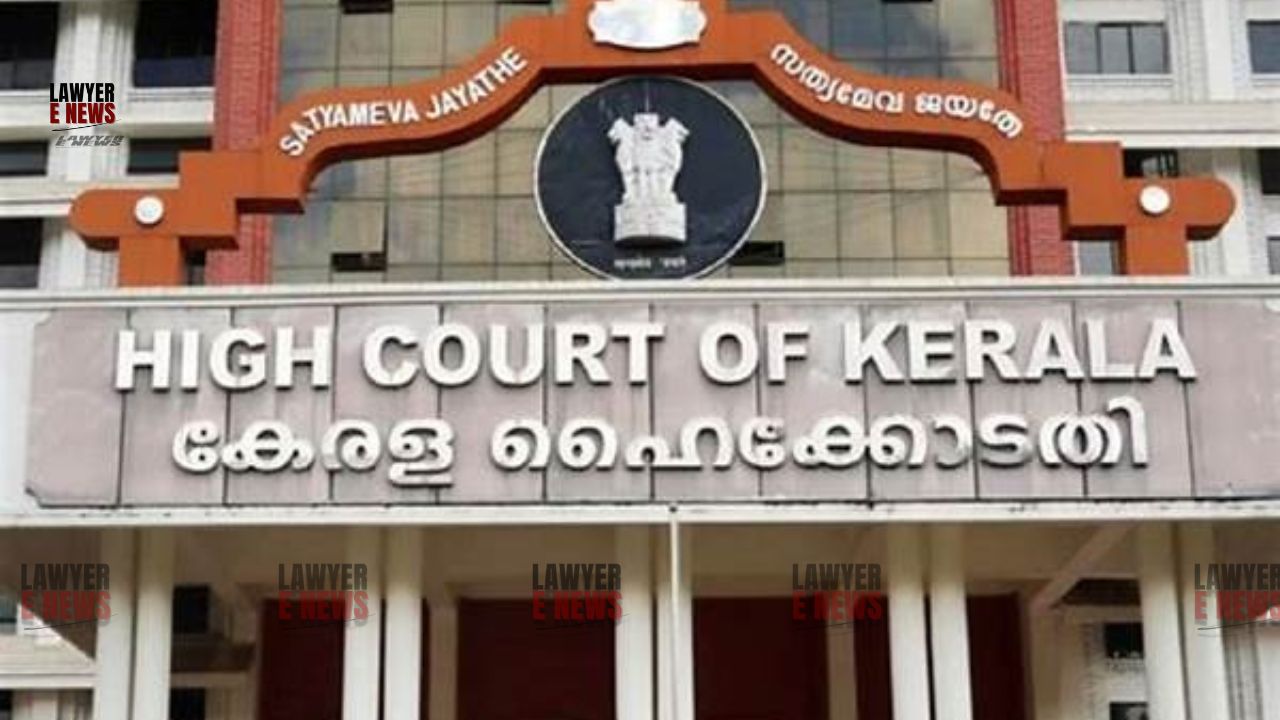
"When a person approaches the court challenging the adverse orders met by him from the hands of bureaucrats, it shall be within a reasonable time. He is not entitled to seek the relief by approaching the court at his whims with inordinate delay so as to unsettle the settled position." Kerala High Court has held that an extraordinary discretionary remedy under Article 226 of the Constitution of India cannot be extended to litigants who sleep over their rights and attempt to resurrect stale claims after decades.
A Division Bench comprising Justice Anil K. Narendran and Justice Muralee Krishna S. dismissed a batch of claims seeking to invalidate 2002 and 2003 government orders that had cancelled cardamom pattas and notified the Mathikettan Shola National Park in Idukki, observing that equitable writ jurisdiction cannot assist "the tardy and the indolent" seeking to overturn settled administrative actions.
The petitioners approached the High Court in 2002 asserting title over tracts of land in Pooppara Village within Udumbanchola Taluk based on registered documents and historic pattas, originally seeking an inquiry into eviction operations conducted by forest and revenue authorities in the Cardamom Hill Reserve. During the pendency of the petition, the State cancelled the relevant pattas in October 2002 and transferred the lands to create the Mathikettan Shola National Park under Section 35 of the Wildlife Protection Act, 1972. It was only in 2024 that the petitioners sought to amend their writ petition to challenge these cancellation and reservation notifications issued two decades prior.
The primary question before the court was whether a challenge against administrative orders cancelling land assignments and notifying a national park can be entertained under Article 226 after an unexplained delay of more than twenty years. The court was also called upon to determine whether the petitioners could plead lack of knowledge regarding the cancellation orders when related civil proceedings on the identical subject matter had already attained finality.
Doctrine Of Delay And Laches Governed By Principles Of Equity
Addressing the maintainability of the writ petition, the Bench observed that the power of the High Court to grant relief under Article 226 is discretionary and equitable. Emphasising that statutory timelines do not govern constitutional courts, the Bench stressed that petitions must nevertheless be instituted within a reasonable period.
Relying on the Supreme Court's pronouncement in State of Orissa v. Laxmi Narayan Das, the Court observed that a constitutional court is under an affirmative legal obligation to scrutinize whether a belated lis ought to be entertained, as delay reflects inaction and causes severe injury to the proceedings.
Writ Jurisdiction Cannot Assist Litigants Who Sleep Over Their Rights
The Court surveyed a long line of apex court authorities, including Chennai Metropolitan Water Supply and Sewerage Board v. T.T. Murali Babu and State of M.P. v. Nandlal Jaiswal, to reiterate that inordinate delay defeats equity and creates public inconvenience.
The Bench noted that allowing litigants to wake up at their leisure and knock on the court's doors to reopen concluded transactions brings administrative chaos and prejudices intervening public interests.
"Delay Reflects Inactivity And Inaction On The Part Of A Litigant"
Quoting the Supreme Court in Union of India v. N. Murugesan, the Division Bench highlighted that the two essential factors to be balanced in such disputes are the length of the delay and the nature of acts completed during the interregnum.
The Bench reiterated that laches involves remissness and slackness in pursuing a claim, operating as an implied waiver or abandonment of rights that disentitles a party from seeking discretionary prerogative writs.
Knowledge Of Patta Cancellation Evident From Intervening Litigations
Rejecting the petitioners' plea that they learned of the 2002 cancellation orders only in 2024 upon the production of an official enquiry report, the Bench scrutinized the record and found that earlier proceedings had extensively referred to the state action.
The Court pointed out that judgments rendered by the Sub Court Kattappana in 2005 and the District Court Thodupuzha in 2009, which arose from the very same eviction drive and involved similarly placed individuals, explicitly recorded the cancellation of the pattas by the government.
Unsettling Settled Public Declarations After Decades Impermissible
The Court observed that the petitioners were fully aware of the contemporaneous litigations and the District Collector's proceedings passed as far back as August 2003.
Consequently, the Bench ruled that incorporating prayers in 2024 to quash orders passed in 2002 and 2003 was barred by gross and unexplained laches, making the claims entirely stale and disentitling the petitioners to equitable consideration.
Holding that the writ petition suffered from fatal, unexplained delay, the Division Bench dismissed the original petition on the threshold ground of limitation and laches. The judgment reaffirms that litigants cannot circumvent the doctrine of laches by amending old, pending writ petitions to challenge decades-old administrative decisions.
Date of Decision: 26 October 2026