-
by sayum
02 November 2026 1:47 PM







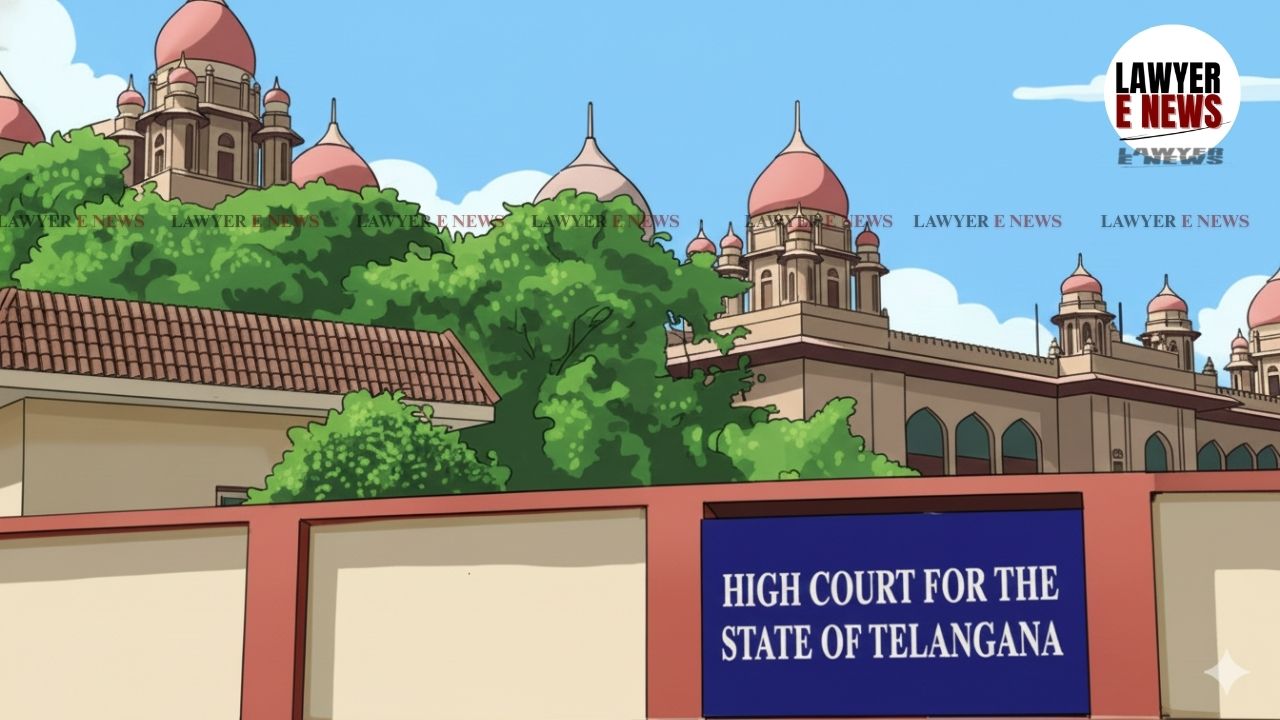
"It is pertinent to mention here that the officer who passed the Order-in-Original and the officer who is assigned as the proper officer in cases involving monetary limits exceeding Rs.2 crores are one and the same i.e., the Joint Commissioner. Accordingly, in view of Section 160 referred to hereinabove, the order cannot be assailed merely on this ground." High Court for the State of Telangana, in a ruling delivered on October 13, 2026, held that a penalty order under Section 122 of the Central Goods and Services Tax Act, 2017 cannot be invalidated on the jurisdictional ground that a formal CBIC circular assigning functions to the "proper officer" was issued subsequently, where the adjudicating authority otherwise possessed the requisite monetary jurisdiction and cured any defect under Section 160 of the CGST Act.
A Division Bench comprising Acting Chief Justice P. Sam Koshy and Justice Narsing Rao Nandikonda held that when the officer adjudicating the matter holds the rank designated for the relevant monetary threshold, the proceedings do not suffer from lack of jurisdiction.
The petitioner, a proprietary trading firm M/s. Charanji Distributors, approached the High Court under Article 226 of the Constitution of India challenging a show-cause notice and a consequential Order-in-Original that imposed penalties of over Rs. 17.27 crores under Section 122(1)(ii) and Section 125 of the CGST Act for allegedly passing fraudulent Input Tax Credit without actual supply of goods. The petitioner contended that as on the dates of the show-cause notice and the adjudication order, no "proper officer" had been assigned functions under Section 122 under Section 2(91) of the CGST Act, as the assigning circular was notified only subsequently.
The primary legal question before the court was whether the show-cause notice and the Order-in-Original imposing penalty under Section 122 of the CGST Act were void ab initio for want of jurisdiction on the ground that the formal circular assigning the statutory functions to a proper officer was issued subsequent to the passing of the order. The court was also called upon to determine whether the petitioner ought to be relegated to the statutory appellate remedy regarding its remaining challenges.
Scope Of 'Proper Officer' Assignment Under Section 2(91) And Monetary Jurisdiction
The petitioner had strenuously argued that under Section 2(91) read with Section 5(1) of the CGST Act, a central tax officer can only exercise statutory functions if expressly assigned by the Board or the Commissioner. It was submitted that CBIC Circular No. 254/11/2025-GST assigning functions under Section 122 was issued only on October 27, 2025, whereas the show-cause notice had been issued on February 17, 2025, and the Order-in-Original was rendered on October 15, 2025. On this basis, the petitioner claimed the entire adjudication was coram non judice and a legal nullity.
The Bench examined the administrative framework alongside earlier circulars dated June 19, 2017, and July 6, 2022, observing that the administrative competence of officers has consistently rested upon defined monetary thresholds. The court noticed that in the present case, the amount under adjudication exceeded Rs. 2 crores, a bracket earmarked for the Joint Commissioner.
Section 160 Curative Bar Shields Proceedings In Conformity With Legislative Intent
The High Court placed decisive reliance on Section 160 of the CGST Act, noting that an assessment, adjudication, or notice cannot be invalidated merely by reason of any mistake, defect, or omission if it is in substance and effect in conformity with the intent and requirements of the Act. The court adverted to the Coordinate Bench ruling in Alokadci Holdings Pvt. Ltd. v. Commissioner of Central Tax to emphasize that statutory proceedings do not fail on technical assignment defects when substantively aligned with the Act.
The Division Bench underscored that the officer who issued the final order and the officer contemplated for cases over Rs. 2 crores were identical in rank. Since the Joint Commissioner held competence in terms of monetary jurisdiction, the subsequent circular merely affirmed that position, leaving no room to treat the adjudication as void ab initio.
"In the present case, the monetary amount involved is more than Rs.2 crores and the order-in-original has been passed by the Joint Commissioner, Hyderabad GST. The Joint Commissioner, therefore, is the competent and proper officer in terms of the applicable allocation of functions."
Alternative Appellate Remedy Must Be Exhausted For Fact-Based Defences
Addressing the petitioner's other contentions—including allegations of breach of natural justice due to postal non-delivery, duress in recording Section 70 statements, the legality of penalty-only proceedings without Section 74 determination, and double penalization under Section 122(1A) vis-à-vis Section 122(1)(ii)—the High Court declined to adjudicate them under writ jurisdiction.
The Bench observed that the Order-in-Original is squarely appealable before the statutory appellate authority, which is fully equipped to evaluate factual and evidentiary controversies. The court affirmed that the petitioner must pursue its statutory remedies rather than bypassing the hierarchy established by the legislature.
"The petitioner has an efficient alternative remedy of filing an appeal before the competent appellate authority. We are, therefore, of the considered opinion that the issues raised by the petitioner, other than the question of jurisdiction considered hereinabove, can appropriately be raised before the appellate authority."
Protection Under Section 14 Of The Limitation Act Granted For Filing Appeal
While rejecting the writ petition on the question of jurisdiction, the court clarified that it was expressing no opinion on the factual merits or legal defences raised concerning the penalty calculations. To prevent prejudice, the High Court directed that the time expended in litigating the writ petition before it be excluded while calculating limitation for the appeal.
The Bench instructed that if the petitioner files an appeal before the competent appellate authority, such period shall be liable to be excluded under the principles of Section 14 of the Limitation Act, 1963, leaving all contentions on merits open for appellate adjudication.
The High Court dismissed the writ petition, upholding the jurisdictional validity of the adjudication under Section 122 of the CGST Act read with Section 160, while granting the petitioner liberty to raise all substantive defences before the statutory appellate forum. This judgment confirms that procedural delays in issuing specific assignment notifications do not render an adjudication without jurisdiction if passed by an officer possessing corresponding monetary authority under the CGST framework.
Date of Decision: October 13, 2026