-
by sayum
27 July 2026 3:39 PM







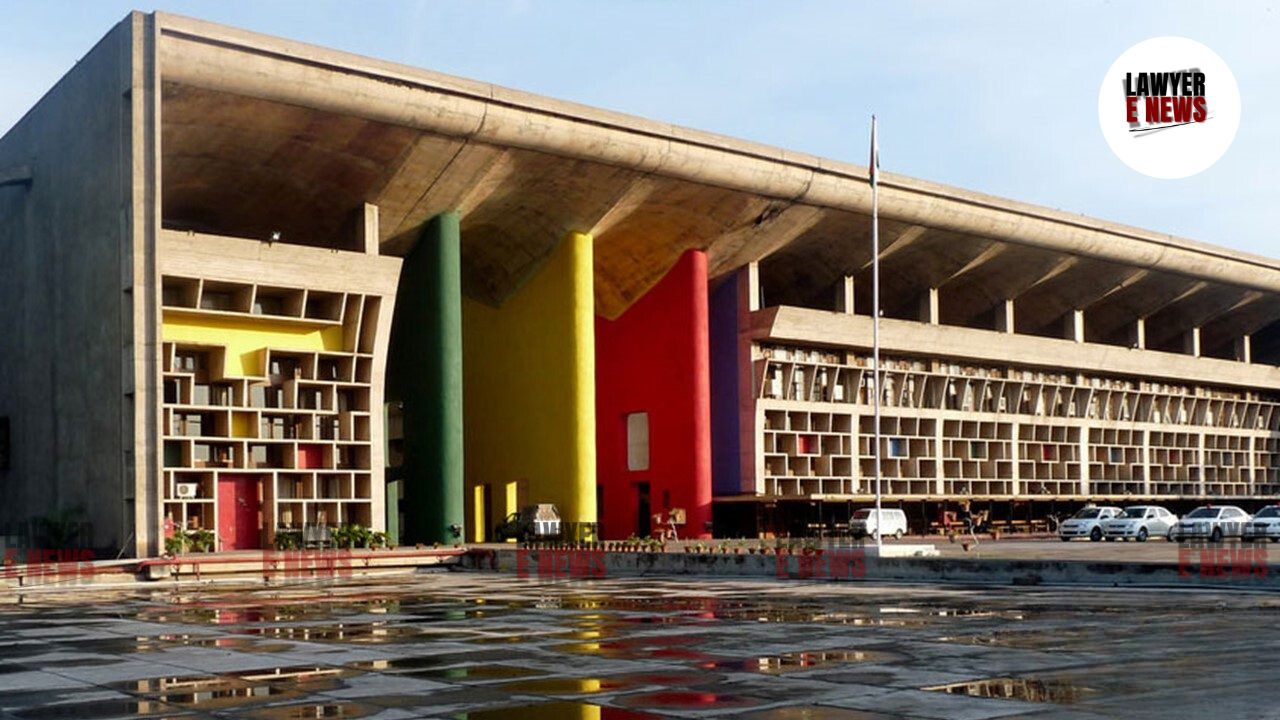
"Once it has been held that fire or explosion in the train falls within the definition of ‘accident’, the Union of India cannot escape its liability to pay compensation on account of death arising out of bomb blast in the train/railway station," Punjab and Haryana High Court has held that a bomb explosion occurring within a passenger train squarely falls within the ambit of an "accident" under Section 124 of the Railways Act, 1989.
A bench of Justice Pankaj Jain, in a judgment, observed that the Railway Administration cannot evade its statutory liability to compensate victims of such incidents. The Court noted that an explosion is an unforeseen event that startles the senses and is not a part of the normal course of a rail journey, thus satisfying the legal criteria for a compensable accident.
The litigation arose from a bomb explosion on February 8, 1992, in the 24-Down Janta Express travelling from Tohana to Jind, which resulted in the death of five passengers and caused fatal injuries to several others. Following the incident, FIR No. 14 was registered under the Explosive Act, the Terrorist and Disruptive Activities (Prevention) Act (TADA), the IPC, and the Indian Railways Act. The Railway Claims Tribunal subsequently awarded compensation to the families of the deceased passengers, holding the incident to be an accident under the law.
The Union of India challenged these awards before the High Court, primarily arguing that a bomb blast does not fall within the definition of an "untoward incident" or an "accident" as envisaged under the Railways Act, 1989. The government contended that it should not be held liable for such criminal acts perpetrated by third parties.
The primary question before the court was whether a bomb blast in a passenger train constitutes an "accident" under Section 124 of the Railways Act, 1989. The court was also called upon to determine the appropriate quantum of compensation and interest applicable to claims originating from the early 1990s in light of subsequent Supreme Court precedents.
Interpretation Of Section 124 Of The Railways Act
The Court began by examining Section 124 of the 1989 Act, which defines the extent of the Railway Administration's liability. The bench noted that the provision creates a strict liability framework where the railway is liable for death or personal injury resulting from an accident to a train, regardless of whether there has been any wrongful act, neglect, or default on the part of the administration.
Accident Manual Classifies Explosions As Accidents
The Court upheld the Tribunal's reliance on the Accident Manual issued by the Northern Railway Administration. The manual, specifically under Item No. 103, classifies accidents into various heads including "Train Accidents" and "Unusual Incidents." The Court observed that "Miscellaneous" categories under consequential train accidents encompass events like fire or explosions that result in serious repercussions such as loss of human life.
Court Relies On Railway Classification Standards
The bench emphasized that the Railway's own internal classification system recognizes fire and explosions as accidents. Justice Jain noted that since the classification includes such events, the Union of India is precluded from arguing that a bomb blast—which is an explosion—is excluded from the scope of Section 124.
"The Union of India can not escape its liability to pay compensation on account of death arising out of bomb blast in the train/railway station."
Defining The Nature Of An 'Accident'
To clarify the definition of an "accident," the High Court relied upon the Supreme Court’s ruling in Union of India vs. Sunil Kumar Ghosh (1984). The apex court had observed that an accident is an occurrence or event which is unforeseen and startles one when it takes place. It is the "happening of the unexpected" rather than the "happening of the expected."
Bomb Blasts Meet Legal Criteria For Accidents
The Court reasoned that while a jolt during shunting might be expected in everyday life, a collision, derailment, or the "blowing up of a train" is something no passenger ordinarily expects. Therefore, such incidents fall within the parameters of an accident because they are not inherent in the normal course of events and constitute a mishap to the train itself.
"The happening of something which is not inherent in the normal course of events, and which is not ordinarily expected to happen or occur, is called a mishap or an accident."
Quantum Of Compensation And Interest
Regarding the amount of compensation, the claimants sought an enhancement to Rs. 8 lakhs based on the Supreme Court's decision in Union of India vs. Rina Devi (2019). However, the High Court noted that according to the Rina Devi ratio, compensation is payable as applicable on the date of the accident with reasonable interest. If the amount so calculated is less than the amount prescribed on the date of the award, the claimant is entitled to the higher of the two.
Modification Of Interest Rates
The Court found that on the date the Tribunal passed the award in 1993, the prescribed amount was Rs. 2 lakhs. Consequently, the Court modified the Tribunal's order to ensure the claimants receive the compensation applicable on the date of the accident, along with interest at the rate of 9% per annum from the date of filing the claim petition until actual realization.
The High Court dismissed the appeals filed by the Union of India and affirmed the Railway's liability to compensate the victims of the 1992 bomb blast. By categorizing the explosion as an "accident" under Section 124, the Court reinforced the principle of strict liability for the safety of passengers, while modifying the interest component to align with established judicial precedents.
Date of Decision: May 18, 2026