-
by sayum
28 August 2026 2:11 PM







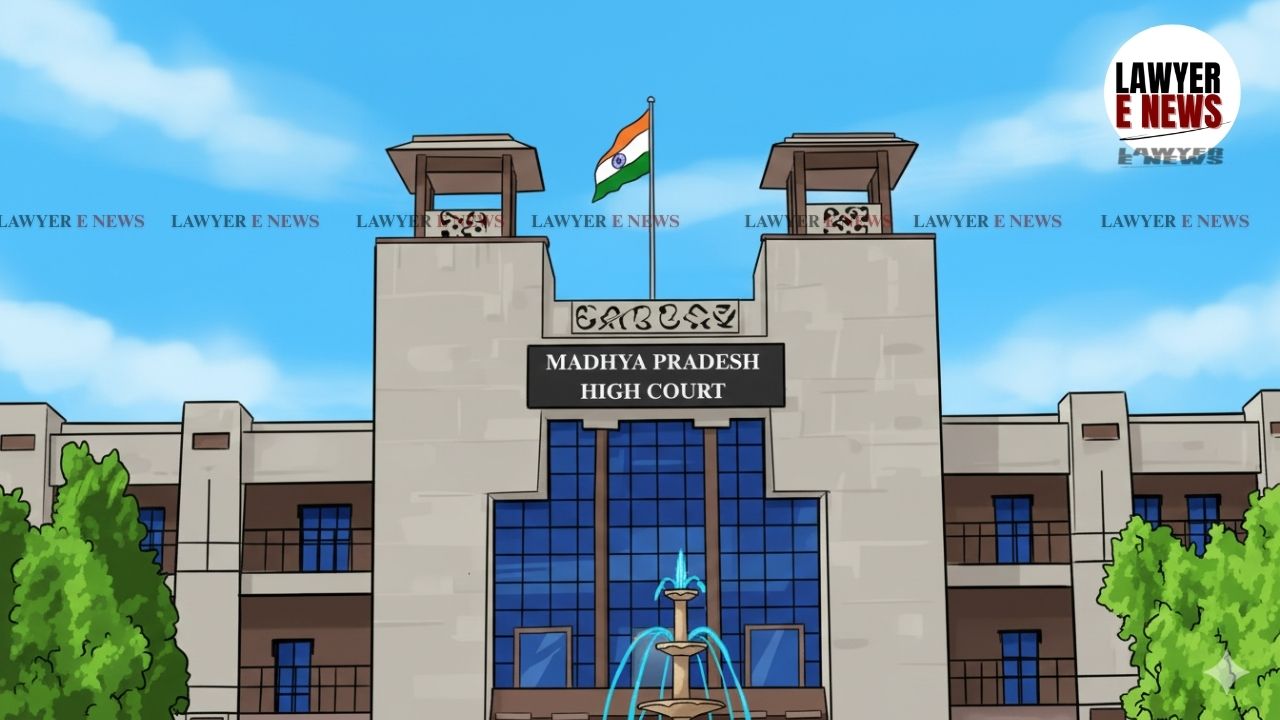
"When the cheque was presented for encashment, the bank had no authority to refuse its honour merely on the ground that the account had been modified, " Madhya Pradesh High Court, in a significant ruling, held that a bank cannot refuse to honour validly issued cheques solely because a partnership firm was reconstituted into a proprietorship concern.
A division bench comprising Acting Chief Justice Vivek Rusia and Justice Pradeep Mittal observed that such a refusal constitutes a "deficiency in service" and attracts liability under Section 77 of the Negotiable Instruments Act, 1881.
The dispute arose when the Bank of India dishonoured two cheques of Rs. 1,00,000 each issued by a partnership firm, M/s Daga Commerce, which had later been reconstituted as a proprietorship. The Bank returned the cheques with the remark "Title of Account Modified," contending that the cheques were issued in the name of a non-existent erstwhile firm. While the Banking Ombudsman initially awarded compensation to the respondent, it later rejected the complaint in a review proceeding, leading the respondent to file a writ petition which was allowed by a Single Judge.
The primary question before the court was whether the Bank was justified in dishonouring cheques issued from an account that underwent a change in legal status from partnership to proprietorship while maintaining the same account number and signatory. The court also examined whether the Reviewing Authority under the Banking Ombudsman Scheme could entertain a review petition filed beyond the limitation period without notice to the complainant.
Review Proceedings Vitiated By Limitation And Natural Justice Violations
The Division Bench first addressed the procedural lapses in the Bank's challenge against the initial Ombudsman award. It noted that the review petition filed by the Bank was barred by limitation under Clause 17(1) of the Banking Ombudsman Scheme, 2002, as it was preferred beyond the one-month period without any application for condonation of delay.
Failure To Afford Opportunity Of Hearing Renders Orders Unsustainable
The Court emphasized that the mandatory requirement of notice and hearing under Clause 17(3) of the Scheme was ignored during the review. "The absence of compliance with these mandatory procedural safeguards vitiates the review proceedings and renders the consequential orders unsustainable," the bench observed.
Maintainability Of Complaint Before Banking Ombudsman
The Court rejected the Bank’s contention that the respondent was not a "customer" and therefore could not maintain a complaint. It held that Clauses 12 and 13 of the Banking Ombudsman Scheme confer a right upon any "aggrieved person" to lodge a complaint regarding the non-payment or delay in payment of cheques.
Aggrieved Person Has Right To Invoke Ombudsman Jurisdiction
The bench clarified that a complaint could not be rejected solely on the ground that the writ petitioner was not a constituent of the appellant Bank. By virtue of the Scheme's provisions, any person suffering from a bank's failure to honour a cheque has the standing to seek redressal before the Ombudsman.
"The complaint could not have been rejected solely on the ground that the writ petitioner was not a customer of the appellant Bank."
Distinction Between Partnership Firm and Proprietorship Concern
Delving into the merits, the High Court found that the authorities failed to appreciate the legal continuity of the account. It noted that while a partnership is a distinct association, a proprietorship concern does not possess a separate legal identity from its proprietor.
Continuity Of Account Number And Signatory Validates Cheques
The record indicated that despite the change in the firm's constitution, the bank account continued with the same account number and authorised signatory. The Court criticized the "erroneous assumption" that a change in business constitution automatically invalidated previously issued cheques without examining the true nature of the banking relationship.
Liability Under Section 77 Of The Negotiable Instruments Act
The Court made a crucial distinction between Section 31 and Section 77 of the NI Act. While the Bank argued that Section 31 limits liability to the drawer, the Court held that Section 77, which deals with a banker’s liability for negligently dealing with a bill presented for payment, was squarely applicable.
Bank Bound To Honour Cheques Unless Stop-Payment Issued
The bench observed that the Bank never directed the account holder to surrender unused cheque leaves nor cancelled the cheques already issued prior to the conversion. "The account holder had neither issued any stop-payment instructions nor cancelled the cheque. Therefore, the dishonour of the cheque by the bank constituted a deficiency in service," the Court held.
"The bank was at fault in dishonouring the cheque, and therefore the provisions of Section 77 of the Negotiable Instruments Act are squarely applicable."
The Division Bench concluded that the Single Judge had meticulously examined the factual and legal aspects of the matter. Finding no perversity or jurisdictional error, the Court dismissed the Bank's appeal and affirmed the order directing compensation to the cheque holder.
Date of Decision: 16 June 2026