
-
by sayum
24 August 2026 6:22 AM







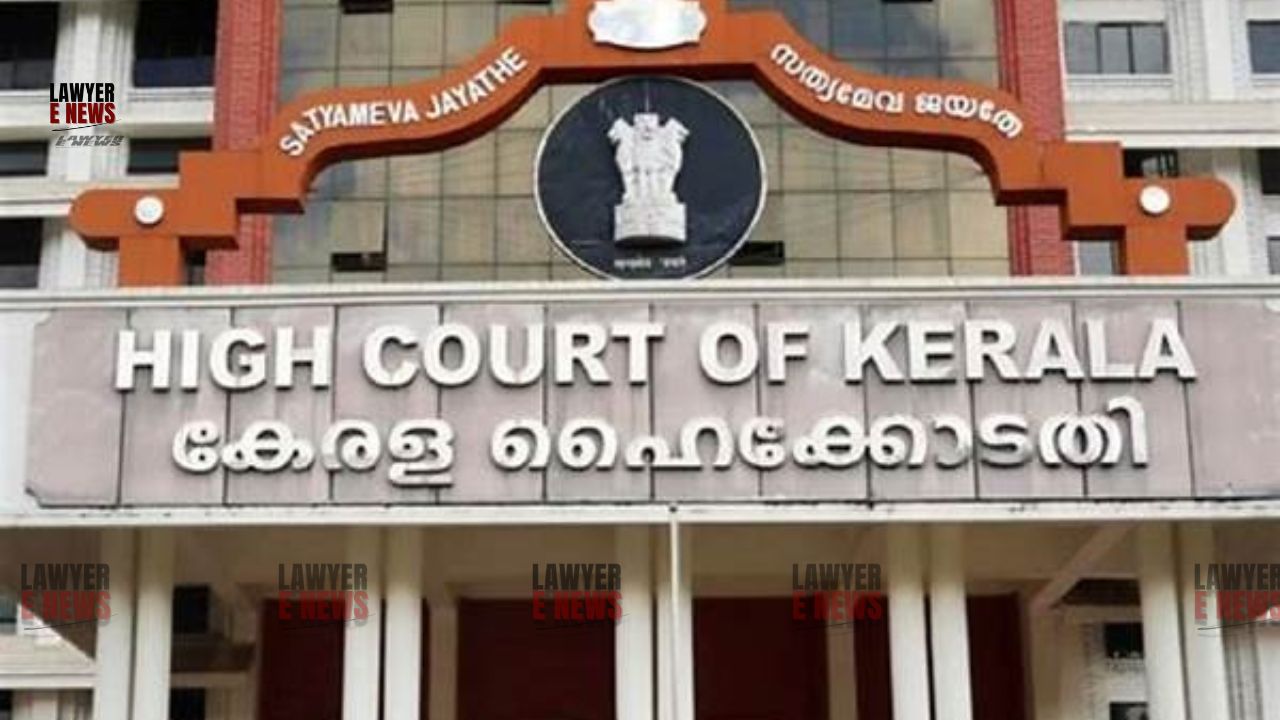
"Exercise of Power Under Section 319 CrPC Is Not Mechanical — Magistrate Cannot Haul In Additional Accused Without Strong and Cogent Evidence,” In a ruling that emphatically reiterates the stringent standards required to summon an additional accused under Section 319 of the Code of Criminal Procedure, the Kerala High Court, on 15 January 2026, quashed proceedings against a Deputy Superintendent of Police (Dy.SP) who had been arrayed as an additional accused nearly nine years after the original complaint, solely on the basis of a belated and unsupported statement by the complainant.
Justice G. Girish, presiding over the Criminal Miscellaneous Case No. 397 of 2018, observed:
“Mere surmises and conjectures derived by the complainant, after an unexplained delay of nine years, cannot be the foundation for invoking the extraordinary power under Section 319 CrPC. The allegations are bald, vague, and devoid of any evidentiary foundation.”
The petitioner, Martin K. Mathew, a retired police officer, was arrayed as the 8th accused in C.C No.138/2005 before the Judicial First Class Magistrate, Changanassery, in a case alleging theft of timber (two Anjili trees) from private land. Originally, there were seven accused, and the complaint made no mention of the petitioner at all.
“No Whisper of Involvement in Original Complaint or Testimony — Delay of Nine Years Fatal to Credibility”
The private complaint, filed by the second respondent in 2005, alleged that the original accused unlawfully trespassed into his land and removed valuable timber. However, the name of the petitioner never appeared in the complaint, nor in the testimony of the complainant when he was examined as PW1 in 2007.
It was only in 2017, after a nine-year hiatus, that PW1 gave an additional statement accusing the petitioner of aiding the alleged offenders by misusing his official capacity as a Dy.SP and even using the timber for constructing his own house. This formed the sole basis for a petition under Section 319 CrPC, upon which the Magistrate passed an order summoning the petitioner as an additional accused.
The High Court, however, found such evidence completely unreliable:
“There is absolutely nothing stated by PW1 in his additional statements about his source of knowledge of the accusation. Nor had he stated any reason why he remained silent for more than nine years.”
“A vague reference to a Lok Ayukta order or police report is not enough. Neither of these documents indicate any involvement of the petitioner in the commission of theft,” the Court added.
“Magistrate Cannot Act on Vague Claims and Belated Testimony — Section 319 CrPC Requires Strong Material”
The Court held that the power under Section 319 CrPC is an extraordinary one and must be exercised sparingly and only when compelling material surfaces during trial, that clearly suggests the involvement of a non-accused.
Citing the Supreme Court decisions in Jitendra Nath Mishra v. State of U.P. (2023) 7 SCC 344 and Satbir Singh v. Rajesh Kumar, AIR 2025 SC 1649, Justice Girish noted:
“The degree of satisfaction required for invoking powers under Section 319 is the same as that required for framing a charge — mere existence of some evidence is insufficient unless such evidence is strong and cogent.”
The Court further observed that the Magistrate had failed to apply the correct standard, and acted mechanically, without appreciating that:
“Neither the complainant’s delayed version nor the Lok Ayukta order nor the police investigation report revealed any material to even remotely suggest the petitioner’s participation in the alleged offence.”
“No Prosecution Without Sanction — Acts Allegedly Done in Official Capacity Are Protected by Section 197 CrPC”
Another critical aspect addressed by the Court was the absence of prior sanction under Section 197 CrPC, which is mandatory when a public servant is accused of acts done in the course of official duties.
The Court held:
“If the petitioner is sought to be arraigned based on the allegation that he afforded police protection while acting as Dy.SP, then cognizance of such act without prior sanction under Section 197 CrPC is impermissible in law.”
In this context, the Lok Ayukta proceedings and Circle Inspector’s report cited by the complainant were found to be irrelevant:
“Allowing Proceedings to Continue Would Be Abuse of Process of Court” — High Court Invokes Section 482 CrPC
Noting that continuation of criminal proceedings in such circumstances would amount to miscarriage of justice, the Court invoked its inherent powers under Section 482 CrPC:
“The materials relied upon to arraign the petitioner as an accused are without any legal substance or evidentiary value. Permitting further proceedings would be nothing but an abuse of the process of law.”
Accordingly, the order dated 18.05.2017 of the Magistrate summoning the petitioner as the 8th accused under Section 319 CrPC was quashed, and all proceedings in C.C No.138/2005 against the petitioner were set aside.
“Allegations Based on Surmise and Delay Cannot Derail Liberty” — Kerala High Court’s Decision Upholds Sanctity of Process
This judgment is a firm reminder of the safeguards in criminal law designed to prevent abuse of judicial process through delayed, uncorroborated, and conjectural allegations, especially against public servants.
The Court’s emphasis on rigorous standards under Section 319 CrPC, the need for prior sanction under Section 197, and the protective ambit of Section 482 CrPC reflects a principled commitment to individual liberty and fairness in
Date of Decision: 15 January 2026