-
by sayum
22 October 2026 11:50 AM







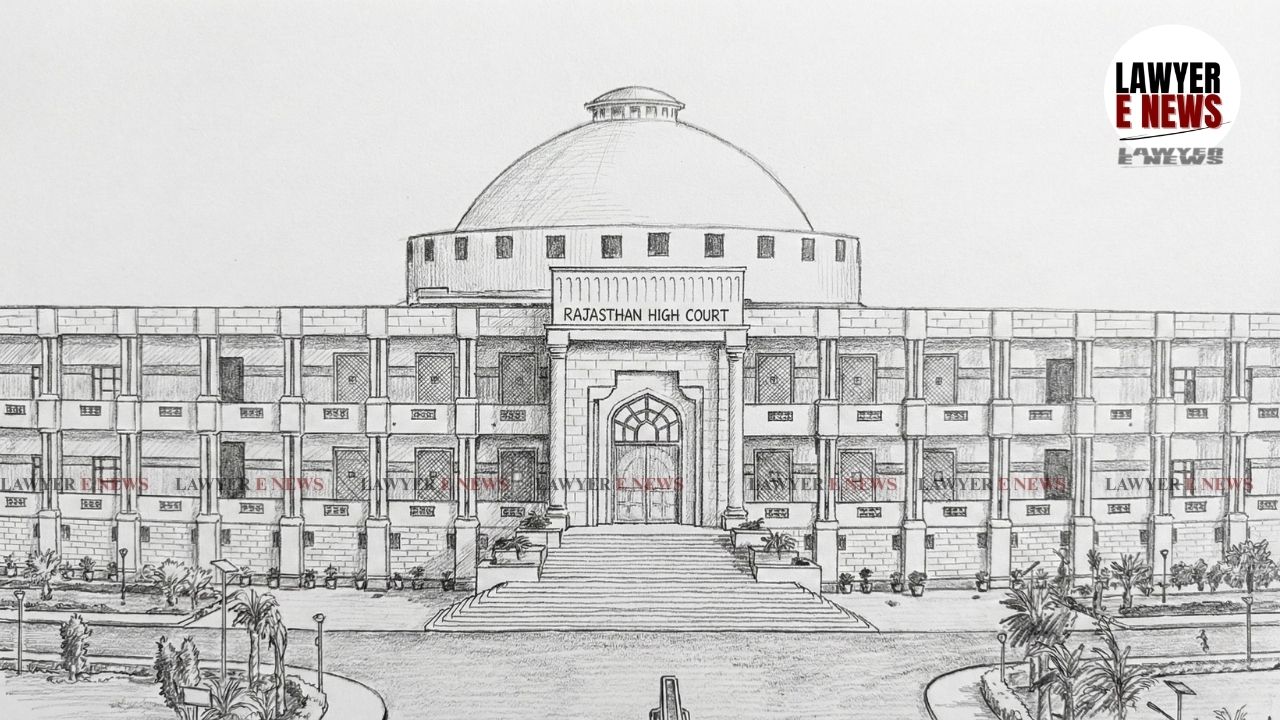
"The jurisdiction of this Court under Article 226 of the Constitution of India is not to act as a second appellate authority over the transfer orders passed by the competent authority or by the Appellate Tribunal." Rajasthan High Court, in a significant ruling delivered on October 15, 2026, held that transfer is an incidence of service and writ jurisdiction under Article 226 of the Constitution of India cannot be invoked to treat the High Court as an appellate forum over administrative transfers.
A single bench of Justice Anoop Kumar Dhand observed that "transfer is an incidence of service" and "no employee has a vested right to remain posted at a particular place of his choice," emphasizing that judicial review is strictly restricted to the rarest of rare situations.
The petitioners, working in state government departments including the Ayush Department and Elementary Education, approached the High Court challenging their transfer orders on various grounds of inconvenience and personal difficulty. The batch of writ petitions reached the High Court assailing the orders issued by the competent departmental authorities.
The primary question before the court was whether the High Court under Article 226 of the Constitution of India can exercise judicial review to interfere with routine administrative transfer orders. The court was also called upon to determine the exhaustive legal grounds on which a government servant's transfer can be validly challenged in writ jurisdiction.
Transfer An Incidence Of Service Without Vested Rights
The court underscored that an employee cannot claim immunity from transfer or demand retention at a single post indefinitely. It noted that the competent administrative authority maintains the exclusive domain to determine postings based on administrative exigencies, public interest, and smooth institutional functioning.
Reiterating long-standing administrative service jurisprudence, the bench noted that long stay at a preferred place cannot be claimed as a matter of legal right. The bench placed reliance on the landmark Supreme Court decision in Shilpi Bose & Ors. Vs. State of Bihar (AIR 1991 SC 532), reiterating that courts and tribunals should not ordinarily interfere with transfer orders passed in administrative necessity.
"No one can claim immunity from transfer and no one can claim that he should not be transferred or should be kept at a particular place of posting till eternity."
Flood Of Transfer Litigations Paralyzing Administration
Expressing grave concern over the volume of transfer challenges, the bench observed that public administration is being brought to a grinding halt due to employees routinely resisting transfers. The court pointed out that maximum numbers of employees are approaching either the Rajasthan Civil Services Appellate Tribunal or the High Court seeking stays, effectively paralyzing governmental machinery.
The bench clarified that the extraordinary and discretionary jurisdiction vested under Article 226 of the Constitution of India is not intended to sit as a court of appeal to determine whether an employee's posting is convenient or disruptive. The court stated that employees ordinarily approach the Tribunal first and cannot subsequently treat the High Court as a secondary administrative appellate forum.
Four Exhaustive Grounds For Judicial Review In Transfer Matters
The High Court laid down that the scope of judicial review in transfer matters is strictly circumscribed and an impugned transfer order can be assailed only in the rarest of rare cases on four specified parameters.
First, interference is permissible if the transfer order has been vitiated by malice, bias, or mala fides, which must be specifically pleaded and substantiated with cogent evidentiary material. Second, judicial intervention may lie if the order violates statutory provisions or rules having statutory force.
Third, an order may be set aside if it has been passed by an authority lacking legal competence to do so. Fourth, relief can be extended in an extreme case of hardship involving a life-threatening disease that directly affects service conditions.
"Personal inconvenience, hardship, long stay, etc. are for the authorities to consider and not for the Courts."
Disposal With Liberty To File Departmental Representation
Finding that none of the four exceptional legal grounds were established in the present batch of petitions, the court declined to quash the transfer orders on merits. However, with a view to balancing equity and ensuring genuine employee grievances are not left unredressed, the bench granted the petitioners liberty to approach their competent authorities by filing detailed representations within two weeks.
The court directed the competent authorities to decide such representations expeditiously, preferably within two weeks of receipt, through reasoned and speaking orders. To facilitate this administrative reconsideration, the court directed that the impugned transfer orders be kept in abeyance for four weeks, restraining respondents from compelling relieving action, while clarifying that failure to join after rejection of representation would invite disciplinary proceedings.
The High Court dismissed the challenge against the transfers while reiterating that personal convenience does not constitute a justiciable legal right under writ jurisdiction. The ruling firmly re-establishes that judicial review under Article 226 cannot be invoked to bypass administrative transfer hierarchies unless strict statutory violations or demonstrated mala fides are established.
Date of Decision: 15 October 2026