-
by kapil
29 October 2026 2:26 PM







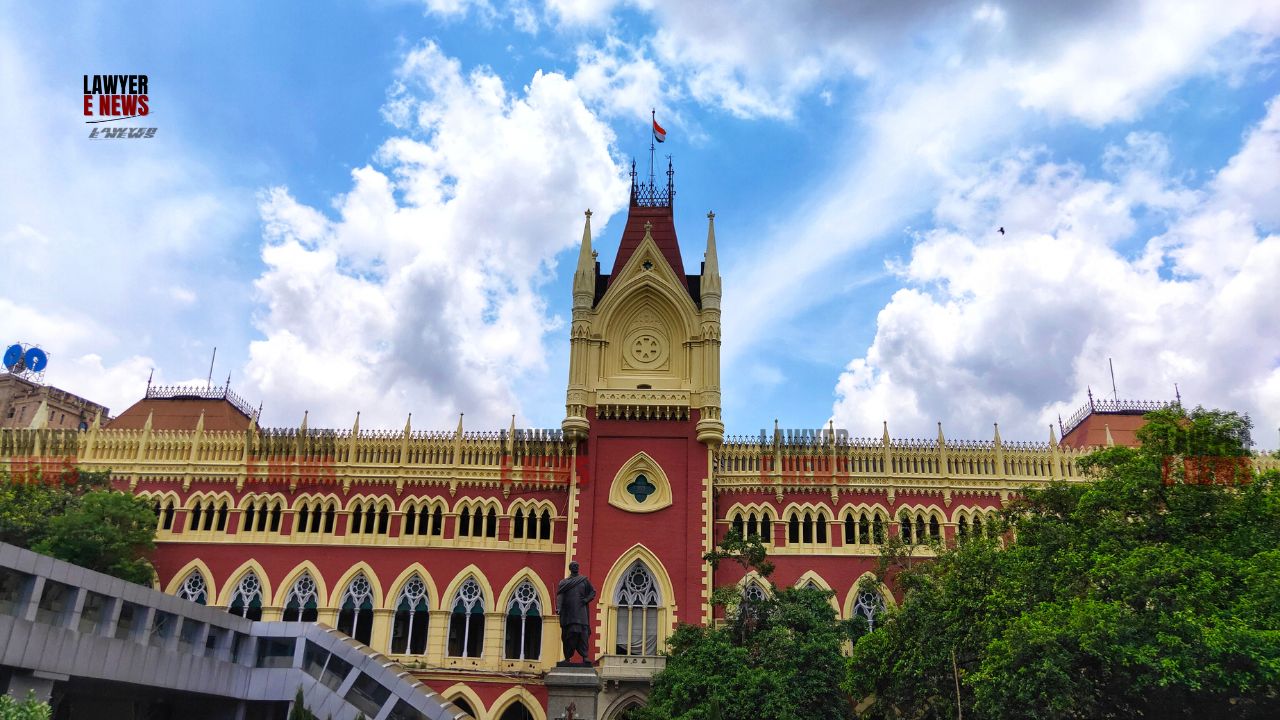
"The restriction is limited to candidature and casting of vote in an election of Managers, and does not extend to any other activity, including removal of Managers... Hence, if BL 10 and BL 11 are read in conjunction, there is no bar to removal of Managers even by defaulting members." Calcutta High Court, in a significant ruling delivered on October 15, 2026, held that apartment owners who have defaulted on their maintenance contributions are not legally disqualified from requisitioning a Special General Meeting (SGM) or voting for the removal of Board Managers under the West Bengal Apartment Ownership Bye-laws, 2022.
A Division Bench comprising Justice Sabyasachi Bhattacharyya and Justice Sandip Kumar De clarified that statutory disqualifications attached to defaults under Bye-law 11 are confined strictly to contesting elections and casting votes in elections for the Board of Managers. The Bench observed that such fiscal disqualification cannot be imported or extended to curtail members' statutory rights to seek the removal of incumbent management.
The dispute arose out of an internal conflict within the Sunrise Towers Apartment Owners Association, where 78 apartment owners requisitioned an SGM under Bye-law 6(2) to remove the incumbent President, Secretary, and Treasurer over allegations of unlawful activities. Upon the office bearers' refusal to convene the meeting, the requisitionists scheduled the SGM, prompting the office bearers to file Title Suit No. 1123 of 2026 before the City Civil Court at Calcutta, challenging the requisition notices and an order passed by the Competent Authority under the West Bengal Apartment Ownership Act, 1972. The trial court initially refused an ad interim injunction under Order 39 Rules 1 and 2 of the Code of Civil Procedure (CPC), but subsequently granted a blanket injunction on a second application captioned under Section 94(e) read with Section 151 of the CPC, which was carried in appeal.
The primary questions before the High Court were whether defaulting apartment owners are disqualified under Bye-law 11 from requisitioning an SGM for the removal of Managers, and whether the Competent Authority possesses statutory jurisdiction to dictate who presides over an association's general meetings. The court was also called upon to determine whether a successive application for interim injunction under Section 94(e) of the CPC was barred by principles of res judicata following the refusal of ad interim relief under Order 39 Rules 1 and 2 of the CPC, and whether a blanket injunction could be granted in the absence of all requisitioning signatories.
Competent Authority Has No Jurisdiction To Regulate Day-To-Day Association Affairs
The High Court scrutinized the statutory powers of the Competent Authority delineated under Sections 10A, 13, and 16B of the 1972 Act, alongside Bye-law 39 of the Bye-laws. The Bench observed that Section 16B(1) empowers the Competent Authority to issue directions only when an Association or its Board of Managers fails to perform its statutory functions, whereas sub-section (2) relates strictly to supersession or removal upon a formal show-cause notice. The court noted that Bye-law 39 merely confers power to formulate general guidelines to remove difficulties, rather than issuing case-specific fiats interfering with individual meetings.
The Bench found that the Competent Authority had acted wholly without jurisdiction in directing that the senior-most non-defaulting member must preside over the meeting. Such a directive directly ran counter to Bye-law 6(4), which mandates that a Special General Meeting must be presided over by the President or, in their absence, by a member chosen by the members present. Holding both administrative orders dated May 27, 2026, and August 6, 2026, to be ultra vires, the Bench held that the Competent Authority traversed palpably beyond its statutory charter.
Disqualification For Arrears Confined To Elections Under Bye-Law 11
Analyzing the statutory scheme governing meetings and elections, the High Court demarcated the separate operational fields of Bye-laws 10, 11, and 13. The Bench highlighted that Bye-law 11 explicitly restricts its disqualification to voting at any election of the Managers and seeking election to the office of the Manager until all arrears of common expenses are cleared. The court emphasized that the disqualification clause cannot be stretched by judicial interpretation to divest members of their basic corporate rights of membership.
The Bench explained that under Bye-law 10(a), the removal of a Manager is conducted by a majority vote of apartment owners present at an SGM, while the election of a successor is an entirely segregated process deferred to a separate Special Election within six weeks. Consequently, the disqualification from voting in an election does not encompass the distinct democratic exercise of voting on a resolution for removal.
Requisitionists Can Invoke Bye-Law 6(2) When Board Refuses To Call Meeting
Addressing the respondents' contention that an SGM for removal under Bye-law 10(a) can only be convened upon a requisition by the Board itself, the High Court held that such an interpretation would lead to an absurdity where an errant Board could perpetually shield itself from accountability. The Bench observed that when the removal of key office bearers is sought and the Board refuses to convene the meeting, the prerogative legitimately shifts to the general body under Bye-law 6(2).
The Bench ruled that Bye-law 6(2) acts as a comprehensive umbrella provision permitting one-third of the members to requisition an SGM on any matter of general importance in the interest of the Association. Since the 73 eligible requisitionists comfortably satisfied the statutory one-third quorum requirement of 64 out of 192 total members, the notices dated May 5, 2026, and May 22, 2026, were held to be completely valid and lawful.
"The artificial captioning of the second injunction application under Section 94(e) of the CPC was a mere misnomer and a feeble endeavour to dissociate the scopes of the two injunction applications... Section 94(e), CPC is merely the substantive provision for grant of injunction, whereas Order 39 Rules 1 and 2 deal with the procedural part of the same."
Successive Injunction Applications Barred By Interlocutory Res Judicata
The High Court dealt firmly with the procedural maneuver of filing a second injunction application under Section 94(e) read with Section 151 CPC after ad interim relief had already been refused under Order 39 Rules 1 and 2 CPC. The Bench clarified that Section 94(e) is merely the substantive enabling provision, whereas Order 39 provides the procedural machinery, establishing that the two provisions are supplemental and not mutually exclusive.
Rejecting the reliance placed on the Supreme Court judgments in Manohar Lal Chopra v. Rai Bahadur Rao Raja Seth Hiralal and Vareed Jacob v. Sosamma Geevarghese, the court noted that inherent powers cannot be exercised to bypass express provisions when the situation is fully covered by Order 39. The Bench ruled that since the subsequent meeting was merely an outcome of the very notices for which interim restraint had been denied earlier on May 29, 2026, the principle of res judicata operated squarely at the interlocutory stage to bar the grant of relief on the second application.
Courts Cannot Mould Relief To Grant Injunction Wider Than The Plaint Prayers
The Bench strongly deprecated the trial court's grant of a blanket injunction restraining the defendants from conducting "any meeting" in connection with the Association. The High Court stressed that the doctrine of moulding relief applies solely where the court grants a lesser relief than what is prayed for, and cannot be weaponized to grant an expansive injunction that travels far beyond the pleadings and prayers.
The judges noted that an omnibus prayer for "any other or further orders" is too wide and vague to permit the court to impose blanket fetters on statutory rights. Imposing an embargo on members from convening future lawful meetings under the Bye-laws amounted to an impermissible judicial restriction not contemplated by the underlying statute.
Non-Joinder Of Joint Requisitionists Vitiates Injunction Under Order 1 Rule 8 CPC
On the question of non-joinder, the High Court observed that the requisition notices were jointly issued by 78 signatories, all of whom shared a unified cause of action. Referring to the Supreme Court ruling in Dr. Vimal Sukumar v. D. Lawrence, the Bench observed that an injunction obtained without leave under Order 1 Rule 8 of the CPC binds only the named defendants and cannot bind non-parties.
The court pointed out that enjoining only four signatories while leaving the remaining co-signatories unbound creates legal anarchy, as the notices and consequential proceedings would remain valid for the others. Scrutinizing the plaint, the Bench noted that the plaintiffs had sought leave under Order 1 Rule 8 CPC solely to sue in a representative capacity on behalf of the Association, and had explicitly averred that the defendants were sued in their individual capacities. In the absence of any prayer or averment seeking leave to sue the defendants as representatives of all 78 signatories, the defect was non-curable on the existing pleadings, rendering the grant of interim injunction wholly unsustainable.
Allowing the batch of appeals, the High Court set aside the parent ad interim injunction order dated June 1, 2026, along with all subsequent extension orders passed by the City Civil Court, Calcutta. The ruling firmly establishes that statutory disqualifications arising from maintenance arrears cannot be extended to muzzle members' governance rights, while reiterating that trial courts cannot circumvent prior refusals of interim relief by entertaining successive applications under inherent powers.
Date of Decision: October 15, 2026