-
by sayum
02 October 2026 8:27 AM







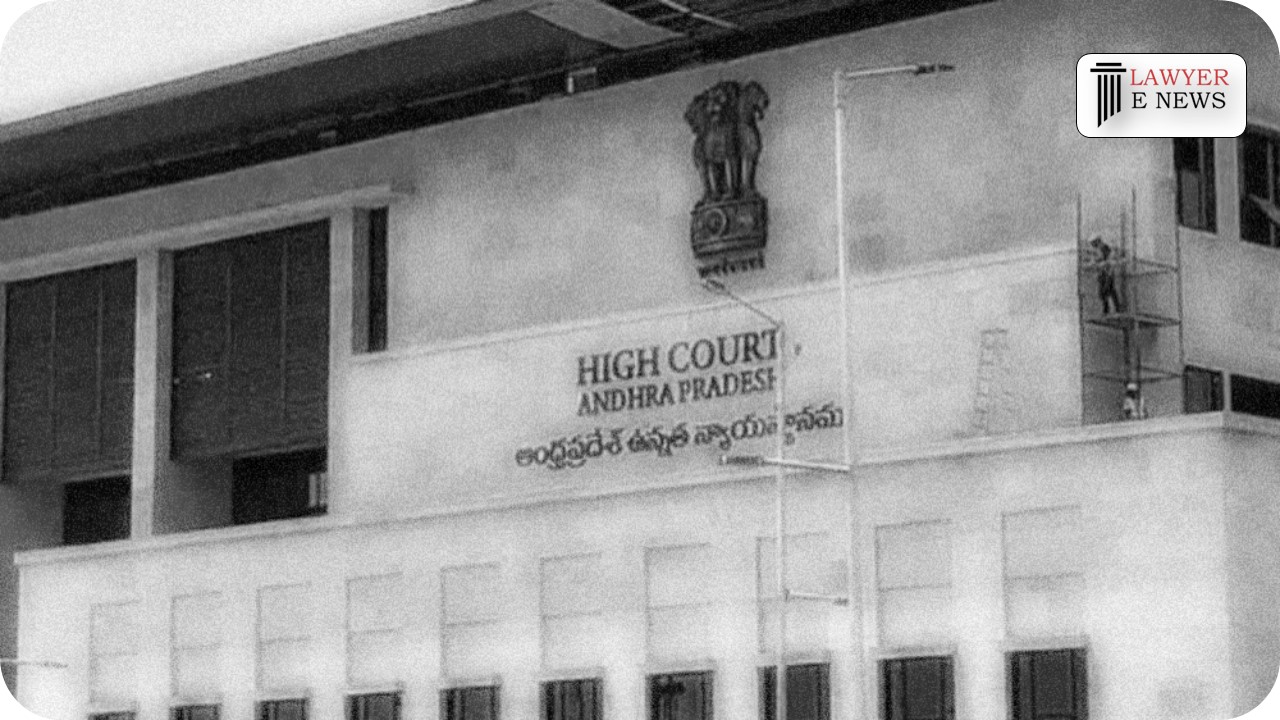
High Court Upholds Trial Court’s Judgment Confirming Loan Repayment Liability for Venkata Rama Saw Mills & Timber Depot
The Andhra Pradesh High Court has upheld the trial court’s decision in a significant loan recovery case, rejecting the appellants’ claim for debt relief under the Andhra Pradesh (Andhra Area) Agriculturists Relief Act, 1938. The judgment, delivered by Justice Venuthurumalli Gopala Krishna Rao, confirmed the liability of Venkata Rama Saw Mills & Timber Depot and its proprietor, Sk. Nayab Rasool, to repay the loan amount of Rs. 40,098.90 with interest to Syndicate Bank.
The case originated from a suit filed by Syndicate Bank seeking recovery of Rs. 40,098.90 from Venkata Rama Saw Mills & Timber Depot, represented by its proprietor, Sk. Nayab Rasool, along with co-obligants K. Moodava Kotaiah and N. Anjaneyulu. The defendants had executed a demand promissory note and other relevant documents for a loan of Rs. 20,000 on October 7, 1981. Despite repeated demands, the defendants failed to discharge their liability, leading to the bank’s legal action
The primary contention of the defendants was their entitlement to debt relief under the Andhra Pradesh (Andhra Area) Agriculturists Relief Act, 1938. They claimed to be agriculturists, which would make them eligible for benefits under the Act. However, the court observed that the first defendant was a business firm, and the second defendant, its proprietor, did not meet the criteria for small farmers. “The appellants’ status as business proprietors disqualifies them from claiming benefits under the debt relief laws,” the court stated.
The defendants admitted their borrowing and liability but pleaded for installment payments and claimed that the interest was usurious. The court found these arguments unsubstantiated. “The defendants have admitted their liability and have not provided any evidence to dispute the plaintiff’s claim. Their plea for installment payment and allegation of usurious interest are unsupported by evidence,” noted Justice Gopala Krishna Rao.
The court discussed the applicability of the Andhra Pradesh (Andhra Area) Agriculturists Relief Act, 1938, extensively. It concluded that the defendants’ business activities precluded them from being classified as small farmers eligible for debt relief. “The defendants’ argument that they are entitled to benefits under the Act 4 of 1938 is unsustainable, as the first defendant is a business firm, and the second defendant is its proprietor,” the judgment highlighted.
Justice Gopala Krishna Rao remarked, “The appellants are not disputing their liability. They have admitted the loan amount and their responsibility to repay. Their contention that they are entitled to debt relief benefits as agriculturists does not hold good.”
The High Court’s dismissal of the appeal confirms the trial court’s judgment, reinforcing the defendants’ obligation to repay the loan amount to Syndicate Bank. This judgment underscores the judiciary’s stance on strictly interpreting the eligibility criteria for debt relief under the Andhra Pradesh (Andhra Area) Agriculturists Relief Act, 1938, and the necessity for substantial evidence to support claims of usurious interest or installment payments. The decision is likely to influence future cases involving similar claims of debt relief by business proprietors.
Date of Decision: July 18, 2024
Venkata Rama Saw Mills & Timber Depot & Ors. V. The Syndicate Bank & Ors.