-
by sayum
26 August 2026 8:00 AM







“When an Arbitrator fails to resolve the dispute and forces parties into fresh litigation after irrevocably altering their positions, the Award becomes unworkable, perverse, and in direct conflict with the public policy of India” – Supreme Court
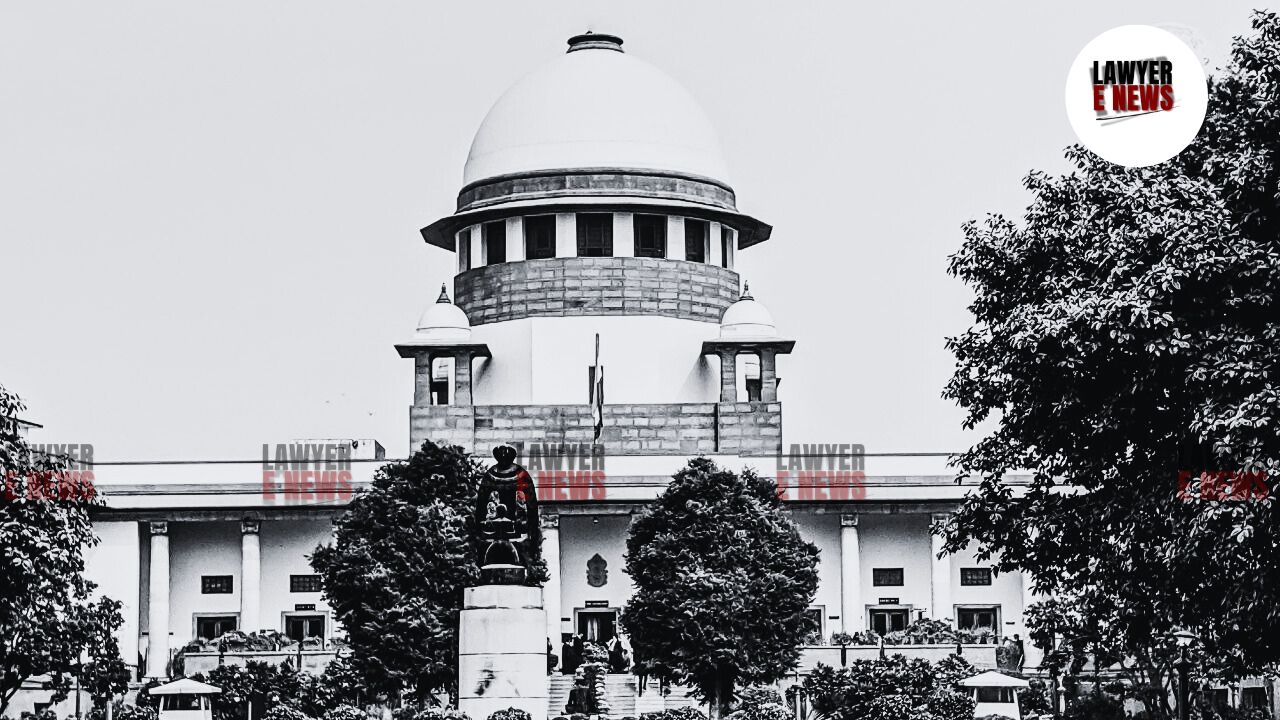
On 31st October 2025, the Supreme Court of India delivered a seminal judgment where it unequivocally held that an arbitral award passed after an “inordinate and unexplained delay” of nearly four years—without providing final reliefs and leaving the parties to begin fresh litigation—violates the fundamental objectives of arbitration and stands vitiated by patent illegality and conflict with public policy under Section 34 of the Arbitration and Conciliation Act, 1996.
The Court, invoking its powers under Article 142 of the Constitution, brought an end to the 16-year-old dispute, regularized otherwise illegal sale deeds, forfeited ₹6.82 crores from the developer, and awarded ₹3.18 crores to the landowners for completing construction, describing the arbitrator’s conduct as a textbook example of how delay and indecisiveness can irreparably damage the arbitration process.
“Justice Delayed and Denied: Arbitrator Took Nearly 4 Years Only to Tell Parties to Litigate Again” – Delay Found Fatal When It Leads to Indecision and Prejudice
The Supreme Court began its analysis by identifying the central flaw: the arbitrator reserved his award on 28.07.2012 and delivered it only on 16.03.2016—after three years and eight months—without offering any cogent explanation. The Court observed that this delay was not merely procedural but destructive of substantive justice.
“It is well-nigh impossible for an arbitrator to have total recall of the oral evidence and arguments after such prolonged delay. Even if notes were maintained, they are a poor substitute for the fresh mind at the conclusion of hearings,” the Court observed.
Relying on Gian Gupta v. MMTC Ltd., GL Litmus Events v. DDA, and Anil Rai v. State of Bihar, the Court declared that while delay per se is not an independent ground under Section 34, “undue delay becomes fatal when it results in non-application of mind, manifest indecisiveness and a failure to adjudicate the disputes effectively.”
The arbitrator’s own admission that the situation was “very complex and unusual” and that he was unable to “devise proper relief” was held as clear evidence of the Award being unworkable.
“An Award that Decides Facts but Refuses to Grant Relief is No Award in the Eyes of Law” – Court Slams Arbitrator for Abdicating Core Function
The Court was scathing in its criticism of the arbitrator for declaring five registered sale deeds executed by the developer in its own favour as illegal but then refusing to grant any consequential relief, instead telling the parties to “seek remedies afresh before a civil court or another arbitrator.”
“This is a dereliction of the arbitrator’s primary duty to adjudicate and resolve the dispute once and for all. An arbitrator cannot play neutral after altering the parties’ rights,” the Court held.
The arbitrator had, during the proceedings, issued an interim order in 2010 directing the developer to hand over possession of the landowners’ 50% share in the building. The landowners then inducted tenants. However, in the final Award, the arbitrator invalidated the developer’s title but gave no relief to the developer for the construction done or for the benefit enjoyed by the landowners.
“The arbitrator left the claimant developer completely divested of its share in the building and also denied any monetary relief, leaving it with nothing but advice to initiate fresh proceedings,” the Court noted.
It held that “an award that neither grants relief nor adjudicates the core financial claims, while simultaneously altering legal possession and ownership, is perverse, incomplete, and liable to be set aside.”
“Section 14 and Section 34 Offer Independent Remedies – No Need to First Challenge Arbitrator’s Mandate” – Clarifies Supreme Court
Addressing another critical legal point, the Court clarified the relationship between Section 14 and Section 34 of the Arbitration Act.
“It is not necessary for an aggrieved party to first invoke Section 14(2) and seek termination of arbitrator’s mandate before challenging an award under Section 34,” the Court held.
It explained that while Section 14 provides a remedy during the pendency of proceedings, Section 34 allows a challenge post facto based on the effects of delay, indecisiveness, or illegality.
The Court recognized the practical difficulty in invoking Section 14, noting that “no party would willingly risk invoking judicial wrath of an arbitrator who may remain in office after such challenge fails.” Thus, delay and bias arising therefrom can be directly addressed under Section 34 without mandatorily exhausting Section 14.
“Arbitrator Misread the Contract – ‘Fitness for Occupation’ Meant as per Plan, Not Utility Connections” – Contractual Interpretation Found Perverse
The Supreme Court overturned the arbitrator’s findings that the building was incomplete and not “fit for occupation” under Clause 6 of the Joint Development Agreement (JDA). It held that the arbitrator had “completely misconstrued the text and context of Clause 6(a)”.
“Clause 6(a) required certification from the Project Architect that the building had been completed as per sanctioned plan and was fit for occupation—not that utilities must be in place,” the Court explained.
The developer had fulfilled the conditions by July–November 2008 by completing the structure, obtaining all clearances including the Completion Certificate from Chennai Metropolitan Development Authority, and offering possession in writing.
The Court held:
“The arbitrator’s insistence on reading external conditions into the contract clause amounts to rewriting the agreement—a patent illegality under Section 34(2A).”
“Sale Deeds Were Invalid, But Cancelling Them Now Would Be Injustice” – Article 142 Invoked to Do Complete Justice
Acknowledging that the developer had acted unlawfully by executing five sale deeds based on a photocopy of a power-of-attorney still in escrow, the Court held that those deeds were illegal. But it refused to direct their cancellation.
“The clock cannot be turned back. The landowners have leased out their share since 2010. New rights have been created. Ordering cancellation would cause greater confusion and fresh litigation,” the Court said.
Invoking Article 142 of the Constitution, the Court held:
“When arbitration fails to resolve core issues and parties are left to litigate afresh after 16 years, it becomes our constitutional duty to bring the dispute to an end.”
Accordingly, it held that:
– The sale deeds dated 19.12.2008 shall stand regularized and declared valid, despite being illegal in inception.
– The entire security deposit of ₹6.82 crores shall stand forfeited by the developer as penalty for its illegal act.
– An additional sum of ₹3.18 crores shall be paid by the developer to compensate the landowners for completing unfinished construction.
– Upon full payment of ₹10 crores, the developer shall regain possession of its rightful 50% share in the property.
This exercise of constitutional equity ensured that the dispute would end once and for all, preventing further abuse of process.
“When Arbitration Becomes a Maze Without Exit, the Court Must Intervene to Restore Faith” – Supreme Court Cautions Against ADR Failure
Concluding the judgment, the Court issued a broader warning:
“If arbitration becomes an endless loop of delay, indecision and fresh litigation, it will shake the very faith of parties in this alternative mechanism. Arbitrators must deliver not just verdicts, but closure.”
The Court also emphasized that Article 142 should not be used to rewrite awards but may be exercised when the arbitrator fails to deliver a legally sustainable award altogether, especially after altering parties' rights mid-way.
The Supreme Court allowed the appeals and set aside the arbitral award in its entirety. In doing so, it restored legal balance between the parties after 16 years of litigation, saved judicial time, and reasserted the essential principles of arbitration.
“This arrangement, in our considered opinion, would bring the curtains down and end this litigation while doing justice to both parties,” the Court concluded.
Date of Decision: 31 October 2025