-
by sayum
27 August 2026 7:40 AM







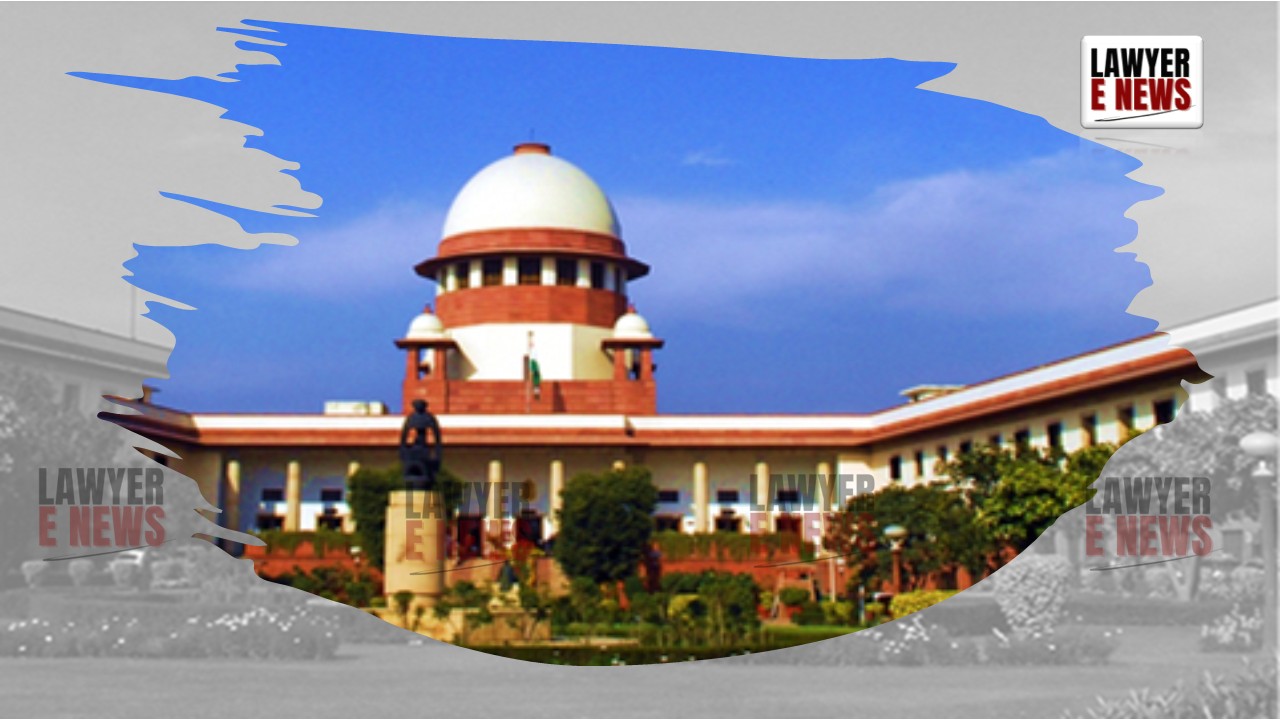
"To apply AICTE Regulations to a candidate participating in recruitment... would be to stretch the Regulations beyond its text, context, and purpose" – Supreme Court delivered a significant judgment in Gujarat Public Service Commission v. Gnaneshwary Dushyantkumar Shah & Ors., clarifying the scope and applicability of the AICTE Career Advancement Scheme (CAS) Regulations, 2012. The Bench comprising Justice Pamidighantam Sri Narasimha and Justice Alok Aradhe held that AICTE CAS Regulations are not recruitment rules, and hence cannot govern direct recruitment conducted by State Public Service Commissions for the post of Professors in Government Engineering Colleges.
Setting aside the judgment of the Division Bench of the Gujarat High Court dated August 20, 2025, the Supreme Court restored the earlier order of the Single Judge which had upheld the recruitment process of the Gujarat Public Service Commission (GPSC) initiated through its advertisement dated September 23, 2015.
AICTE Career Advancement Scheme is Meant for Internal Promotions, Not Direct Entry
The Court began its judgment by identifying the central issue — whether the AICTE (Career Advancement Scheme for Teachers and Other Academic Staff in Technical Institutions) Regulations, 2012 apply to initial recruitment to the post of Professor through open competitive examinations conducted under State Recruitment Rules.
After a detailed analysis of the statutory scheme under the All India Council for Technical Education Act, 1987, particularly Sections 10 and 23, the Court held:
“The AICTE Regulations are not Recruitment Rules but are Promotion and Progression Rules... The law does not permit a regulation crafted as a ladder to be used as a gate.”
The Court clarified that the AICTE CAS Regulations are designed only to facilitate the academic and career progression of existing faculty already working as Assistant or Associate Professors within the technical education system. These rules presuppose an incumbent status and are applicable in the internal promotion process within institutions — not to fresh aspirants seeking entry into the system.
“The expression ‘direct recruitment’ is used in the Regulations, in the limited context of Career Advancement Scheme entry levels,” the Court observed, adding that “they cannot logically apply to a person who is not yet a part of that system.”
Estoppel Applies to Candidates Who Accept Selection Criteria Without Protest
The Supreme Court was also categorical in rejecting the respondent-candidate’s post-facto challenge to the interview process. The respondent had appeared for the interview in 2015 and secured only 28 marks against the prescribed 45, thereby failing to meet the minimum qualifying threshold for selection.
It was only after being unsuccessful that the respondent approached the High Court, claiming that the interview-based evaluation violated AICTE norms, and seeking appointment to the post of Professor (Plastic Engineering).
Reaffirming the settled principle in service jurisprudence, the Court held:
“A candidate having participated in the process of selection, without protest, cannot challenge the Rules of the game after being declared unsuccessful.”
Reliance was placed on the precedent laid down in Anupal Singh v. State of Uttar Pradesh [(2020) 2 SCC 173], which reiterates the doctrine of estoppel in recruitment-related litigation.
The Supreme Court criticized the Division Bench for entertaining the respondent’s belated challenge and held that:
“The Division Bench of the High Court committed an error in assuming that the AICTE Regulations override the State Recruitment Rules in the matter of initial appointment.”
State Recruitment Rules and AICTE Regulations Operate in Distinct Fields
Another key aspect of the judgment was the clear demarcation between the powers of the State Government and the AICTE. The Supreme Court decisively held that there is no repugnancy between the State Recruitment Rules, 2012 and the AICTE CAS Regulations, 2012.
The Court explained: “The AICTE Regulations and State Rules operate in different fields, therefore, the question of one superseding the other does not arise.”
Even though the AICTE is the apex authority for maintaining standards in technical education, the Court noted that its regulatory scope does not extend to the mode or manner of direct recruitment in Government-run colleges, which are governed by State-specific service rules.
The Court observed that the respondent never alleged any inconsistency in the educational qualifications prescribed under the State Rules with those of the AICTE. Rather, the grievance was narrowly focused on the evaluation method (interview) — an aspect clearly stipulated in the advertisement and unchallenged by the respondent before the selection process.
Academic Excellence Alone Cannot Justify Judicial Intervention in Recruitment
While acknowledging that the respondent possessed significant research credentials, the Supreme Court declined to interfere with the selection process, emphasizing that: “Courts do not make appointments. A recruitment concluded in 2015 cannot be reopened in 2025, on the basis of the Regulations that never applied to it.”
This reflects a continuing judicial restraint by constitutional courts in service matters, particularly in respect of expert evaluations and settled selection processes.
In unequivocal terms, the Supreme Court ruled that the AICTE Career Advancement Scheme Regulations of 2012 are meant for the progression of already appointed faculty and cannot be imported into the initial recruitment process governed by the State Public Service Commission under distinct State Rules.
The Court emphasized the doctrine of estoppel, the non-overlapping nature of AICTE and State powers, and the limited scope of judicial review in recruitment, ultimately allowing the appeal filed by the Gujarat Public Service Commission.
“To apply AICTE Regulations to a candidate participating in recruitment... would be to stretch the Regulations beyond its text, context, and purpose.”
Date of Decision: January 19, 2026