-
by sayum
04 October 2026 12:06 PM







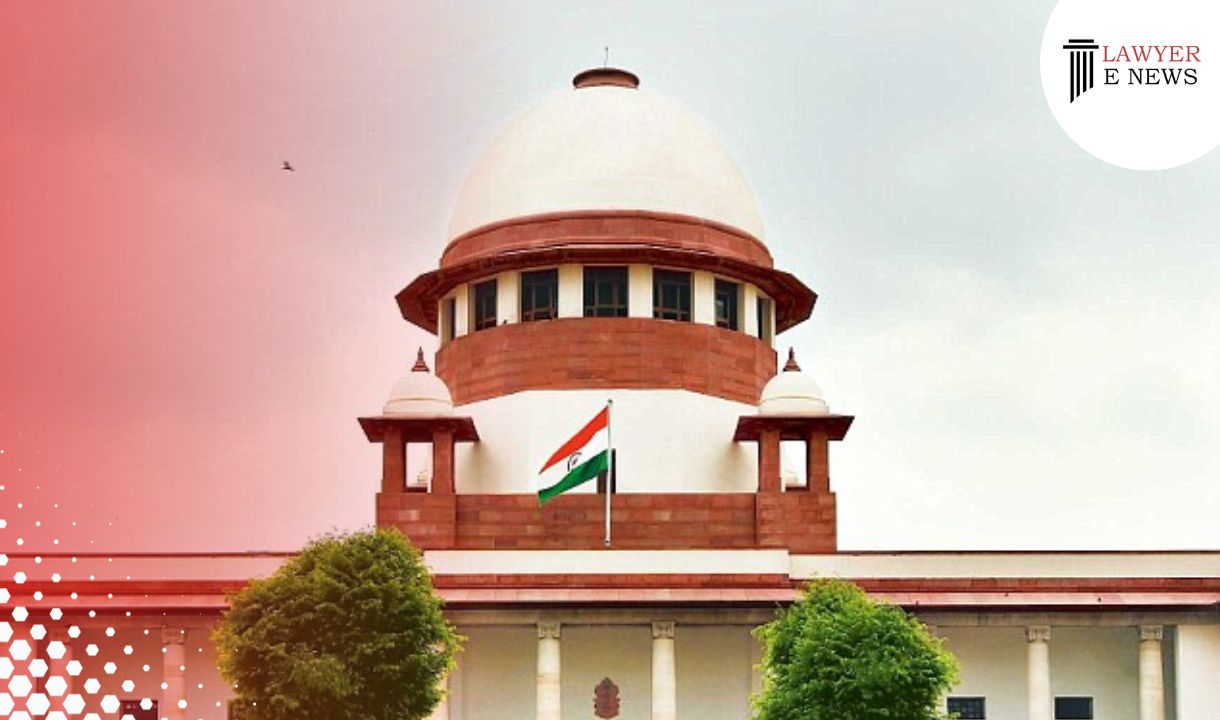
In a recent judgment, the Supreme Court of India has set a significant precedent in property sale disputes, ruling in favor of the appellant, Munishamappa, against M. Rama Reddy & Ors. The apex court’s decision, delivered on November 2, 2023, by Justices Vikram Nath and Rajesh Bindal, emphatically stated that an “Agreement to Sell is not barred under the Fragmentation Act,” thus overturning the High Court of Karnataka’s earlier ruling.
The case, which revolves around a specific performance suit of a property sale agreement, brought into question the applicability of the Karnataka Prevention of Fragmentation and Consolidation of Holdings Act, 1996. The Supreme Court’s judgment is poised to impact future cases involving property agreements and their interpretation under various state laws.
The origin of the dispute dates back to 1990, when an agreement to sell a property for Rs. 23,000 was made between Munishamappa and the respondents. Despite the agreement and the repeal of the Fragmentation Act in 1991, the respondents delayed the sale deed’s execution, prompting Munishamappa to seek legal recourse.
The Trial Court initially dismissed the suit, citing doubts about the agreement’s execution and the limitation period. However, the First Appellate Court reversed this decision, affirming the agreement’s validity and adherence to the limitation period. The matter escalated to the High Court, which erroneously declared the agreement void, citing a violation of the Fragmentation Act.
Supreme Court clarified, “The Agreement to Sell is not a conveyance; it does not transfer ownership rights or confers any title.” This pivotal observation underlines the legal distinction between an agreement to sell and the actual conveyance of property rights, a nuance that was crucial in this case.
The Supreme Court’s intervention has not only rectified a legal misinterpretation by the High Court but also reinstated the rights of the appellant under the agreement. The apex court’s ruling, restoring the First Appellate Court’s decision, decrees the suit for specific performance in favor of Munishamappa, marking a significant moment in India’s property law jurisprudence.
The case exemplifies the Supreme Court’s role in correcting legal misinterpretations and upholding justice, especially in complex property law scenarios. Legal experts view this judgment as a reinforcement of contractual rights and a clarification on the legal standing of property sale agreements under Indian law.
Date of Decision: 2nd November 2023
MUNISHAMAPPA VS M.RAMA REDDY & ORS.