-
by sayum
27 July 2026 3:39 PM







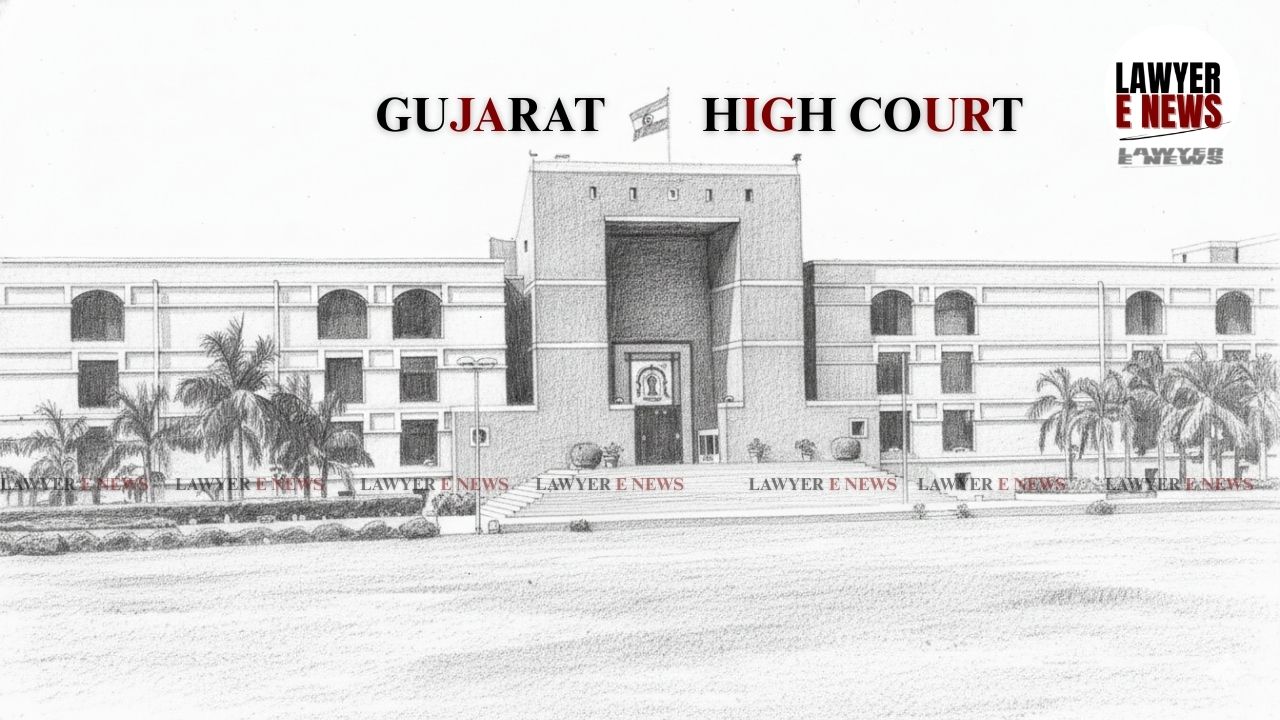
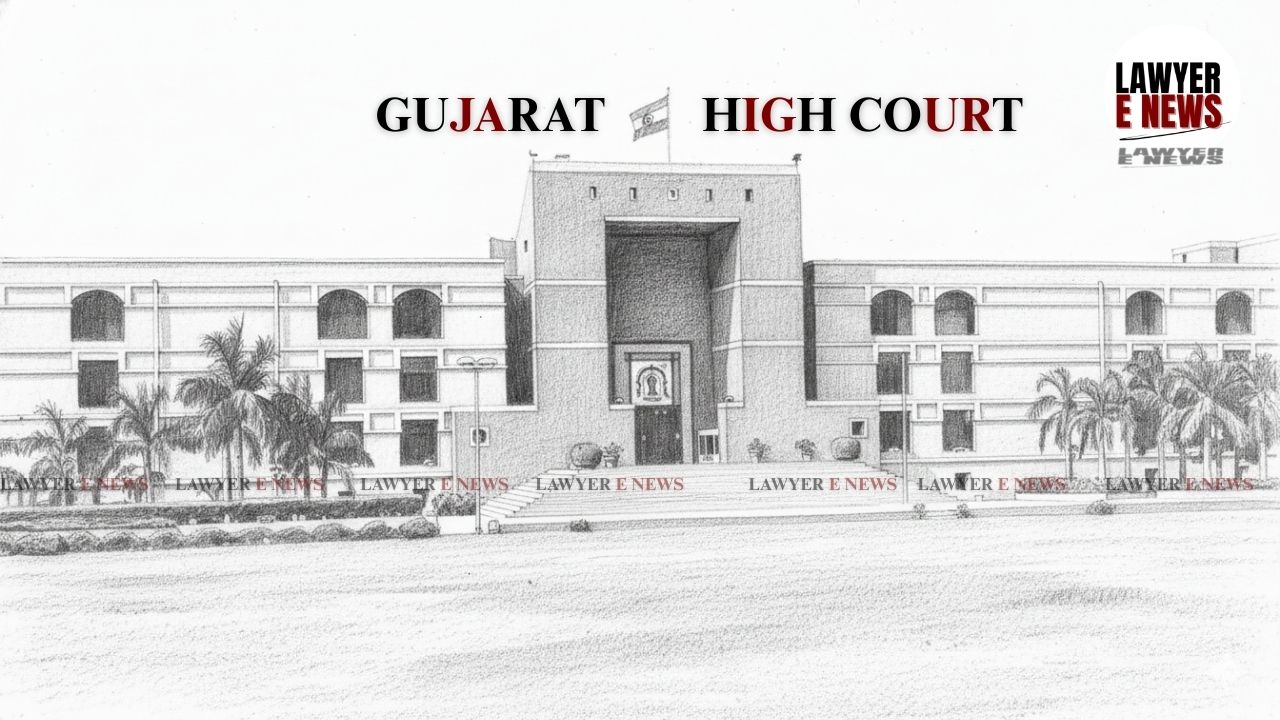
"A police statement of an accused which is in the form of confession is per se inadmissible and no relevance whatsoever can be placed on such statement either at the stage of bail or during trial since such confessional statements are rendered inadmissible by virtue of Section 25 of the Evidence Act," Gujarat High Court, in a significant ruling dated June 19, 2026, held that telephonic contact between an advocate and their client cannot be construed as evidence of a criminal conspiracy under Section 120B of the Indian Penal Code (IPC).
A bench of Justice P. M. Raval observed that when material of "sterling and impeccable quality," such as CCTV footage, negates the presence of an accused at the scene of the alleged crime, the High Court is justified in exercising its inherent powers under Section 482 of the Code of Criminal Procedure (CrPC) to quash the proceedings.
The applicant, a practicing advocate, sought the quashing of an FIR registered at Rander Police Station, Surat, for offences including attempted murder (Section 307 IPC) and criminal conspiracy (Section 120B IPC). The complainant alleged that the advocate had threatened him on the third floor of the Sessions Court, Surat, and subsequently conspired with other accused persons to orchestrate a physical assault involving swords and iron pipes. The advocate contended he was falsely implicated to prevent him from representing the accused in a pending matter.
The primary question before the court was whether the High Court can consider evidence of alibi, such as CCTV footage, at the stage of quashing under Section 482 CrPC. The court was also called upon to determine whether a telephonic conversation between an advocate and a client constitutes sufficient evidence of criminal conspiracy and the evidentiary value of a co-accused's confessional statement made to the police.
Court Relies On CCTV Footage To Falsify Complainant’s Claims
The Court noted that the applicant had immediately approached the Commissioner of Police and the Investigating Officer to provide evidence of his absence at the time of the alleged threat. After the intervention of the High Court, CCTV footage was collected which clearly showed that the applicant was not present in the passage or balcony of the third floor of the District Court, Surat, at 10:00 AM as alleged in the FIR.
"The very initiation of the FIR on the ground that the present applicant threatened the complainant at 10:00 O’clock... is falsified from the CCTV footage collected."
Professional Contact Between Advocate And Client Is Not Criminal Conspiracy
Addressing the allegation of conspiracy based on a phone call between the applicant and a co-accused, the Court emphasized the professional relationship between the parties. Justice Raval observed that since the applicant was representing the co-accused in legal proceedings, a telephonic conversation at 01:34 PM could not be termed a criminal conspiracy. The Court held that the essential ingredient of an agreement to commit an offence was missing.
Court Explains Boundaries Of Section 120B IPC For Legal Professionals
The bench remarked that while direct evidence of conspiracy is rarely available, the circumstances must be evaluated carefully. In this case, the fact that the applicant was an advocate representing the person he called meant that the telephonic contact was a professional necessity. The Court refused to brush aside this professional status, noting that such a call, in the absence of other corroborative material, does not establish a meeting of minds for a crime.
"Contacting his client on phone, in no terms can be said that he had criminal conspiracy."
Inadmissibility Of Co-accused Confessions Under Evidence Act
The Court highlighted that the only material linking the applicant to the conspiracy, other than the phone call, were the statements of co-accused persons. Relying on the Supreme Court precedent in P. Krishna Mohan Reddy Vs. State of Andhra Pradesh (2025), the Court held that a police statement in the form of a confession is inadmissible under Section 25 of the Evidence Act and cannot be used to implicate another co-accused.
Reliance On Confessional Statements For Quashing Is Unlawful
The judgment clarified that Section 30 of the Evidence Act would be of no avail at this stage. It held that if the material relied upon by the prosecution consists solely of inadmissible confessions, it cannot form the basis for continuing a criminal trial. This is particularly true when the primary allegations of the complainant regarding the applicant's presence are contradicted by objective electronic evidence.
Supreme Court’s Four-Step Test For Quashing Criminal Proceedings
Invoking the "structured four-step test" laid down in Sajal Bose vs. State of West Bengal (2026) and Pradeep Kumar Kesarwani vs. State of Uttar Pradesh (2025), the High Court assessed whether the material relied upon by the accused was of "sterling and impeccable quality." The bench concluded that the CCTV footage was sufficient to negate the allegations in the complaint.
"When the material relied upon by the accused is of sterling and impeccable quality is sufficient to negate the allegations in the complaint... continuation of the proceedings would amount to an abuse of the process of Court."
The High Court concluded that the FIR against the advocate was an abuse of the process of law, seemingly filed to exert pressure and prevent him from representing his clients. Finding that the Investigating Agency’s own collected material (CCTV) falsified the prosecution's case, the Court allowed the application and quashed the FIR and all consequential proceedings against the applicant.
Date of Decision: 19 June 2026