-
by sayum
19 August 2026 1:58 PM







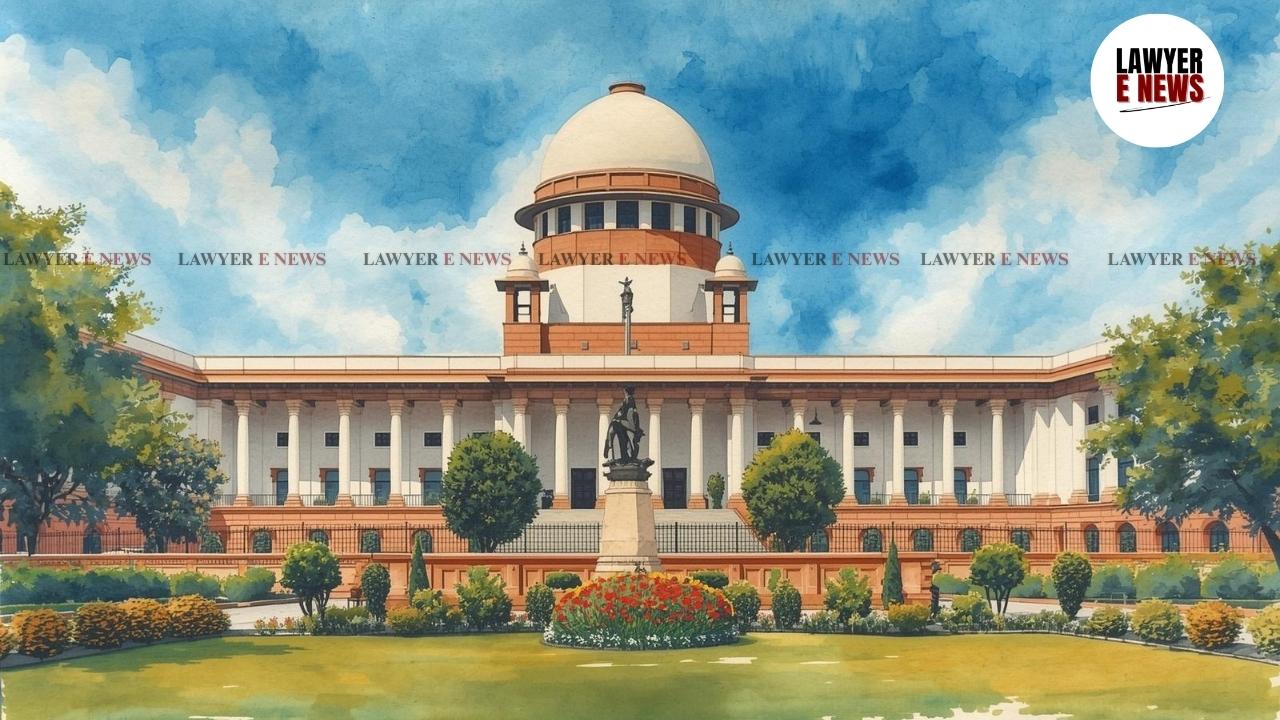
"An admission of a claim by RP is akin to mere recital/reference of debt, which does not amount to an acknowledgment under Section 18 of the 1963 Act", Supreme Court, in a significant ruling dated April 29, 2026, held that the admission of a claim by an Interim Resolution Professional (IRP) or Resolution Professional (RP) does not constitute an acknowledgment of liability under Section 18 of the Limitation Act, 1963.
A bench of Justices Pamidighantam Sri Narasimha and Alok Aradhe observed that the RP’s role is limited to the administrative task of collating claims and does not involve adjudicatory powers that could extend the limitation period for filing a fresh insolvency petition.
The appellant, an erstwhile director of two corporate debtors, challenged the initiation of Corporate Insolvency Resolution Process (CIRP) by a secured financial creditor, Omkara Asset Reconstruction. The loans were declared Non-Performing Assets (NPA) in December 2016, and after a complex history of prior insolvency proceedings and assignments, a Section 7 IBC petition was filed in September 2024. The NCLT and NCLAT had earlier admitted the petition, treating the IRP’s admission of claims in a previous, terminated insolvency round as a valid acknowledgment that reset the limitation clock.
The primary question before the court was whether the period of limitation for a Section 7 IBC application is reckoned from the date of NPA or a later date under the SARFAESI Act. The court was also called upon to determine if the admission of a claim by an IRP/RP during a prior CIRP constitutes an "acknowledgment of liability" capable of extending limitation under Section 18 of the Limitation Act.
Limitation Runs From Date Of NPA Classification
The Court reaffirmed that the three-year limitation period for filing an application under Section 7 of the Code is governed by Article 137 of the Limitation Act. It emphasized that the "right to apply" accrues on the date of default, which is consistently interpreted as the date the corporate debtor first fails to discharge its repayment obligations.
"The limitation begins to run from the date of classification of the account as NPA, being the date of default, and not from any subsequent proceeding initiated for recovery."
The bench rejected the respondent's argument that limitation should commence only after the expiry of notice periods under Section 13(2) and 13(4) of the SARFAESI Act. Relying on Babulal Vardharji Gurjar v. Veer Gurjar, the Court noted that once the account is declared an NPA, the clock begins to tick for the purposes of the Insolvency and Bankruptcy Code.
Calculation Of The Remaining Limitation Period
After establishing the NPA date as December 6, 2016, the Court calculated the time remaining for the creditor. It noted that the original three-year window would have expired in December 2019. However, the Court accounted for three intervening events: the CIRP of the original lender (DHFL), the Suo Motu Covid-19 extension granted by the Supreme Court, and the moratorium during the corporate debtor's first CIRP.
"After reckoning three years from 06.12.2016 and excluding the above referred periods, only three days remain... petition under Section 7 was filed on 23.09.2024 which is well beyond the period of limitation."
RP’s Admission Of Claim Is An Administrative Task
The heart of the judgment addressed the legal character of the RP's actions under Section 18 of the IBC. The Court clarified that the Resolution Professional performs purely administrative and clerical functions, which involve the collation and induction of claims into the system. It reiterated that the RP does not possess adjudicatory powers, a principle established in Committee of Creditors of Essar Steel India Ltd. v. Satish Kumar Gupta.
"RP performs its administrative duties under Section 18 of the Code. The admission of a claim by RP is merely an administrative/clerical task performed as part of its statutory duties... and, therefore, admission of claim by RP only means induction/entry of a claim."
"IRP’s admission of secured financial creditors debt in first CIRP was not an acknowledgement under Section 18 of 1963 Act."
Section 18 Limitation Act Requires Conscious Acknowledgment
The Court delved into the requirements of Section 18 of the Limitation Act, stating that for a writing to constitute a valid acknowledgment, it must evince a conscious and unequivocal intention to admit a subsisting jural relationship. A mere reference to a debt or a "bald recital" in a list of creditors does not suffice to renew the limitation period.
"For a writing to constitute a valid acknowledgment, it must be made by the party against whom the right is claimed... it must evince a conscious and unequivocal intention to admit a subsisting jural relationship and an existing liability."
The Bench concluded that because the IRP's admission of the claim was not a conscious act of the Corporate Debtor to admit liability, but rather a statutory administrative duty, it could not enure to the benefit of the creditor. Furthermore, the Court noted that even if it were considered an acknowledgment, it was made after the original limitation period had already lapsed, which is legally impermissible.
Finding that the Section 7 IBC application was filed well beyond the prescribed period of limitation, the Supreme Court allowed the appeals. The Court set aside the orders of the NCLT and NCLAT, effectively terminating the insolvency proceedings initiated by the asset reconstruction company. The ruling clarifies that administrative entries in insolvency records cannot revive time-barred debts.
Date of Decision: 29 April 2026