-
by sayum
01 November 2026 1:51 PM







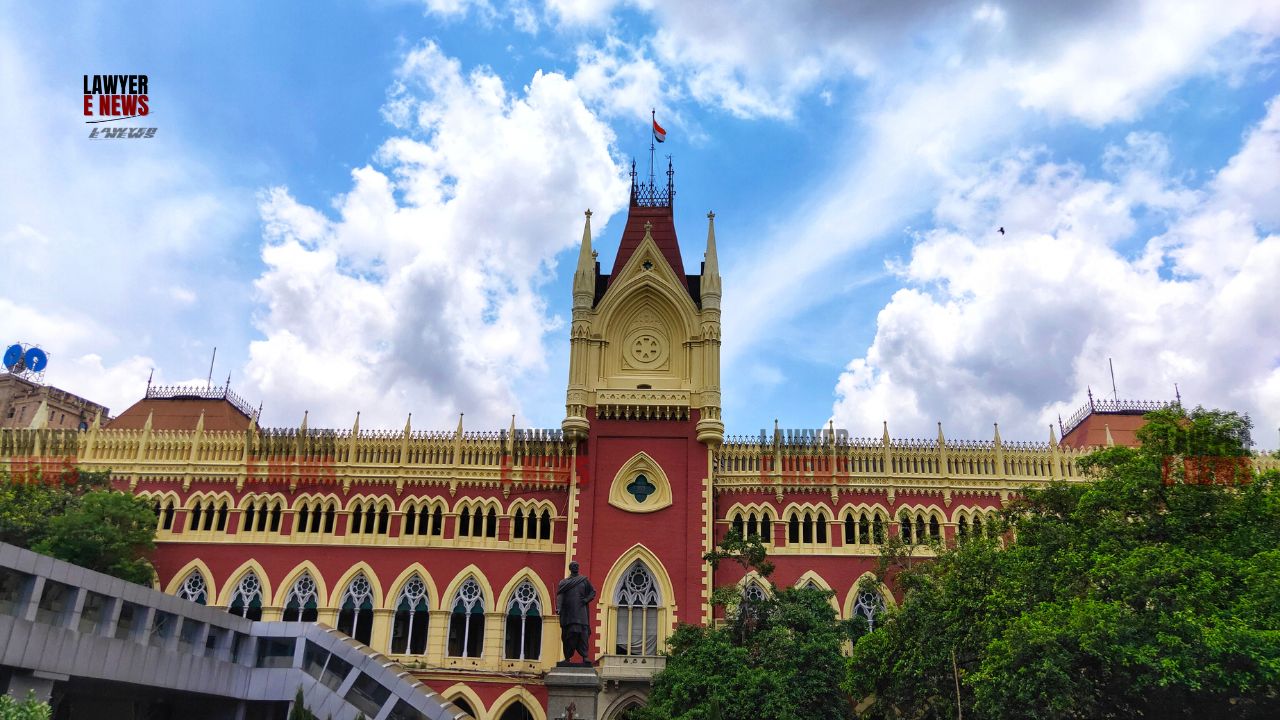
"If a delimitation exercise is carried out inconformity with the provisions of the relevant statute, and the constitutional provisions, and no breach of such provisions have been committed, the Court cannot interfere with the same." Calcutta High Court has ruled that the constitutional bar under Article 243ZG on judicial interference in electoral matters does not preclude a writ court from examining the validity of a municipal ward delimitation exercise if the challenge is raised before the issuance of the election notification, while holding that a Municipal Commissioner appointed as Administrator under Section 118(1)(b) of the Kolkata Municipal Corporation Act, 1980 is competent to recommend ward alterations under Section 601.
Justice Hiranmay Bhattacharyya delivered the order on October 29, 2026, refusing to grant interim stay on the notification expanding the Kolkata Municipal Corporation from 144 to 209 wards.
The writ petitioner, a Kolkata resident, challenged the notification dated September 11, 2026, which substituted Schedule II of the Kolkata Municipal Corporation Act, 1980, to increase the number of wards from 144 to 209. The petitioner alleged that the delimitation exercise amounted to gerrymandering, was conducted using electoral rolls rather than actual population data, and was initiated on the recommendation of the Municipal Commissioner after the dissolution of the elected body, which the petitioner argued was impermissible under Sections 117 and 118 of the 1980 Act.
The primary legal issues before the court were whether Article 243ZG of the Constitution of India completely ousts writ jurisdiction to challenge municipal ward delimitation before an election notification is published, and whether an Administrator appointed under Section 118(1)(b) of the 1980 Act possesses the statutory competence to recommend delimitation and ward restructuring to the State Government under Section 601.
Addressing the preliminary maintainability objection raised by the State and the Corporation under Article 243ZG, the bench relied on the Supreme Court ruling in State of Uttar Pradesh v. Pradhan Singh Kshettra Samiti to clarify that judicial review remains accessible on limited procedural grounds prior to the formal election call.
Pre-election challenge to delimitation remains maintainable under Article 226
The court observed that although Article 243ZG(a) contains a non-obstante clause prohibiting courts from questioning laws relating to the determination of constituencies, judicial scrutiny is not barred when procedural mandates such as inviting objections and granting a hearing are alleged to be violated, provided the election notification has not yet been promulgated. Since the respondents conceded that the election notification had not been issued, the court held the writ petition maintainable.
Turning to the petitioner's claim for interim relief, the bench examined whether the delimitation process suffered from procedural illegality or lack of statutory backing.
Preparatory steps taken prior to statutory amendment do not invalidate delimitation
The court rejected the petitioner's contention that the delimitation was void because initial steps were initiated prior to the formal amendment of Section 5 of the 1980 Act, which substituted the strength of elected councillors. The bench observed that the Kolkata Municipal Corporation (Amendment) Act, 2026 was published in the Extraordinary Gazette on August 20, 2026, and the formal submission of ward redistribution occurred on August 22, 2026.
The court noted that only preparatory work for the draft Schedule II had preceded the statutory amendment, emphasizing that such preliminary compilation does not vitiate the delimitation exercise which effectively commenced only after Section 5 was formally amended.
Litigants failing to lodge statutory objections cannot allege denial of hearing
The bench scrutinized the timeline of public notices and noted that objections and suggestions were invited between August 5 and August 13, 2026, and again between August 22 and September 3, 2026, with hearings afforded to objectors. The court underscored that the petitioner placed no evidence on record demonstrating that he had lodged any objection to the draft notifications.
A person who chooses not to file objections against the draft publication amending Schedule II cannot belatedly claim before a writ court that reasonable opportunity of hearing was denied before the final notification was issued, the bench held.
Administrator appointed under Section 118(1)(b) exercises all powers of elected Corporation
On the competence of the Municipal Commissioner acting as Administrator, the court reviewed the statutory scheme governing dissolved municipal bodies under Section 117 and Section 118 of the 1980 Act. The court noted that dissolution of the elected body does not dissolve the Corporation as a corporate entity under Section 118(2).
The bench held that upon dissolution under Section 117, an Administrator appointed pursuant to Section 118(1)(b) is statutorily clothed with all powers and duties of the members of the Corporation, the Mayor-in-Council, and the Mayor. Consequently, the Administrator was fully empowered to make recommendations for ward restructuring to the State Government under Section 601 of the 1980 Act.
Distinction between mid-election gerrymandering and pre-notification delimitation
The court distinguished the Supreme Court precedent in State of Madhya Pradesh v. Devilal, noting that Devilal dealt with a State Government altering panchayat constituencies in the midst of an ongoing election, which amounted to gerrymandering. In the present case, the delimitation was finalized prior to the issuance of any election notification after inviting public objections.
The court affirmed that amending Schedule II falls within the exclusive statutory domain of the State Government under Section 601, and courts cannot dictate how municipal boundaries are carved out unless an explicit statutory or constitutional breach is established.
The High Court held that the petitioner failed to establish a prima facie case or show balance of convenience in his favour, ruling that staying the ward notification would run contrary to public interest by stalling the constitutional mandate to hold elections within six months of dissolution. The prayer for interim stay of the notification dated September 11, 2026 was accordingly dismissed, and respondents were directed to file their affidavits-in-opposition within three weeks.
Date of Decision: October 29, 2026