
-
by sayum
26 August 2026 1:49 PM







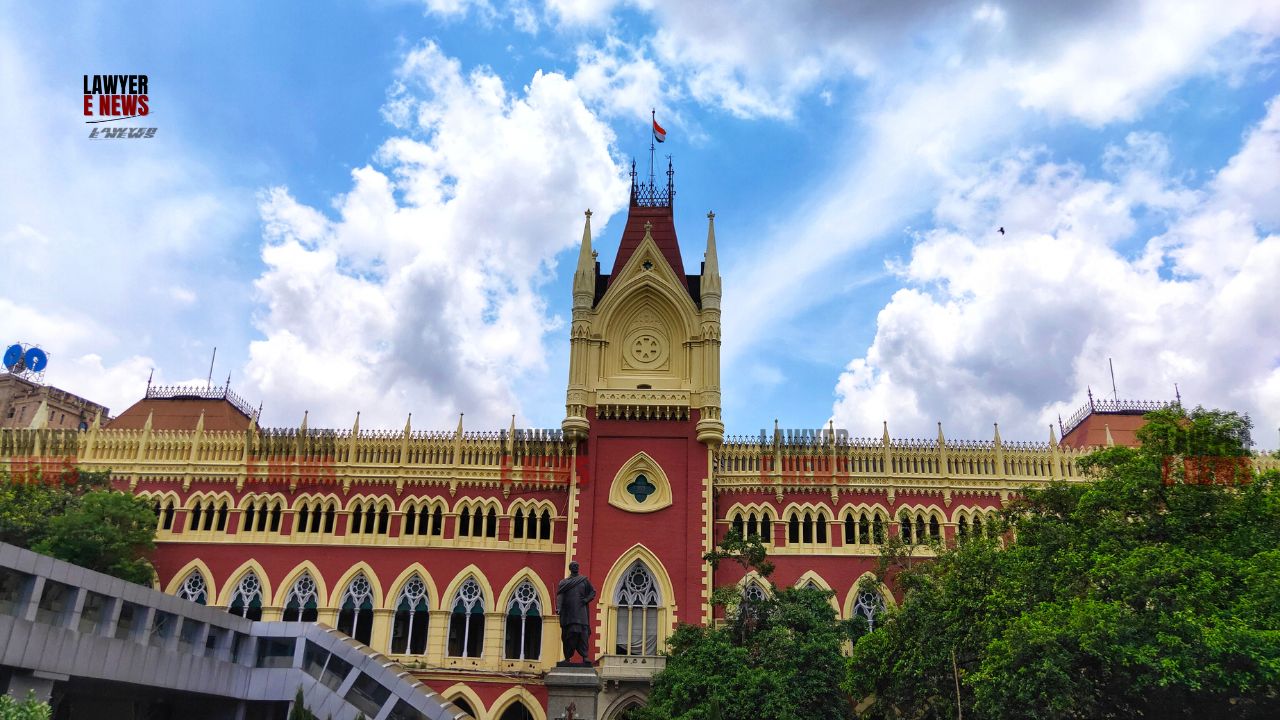
"A Debuttar Property Vests in the Deity and Is Impartible — Its Inclusion in a Partition Suit Is a Glaring Error", Calcutta High Court partly allowed a first appeal in a decade-old partition suit, modifying the preliminary decree on three critical grounds — erroneous inclusion of a debuttar property in the partition schedule, omission of an admitted joint property rendering the suit bad for partial partition, and a mechanical direction for accounts that ignored admitted expenditure by the defendants exceeding rental income.
A Division Bench of Justice Sabyasachi Bhattacharyya and Justice Supratim Bhattacharya exercised its appellate powers under Order XLI Rule 24 CPC to finally determine the suit and declare the shares of parties, avoiding yet another remand in a suit already once returned to the trial court.
Background of the Case
The respondent-plaintiff filed a partition suit in 2012 in respect of properties on Motilal Nehru Road, Kolkata. The defendants-appellants challenged the preliminary decree of partition passed by the Civil Judge, Alipore on April 24, 2019, on three grounds: first, that a debuttar property was wrongly included in the partition schedule; second, that an admittedly joint property — Premises No. 138A, Motilal Nehru Road — was omitted from the schedule, making the suit bad for partial partition; and third, that the trial court directed accounts covering only rental income collected by the defendants, ignoring their admitted expenditure on taxes, repairs, and maintenance which exceeded the rental income. This was already the second round of litigation, the suit having been remanded once before.
Debuttar Property Cannot Be Partitioned
The Court found that Premises No. 138 (formerly No. 8A, Hazra Lane) was covered by Deed No. 4669 of 1943 — an Arpannama — which dedicated the property to deities. The plaintiff himself, as PW-1, had admitted in cross-examination that this property had been renumbered as 138, Motilal Nehru Road.
The Court held that a debuttar property vests in the deity and is not owned by its shebaits. By its very nature it is impartible at the behest of shebaits. Its inclusion in the partition schedule was therefore a glaring error — though a curable one. The Court corrected it by directing that in Item No. I of the schedule, Premises No. 138 shall be read as 138A, effectively excluding the debuttar property from the hotchpot.
Omission of Joint Property — Suit Bad for Partial Partition
The Court further found that Premises No. 138A, Motilal Nehru Road — formerly Premises No. 8B, Hazra Lane — was covered under Deed No. 4558 of 1943 and was admittedly a joint property. PW-1 had specifically admitted in cross-examination that Premises No. 8B had been renumbered as 138A and 139A, Motilal Nehru Road. Yet Premises No. 138A was conspicuously absent from both schedules of the plaint.
The Court held that this omission would ordinarily render the suit bad for partial partition. However, since the defect was curable, the Court exercised its power under Sections 107 and 153 CPC to amend the schedule and include the omitted joint property rather than remand the matter.
Accounts Must Include Both Income and Expenditure
On the accounts question, the Court found a clear admission by PW-1 in cross-examination that all payments in respect of the suit property — corporation taxes, electricity bills, statutory outgoings, maintenance and repairs — had been made by the defendant-appellants. The defendants' own pleading stated that the meagre rental income from old monthly tenants could not even meet the maintenance expenditure of the suit properties.
Despite this admitted state of affairs, the trial court had directed accounts only in respect of rental income collected by the defendants, without any reference to their expenditure. The Court held this was an error.
"For a preliminary decree of accounts to be passed, the court had to take into consideration the expenditure incurred by the appellants and not merely confine such accounts to the income from rents collected by them from the tenants."
The Court noted that the failure to frame a specific issue on accounts and expenditure was not fatal since both parties had addressed the issue in evidence and arguments and no party was taken by surprise. However, the omission to include the expenditure component in the accounts direction was a substantive error that had to be rectified.
Shares Not Declared — Another Error Cured
The Court also found that the impugned preliminary decree had failed to specify the shares of the parties — which is the sine qua non of a valid preliminary decree of partition. Based on the admitted pleadings of both parties, the Court declared that the plaintiff and defendant No. 4 are entitled to one-fourth share each, while defendant Nos. 1 to 3 are jointly entitled to a half share, which works out to one-sixth share each.
Appellate Court's Power to Avoid Remand
Noting that the suit had been pending for over a decade since 2012 and had already been remanded once, the Court invoked Order XLI Rule 24 CPC, Section 107 and Section 153 of the Code to finally determine the suit and bring it to a terminus. The defects were of a curable and technical nature and the evidence on record was sufficient for the appellate court to correct them without sending the matter back.
"Instead of relegating the parties to a further remand, this Court, applying Order XLI Rule 24 CPC, ought to finally determine the suit and bring it to a terminus, since the evidence on record is sufficient to enable this Court to do so."
The Calcutta High Court partly allowed the appeal and modified the preliminary decree in four respects: the partition schedule was amended to read Premises No. 138A in place of 138; the accounts direction was modified to include both income earned and expenditure incurred by the defendants; shares of all parties were specifically declared; and timelines for amicable partition and rendering of accounts were directed to run from the date of the appellate judgment. No order as to costs was passed.
Date of Decision: March 17, 2026





